 CryptoChain Blog
Introduction to Ethereum L2 for IoT in 2026
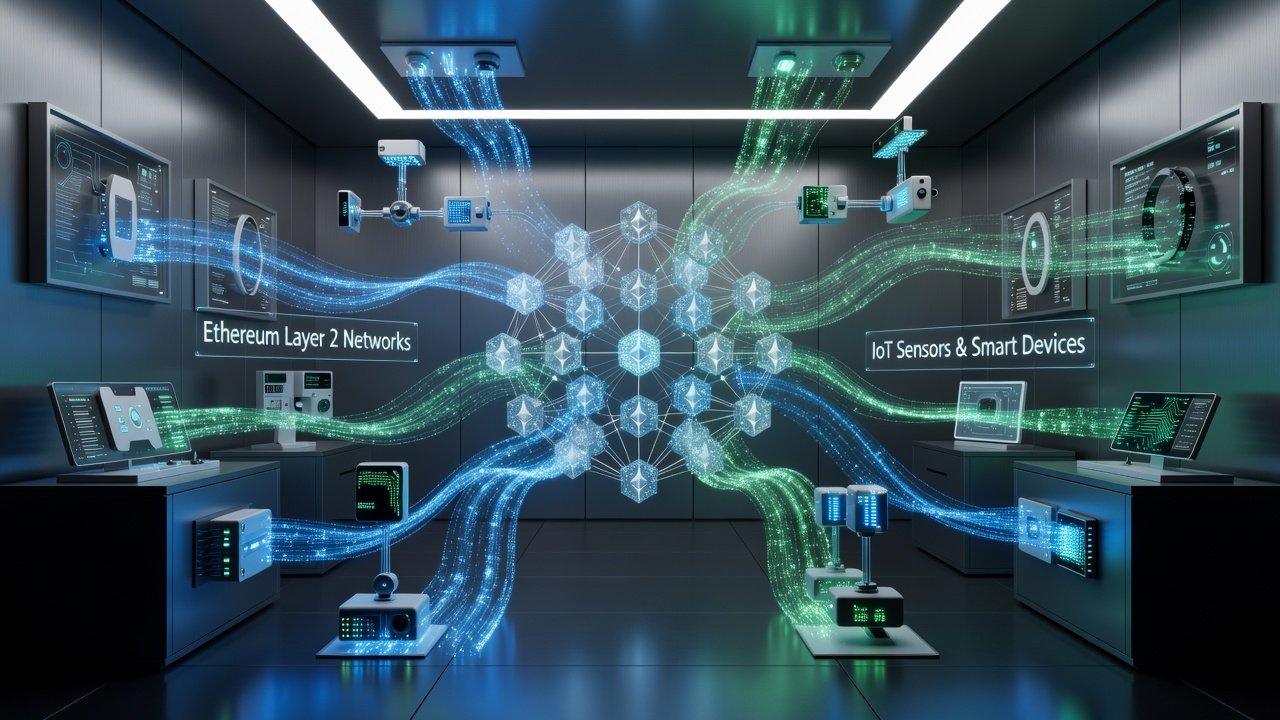
As IoT networks expand rapidly across industries, Ethereum Layer 2 solutions are becoming essential for handling the massive data flows from sensors and smart devices. This beginner-to-intermediate guide explores practical Ethereum news and trends, focusing on real-world scalability for IoT applications. Layer 2 technologies like rollups dramatically reduce costs compared to mainnet while maintaining the security inherited from Ethereum, making them ideal for high-volume device interactions in 2026. Developers and businesses are increasingly turning to these solutions to process telemetry data from millions of connected devices without the congestion and expense of Layer 1 transactions.
Key benefits include lower transaction fees, faster confirmations, and enhanced privacy features tailored for distributed IoT ecosystems. Whether you're a beginner exploring ETH updates or an intermediate developer seeking integration details, this article provides in-depth coverage from protocols to pitfalls, helping you build robust applications that leverage the latest advancements in the Ethereum ecosystem.
Benefits Over Mainnet and Cost Reductions via Rollups
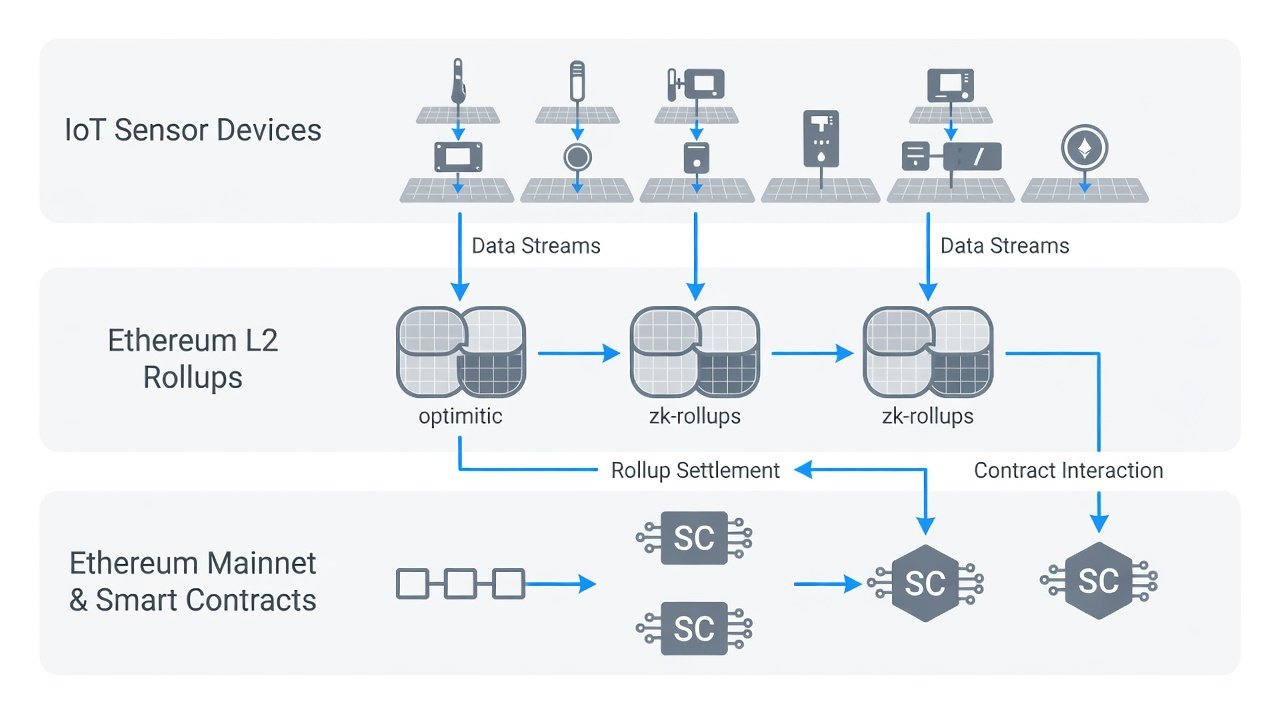
Ethereum mainnet struggles with high gas fees and limited throughput during periods of network congestion, which can make IoT data logging prohibitively expensive for continuous sensor feeds. Layer 2 rollups address this by batching hundreds of transactions into a single Layer 1 submission, achieving significant efficiency gains. Optimistic rollups assume transactions are valid by default and only run fraud proofs when disputes arise, while zero-knowledge rollups use validity proofs for immediate finality. These mechanisms deliver throughput improvements of 10 to 100 times while preserving Ethereum's security model through data availability on the main chain.
In practical terms, this means IoT projects can handle thousands of daily device interactions at a fraction of the cost, enabling use cases like real-time environmental monitoring that were previously uneconomical. Rollups also support EVM compatibility, allowing existing Ethereum smart contracts to migrate with minimal changes.
Top L2 Protocols Supporting IoT
Several Layer 2 protocols stand out for IoT use cases in 2026. Optimism and Arbitrum lead with optimistic rollups that batch transactions efficiently for high-frequency sensor data. Polygon zkEVM offers zero-knowledge proofs for enhanced scalability in sensor networks, while Base provides a developer-friendly environment backed by Coinbase infrastructure. These platforms support Ethereum's ecosystem while addressing mainnet limitations like high gas costs during peak loads.
- Optimism: Focuses on EVM compatibility for seamless smart contract deployment in IoT data processing, with strong tooling for oracle integrations.
- Arbitrum: Provides strong security guarantees suitable for supply chain tracking and multi-party IoT consensus mechanisms.
- Base: Emerging as a cost-effective option for energy sector applications requiring rapid finality.
- Polygon zkEVM: Ideal for privacy-sensitive IoT deployments using advanced cryptographic proofs.
Learn more about Ethereum's core infrastructure at Ethereum.org. Additional JavaScript resources for integration can be found at MDN Web Docs.
Integration Steps with Code Examples
Integrating Ethereum L2 with IoT devices involves connecting hardware like Raspberry Pi sensors to L2 networks via APIs or oracles. Begin by selecting a protocol based on your throughput needs and security requirements. The process typically spans wallet setup, contract deployment, and data submission pipelines.
- Choose and bridge assets to the target L2 using official bridges to minimize fees.
- Set up a wallet and fund it with ETH on the chosen L2 network.
- Deploy a smart contract for data logging using Solidity, including functions for timestamped readings and access controls.
- Use libraries like web3.js or ethers.js to push IoT data on-chain from device firmware or edge gateways.
- Implement oracle services such as Chainlink for off-chain data verification when needed.
- Monitor transactions with tools like Tenderly for debugging and optimization.
Example code snippet for a basic sensor data submission on Optimism:
const { ethers } = require('ethers');
const provider = new ethers.providers.JsonRpcProvider('https://mainnet.optimism.io');
const wallet = new ethers.Wallet(privateKey, provider);
const contract = new ethers.Contract(contractAddress, abi, wallet);
async function logSensorData(reading) {
  const tx = await contract.logData(reading.value, reading.timestamp);
  await tx.wait();
  console.log('Data logged:', tx.hash);
}
Always test on testnets first to avoid common errors such as nonce mismatches or insufficient gas limits. For production, incorporate retry logic and batch submissions to further optimize costs.
Case Studies from Supply Chain and Energy Sectors
In supply chain management, companies leverage Arbitrum to track shipments in real time with tamper-proof records, reducing disputes by streamlining provenance verification across global logistics networks. Sensors on containers report location, temperature, and humidity directly to L2 contracts, enabling automated alerts and compliance logging without mainnet delays.
In the energy sector, utilities deploy Polygon zkEVM for decentralized smart meter readings, facilitating peer-to-peer energy trading with improved efficiency and transparency. Home solar installations feed generation data into rollup-based ledgers, supporting dynamic pricing models and grid balancing. These implementations highlight Layer 2's role in secure, cost-effective IoT deployments that scale to thousands of endpoints while maintaining auditability.
Performance Comparisons and Security Considerations
Compared to Ethereum mainnet, L2 solutions offer substantially lower fees and higher throughput, making them suitable for thousands of daily IoT transactions. Optimistic rollups typically provide near-instant confirmations with a challenge period, whereas zk-rollups deliver immediate finality at the expense of higher computational overhead for proof generation. Security relies on fraud proofs or validity proofs anchored to Ethereum, with additional layers like multi-signature wallets and hardware security modules recommended for critical device fleets.
Common risks include bridge vulnerabilities and oracle manipulation, so projects should conduct regular audits and implement circuit breakers in smart contracts.
Common Pitfalls to Avoid
Developers often overlook gas optimization techniques or fail to account for L2-specific bridging delays during high-load periods. Regulatory angles include data privacy compliance under emerging global standards such as GDPR extensions for blockchain data. Future outlook points to tighter L2-IoT convergence with AI-driven analytics and cross-rollup interoperability standards expected by late 2026.
FAQs
How do I set up an L2 IoT node?
Start with official documentation from your chosen protocol, connect via standard RPC endpoints, and use edge computing frameworks to handle local preprocessing before on-chain submission.
What regulatory considerations apply to IoT on Ethereum L2?
Focus on data sovereignty laws, consent management for device-collected information, and evolving blockchain-specific guidelines in your jurisdiction.
What's the future outlook for Ethereum L2 IoT in 2027?
Expect more zk-rollup advancements for ultra-secure scaling, deeper integration with 5G networks, and standardized IoT-specific tooling across major protocols.
Conclusion
Ethereum L2 integrations are transforming IoT landscapes with practical scalability, security, and cost efficiency. By following the steps and insights outlined above, teams can build future-proof solutions that capitalize on the latest ETH updates and trends.
No comments yet. Be the first!