 CryptoChain Blog
Introduction to Ethereum L2 Metaverse Scaling
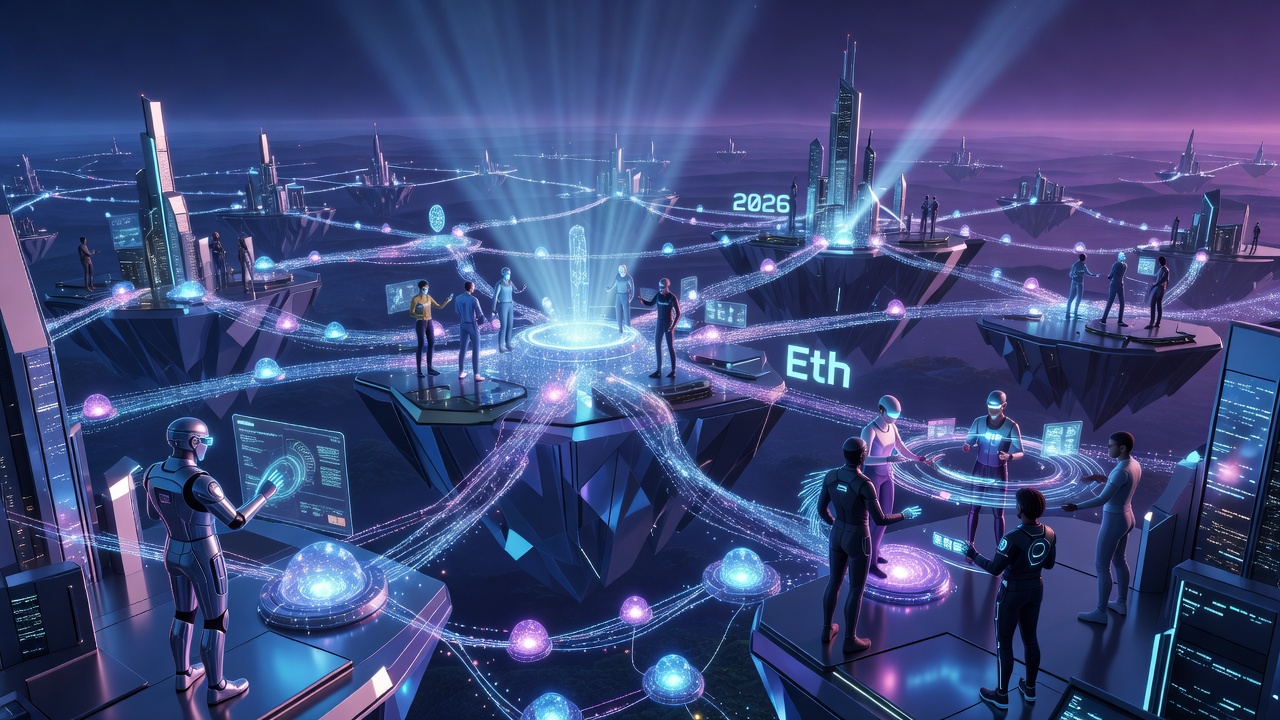
As the metaverse evolves in 2026, Ethereum Layer 2 networks are emerging as the backbone for high-throughput virtual environments. These solutions address the limitations of Ethereum mainnet by enabling real-time interactions at scale without compromising security. Developers and users alike are turning to L2 platforms to build immersive experiences that support thousands of concurrent participants across persistent digital realms. The shift toward L2 scaling represents a pivotal advancement in how virtual worlds can operate efficiently while remaining anchored to Ethereum's robust security model.
This article explores the latest developments, benchmarks, and practical strategies for leveraging L2 technology in metaverse projects. Focus remains on forward-looking ETH updates and emerging use cases beyond traditional sectors. Readers will gain insights into specific projects, deployment workflows, and decision frameworks for choosing the right infrastructure.
Key L2 Projects Enabling High-Throughput Virtual Worlds
Several prominent L2 projects stand out for their metaverse capabilities. Optimism and Arbitrum lead with optimistic rollups that batch transactions for efficiency, allowing virtual economies to process actions like avatar movements and asset trades rapidly. zkSync and Polygon zkEVM utilize zero-knowledge proofs for enhanced privacy and speed in virtual settings. These platforms support custom environments where avatars can interact seamlessly across expansive digital spaces without network congestion.
Performance benchmarks show L2 networks achieving 2,000+ transactions per second compared to Ethereum mainnet's 15-30 TPS. Latency drops to under 100 milliseconds in optimized setups, making real-time metaverse navigation feasible. For instance, Arbitrum's recent upgrades have demonstrated consistent handling of complex multi-user simulations that would overwhelm mainnet resources. Integration examples include platforms experimenting with L2 for dynamic world-building tools that respond instantly to user inputs.
Scalability Solutions for Real-Time Interactions
Scalability in metaverse contexts relies on rollup architectures that process computations off-chain while settling on Ethereum. Data availability solutions like Celestia further boost throughput for dense virtual worlds. Techniques such as state channels allow persistent sessions for ongoing interactions without constant on-chain writes, reducing costs and improving responsiveness during large-scale events like virtual concerts or collaborative builds.
Comparisons of rollup approaches reveal optimistic rollups excel in developer friendliness while ZK-rollups offer superior security guarantees for complex economies. Practical examples show how these solutions enable fluid transitions between different virtual zones, maintaining consistency across thousands of simultaneous users.
Token Economics in Metaverse Economies
Token economics on L2 metaverses emphasize sustainable models with utility tokens for governance and access. These systems reward participation through staking mechanisms that align incentives across virtual communities. Integration with Ethereum's ecosystem ensures interoperability for asset movement between layers, fostering vibrant internal markets where resources and experiences can be exchanged fluidly.
Real-world case studies from platforms like The Sandbox's L2 expansions and Decentraland's scaling experiments demonstrate reduced costs and increased user retention in 2026 deployments. These examples highlight how well-designed token flows prevent inflation while encouraging long-term engagement in virtual societies.
Step-by-Step Guidance on Deploying a Simple Metaverse dApp on L2
Deploying a metaverse dApp on L2 involves these detailed steps. First, select an L2 provider such as Arbitrum and set up a development environment with Hardhat or Foundry for contract compilation. Next, write smart contracts optimized for rollup compatibility, focusing on efficient gas usage for frequent state updates like position tracking in virtual spaces. Then, integrate frontend frameworks like Unity or Three.js for virtual rendering and connect via libraries such as ethers.js configured for the chosen L2 RPC endpoint.
Test thoroughly on testnets to simulate high-traffic scenarios before bridging assets via official bridges. Finally, monitor with tools from ethereum.org for performance analytics and iterate based on real usage data. This process ensures low fees and high speed from the outset, with additional considerations for handling data availability and fallback mechanisms during peak loads.

Rollup Approach Comparisons and Practical Adoption
Optimistic rollups provide fast finality with fraud proofs, ideal for dynamic metaverse events where quick dispute resolution matters. ZK-rollups shine in verifiable computations for trustless economies, offering stronger assurances in scenarios involving high-value virtual assets. Adoption strategies include starting with hybrid models that leverage both for different components of a virtual world, such as using optimistic for social features and ZK for economic transactions.
Case studies highlight successful integrations where L2 reduced congestion by 90% while maintaining Ethereum security. Developers should evaluate factors like ecosystem maturity, tooling availability, and community support when selecting an approach.
Real-World Case Studies and Common Pitfalls to Avoid
Examining 2026 implementations reveals patterns of success. One project on zkSync built a persistent virtual campus supporting educational simulations with over 5,000 daily active users by optimizing contract logic for batch processing. Another on Optimism integrated real-time physics engines for collaborative building spaces, achieving sub-second response times through careful state management.
Common mistakes include overlooking bridge security during asset transfers and failing to account for L2-specific finality delays in user-facing features. Always conduct audits focused on rollup interactions and simulate network partitions to ensure resilience.
Future Outlook and Adoption Strategies
Looking ahead, Ethereum L2 developments promise further enhancements in cross-chain communication and modular scaling. Teams adopting these technologies early position themselves for greater user growth by delivering seamless experiences. Key strategies involve community governance experiments on L2 and gradual migration of existing prototypes to test scalability limits.
FAQ Section
- What are the main benefits of L2 for metaverses? Higher throughput and lower costs enable scalable interactions that feel responsive even with large participant numbers.
- How do benchmarks compare in 2026? L2s deliver thousands of TPS versus mainnet limits, with specific networks showing consistent performance in virtual world simulations.
- Is deploying on L2 complex for beginners? Step-by-step tools and documentation simplify the process, though testing for concurrency remains essential.
- Which rollup is best for token economies? ZK options often provide stronger guarantees for verifiable fairness in economic activities.
- What resources help monitor L2 performance? Official documentation from providers like arbitrum.io and optimism.io offers dashboards and guides.
Conclusion
Ethereum L2 networks are transforming metaverse possibilities in 2026 through advanced scaling. By following deployment guides, studying benchmarks, and learning from case studies, builders can create robust virtual worlds. Continued innovation promises even greater adoption ahead. Explore resources from polygon.technology and the sites mentioned for the latest updates and start experimenting with L2 environments today.

No comments yet. Be the first!