 CryptoChain Blog
Introduction to Ethereum Layer 2 Ecosystem in 2026
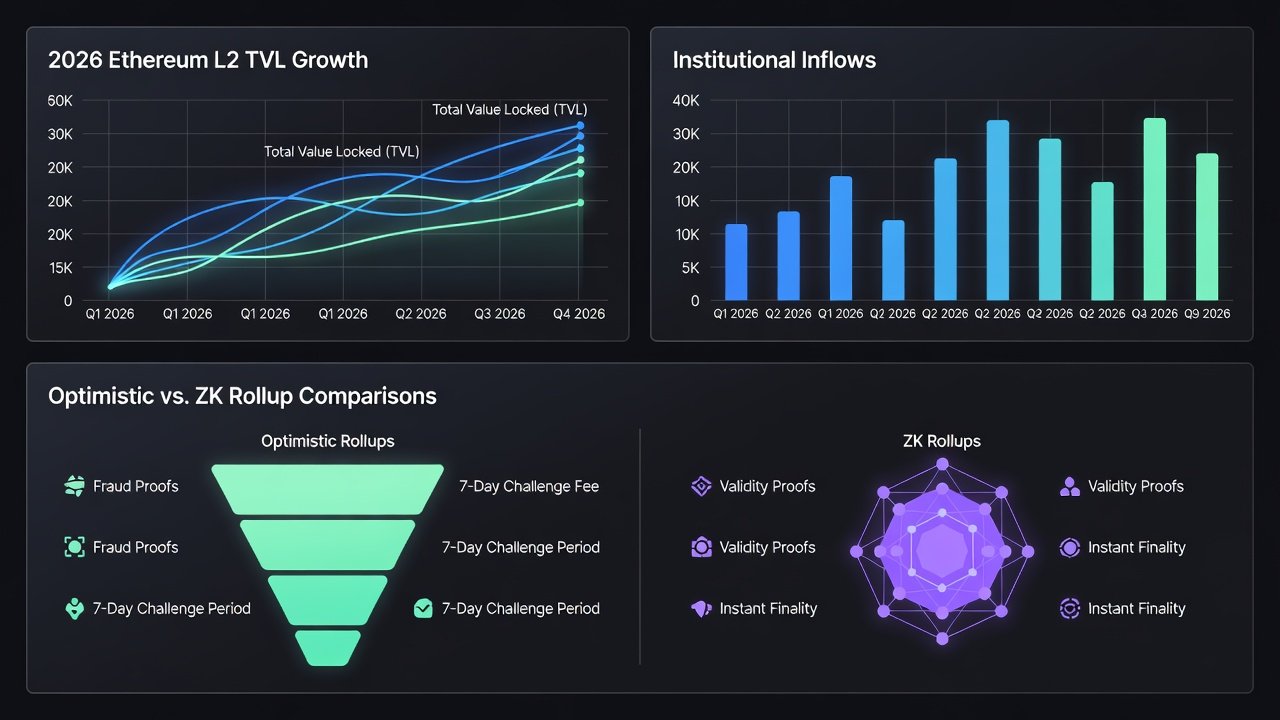
The Ethereum Layer 2 landscape has matured significantly by 2026, driven by scaling solutions that enhance transaction throughput while maintaining security inherited from the base layer. Institutional interest has surged, with TVL metrics reflecting capital inflows from traditional finance entities seeking efficient on-chain exposure. This analysis draws on real-time data from platforms like L2Beat and Dune Analytics to dissect TVL breakdowns, address activity, and competitive dynamics between optimistic and zero-knowledge rollups. Ethereum's base layer upgrades have indirectly boosted L2 performance by improving data availability, allowing rollups to handle more complex institutional workflows such as tokenized securities settlement and cross-border payments. Developers and analysts now focus on granular metrics beyond simple TVL, including active addresses segmented by wallet type and integration depth with traditional finance systems. Understanding these metrics is essential for investors and developers monitoring Ethereum's evolution toward mass adoption. Key trends include the dominance of specific rollup architectures and integrations with TradFi protocols that prioritize compliance and auditability.
TVL Breakdown by Rollup Type and Institutional Inflows
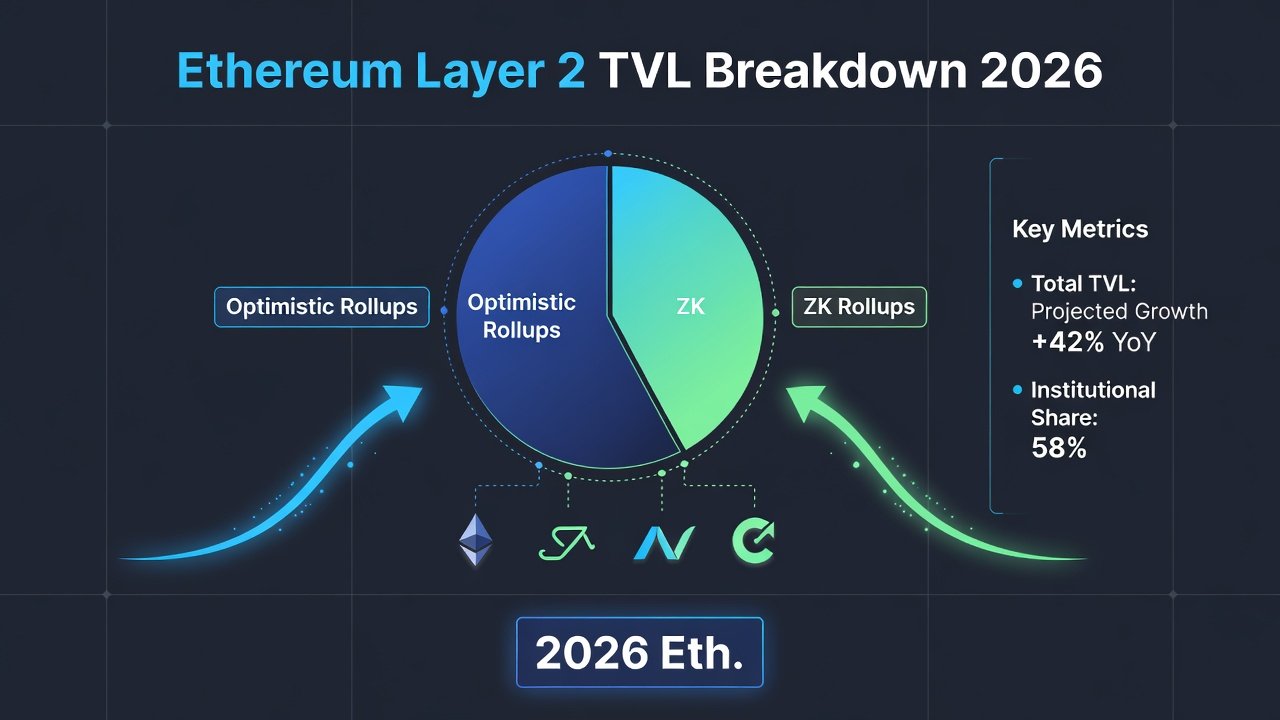
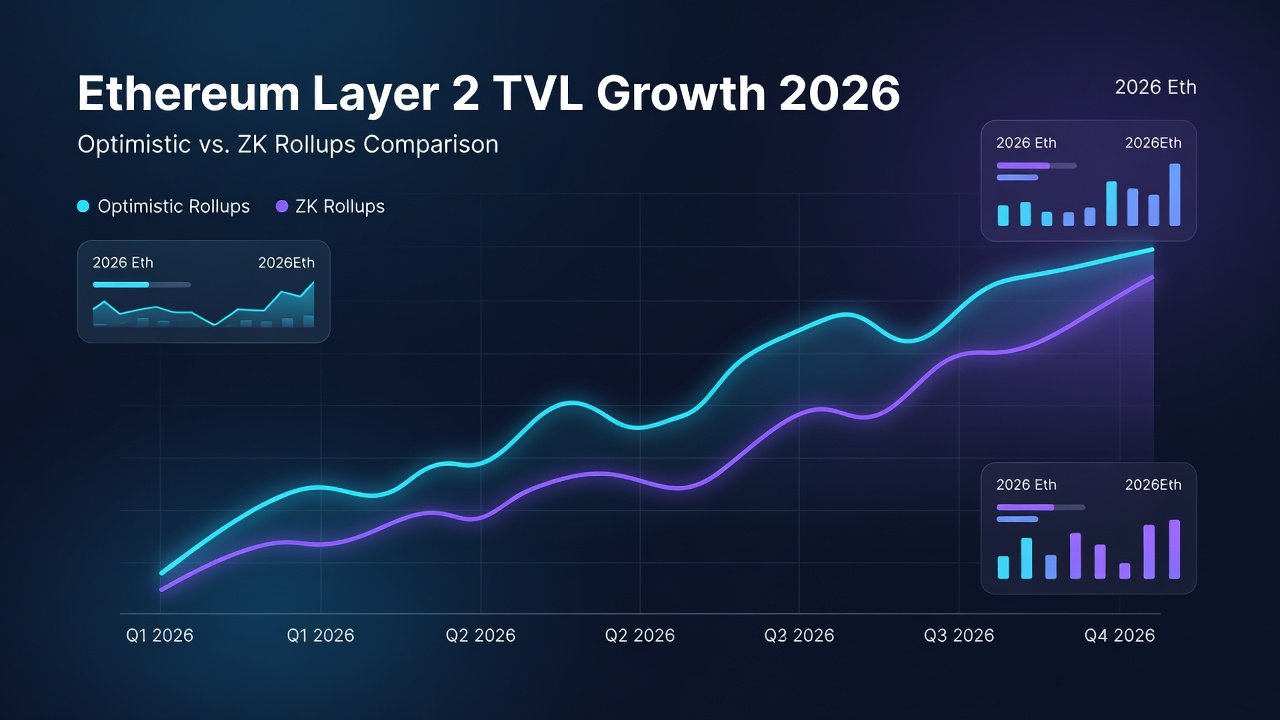
Total Value Locked across Ethereum L2s reached substantial levels in late 2026, with institutional wallets contributing a growing share. Optimistic rollups such as Optimism and Arbitrum continue to hold significant portions due to their mature ecosystems and EVM compatibility, which simplifies migration of existing smart contracts from the mainnet. ZK-based solutions, including zkSync and Polygon zkEVM, have accelerated in TVL growth thanks to enhanced privacy features and faster finality that appeal to institutions handling sensitive financial data. Data from L2Beat shows breakdowns by category: optimistic rollups account for the majority of TVL in established DeFi applications like lending protocols and decentralized exchanges, while ZK rollups attract newer institutional capital focused on scalability for high-frequency trading and asset tokenization. Active address trends indicate a 40% year-over-year increase in unique institutional participants across major L2s, with many addresses linked to custodians and asset managers. Examples include inflows into Arbitrum's ecosystem from banks experimenting with on-chain treasury management and zkSync's growth from partnerships involving real-world asset issuance. These patterns highlight how rollup choice often depends on the specific use case, with optimistic solutions favored for broad liquidity and ZK for verifiable computations in regulated environments.
Optimistic vs ZK Solutions: Transaction Volume and Metrics Comparison
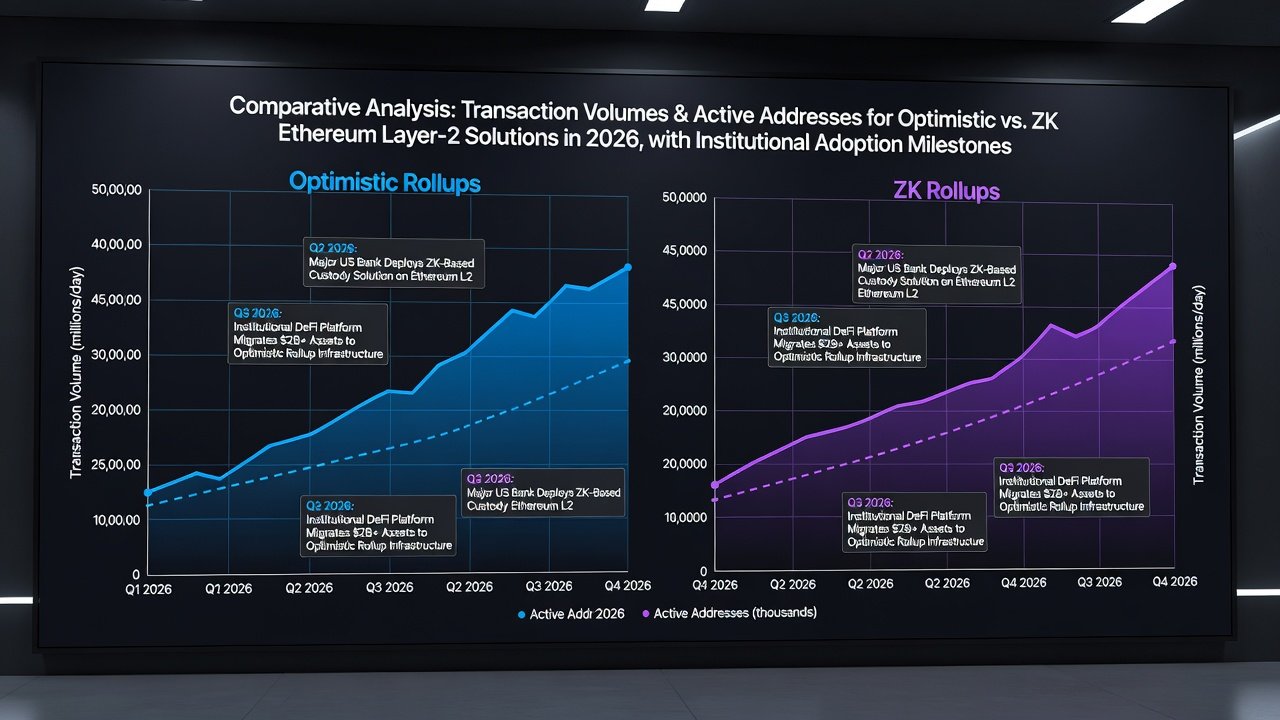
Comparing optimistic and ZK rollups reveals distinct performance profiles that influence institutional decision-making. Optimistic solutions lead in raw transaction volume for general-purpose DeFi, benefiting from lower complexity in fraud proofs and easier developer onboarding through familiar tooling. ZK rollups excel in throughput for specific use cases like payments and NFTs, with verifiable computation providing stronger security assurances that reduce the need for extensive monitoring. Recent Dune Analytics dashboards highlight that optimistic rollups processed higher daily transaction counts on average, yet ZK variants demonstrated superior cost efficiency per transaction in high-volume scenarios due to batching and proof generation optimizations. TradFi integrations, such as tokenized asset platforms on Arbitrum and zkSync, underscore the shift toward institutional-grade infrastructure, where metrics like average transaction value and settlement speed become critical differentiators. For instance, optimistic rollups often show higher user retention in retail-facing applications, whereas ZK chains attract steady institutional volume through features like recursive proofs that enable complex financial derivatives without exposing underlying data. This comparison helps stakeholders evaluate which architecture aligns with their risk tolerance and operational requirements.
Expert Predictions for Q1 2027 and Adoption Signals
Analysts anticipate continued TVL expansion in the next quarter, propelled by Ethereum's ongoing protocol upgrades and regulatory clarity in key jurisdictions. Institutional capital is expected to flow toward L2s with robust compliance tools and bridge security enhancements, potentially shifting market share as new ZK implementations mature. Monitoring signals like active address growth and TVL concentration ratios can help identify leading protocols before broader market recognition occurs. Predictions also point to increased hybrid models combining optimistic and ZK elements for optimized performance across different transaction types. Practical steps for tracking include setting up custom queries on Dune Analytics for real-time dashboards and subscribing to L2Beat alerts for TVL fluctuations, enabling proactive portfolio adjustments based on emerging trends.
Practical Steps for Tracking L2 Metrics via Dashboards
Effective monitoring of Ethereum L2 metrics requires a structured approach using available analytics platforms. First, access L2Beat for standardized TVL rankings and risk assessments across all major rollups, filtering by institutional activity indicators where available. Second, build or fork Dune Analytics queries to visualize active addresses and transaction volumes segmented by institution type, incorporating filters for known custodian wallets to isolate meaningful inflows. Third, cross-reference with on-chain explorers to verify institutional wallet activity and bridge inflows, paying attention to patterns such as repeated large transfers from traditional finance entities. Fourth, review weekly reports from Ethereum.org for base-layer context impacting L2 performance, including any changes in gas costs or data availability that could affect rollup economics. Fifth, set up automated alerts for metric thresholds, such as a 10% weekly TVL increase, to stay ahead of adoption waves. These steps provide a comprehensive framework for interpreting signals and making informed decisions in a rapidly evolving ecosystem.
Which L2s Are Attracting the Most Institutional Capital?
Arbitrum and Base lead in institutional TVL attraction due to established liquidity pools and enterprise partnerships that facilitate seamless integration with existing financial systems. ZK-focused chains like Starknet and Polygon zkEVM are gaining traction for specialized applications involving privacy-preserving computations and high-security settlements. Audience questions often center on risk-adjusted returns and integration ease with existing TradFi systems, with many seeking guidance on evaluating bridge risks and smart contract audit histories. Institutions appear drawn to L2s offering native support for compliance features, such as permissioned access controls, which help navigate regulatory landscapes while maintaining decentralization benefits. Tracking these preferences through address clustering on Dune Analytics reveals shifting capital allocations that can inform broader market strategies.
Risks and Considerations in L2 Adoption
While metrics show promising growth, institutions must weigh risks including bridge vulnerabilities, smart contract exploits, and potential centralization in sequencer operations. Diversifying across multiple L2s can mitigate single-point failures, and ongoing audits remain essential for high-value deployments. Understanding how TVL can be inflated by temporary incentives helps separate sustainable adoption from short-term hype.
FAQ on Interpreting Adoption Signals for ETH Updates
How do TVL metrics indicate institutional adoption?
TVL spikes correlated with known institutional addresses signal sustained interest rather than speculative retail flows, often accompanied by increased transaction complexity and longer holding periods.
What distinguishes optimistic from ZK rollups in adoption trends?
Optimistic rollups favor broad DeFi compatibility and lower entry barriers, while ZK solutions prioritize verifiable efficiency and privacy for enterprise use cases involving sensitive data.
Where can I find the latest data sources?
Consult L2Beat and Dune Analytics for up-to-date visualizations and metrics that track both retail and institutional activity.
Are there risks in relying solely on TVL for predictions?
Yes, combine TVL with active address and volume data for a fuller picture of genuine adoption, as TVL alone may not reflect usage quality or long-term retention.
How do TradFi integrations influence L2 selection?
Integrations with compliance tools and tokenized assets often tip the scale toward L2s with proven security track records and developer support ecosystems.
No comments yet. Be the first!