 CryptoChain Blog

Introduction to Ethereum L2 Prediction Markets in 2026
As Ethereum continues to evolve, Layer 2 solutions have become central to the growth of decentralized prediction markets. These platforms allow users to bet on real-world events with greater efficiency than ever before. In 2026, the focus is on scalability improvements via rollups, reduced fees, and deeper integration with existing DeFi primitives, driving higher user adoption across the ecosystem. Recent ETH updates have emphasized network upgrades that support faster transaction finality on L2s, making prediction markets more accessible to both retail and institutional participants. This guide examines the evolution, key protocols, and practical steps for engaging with these markets while exploring how these developments address longstanding challenges in on-chain betting such as high costs and slow confirmations.
Prediction markets on Ethereum have historically faced limitations due to mainnet congestion and elevated gas fees. Layer 2 technologies, particularly optimistic and zero-knowledge rollups, solve these issues by processing transactions off-chain while inheriting Ethereum's security. This evolution has led to increased liquidity and more sophisticated market designs that appeal to a broader audience interested in forecasting outcomes in politics, sports, finance, and beyond.
Key Protocols Driving L2 Prediction Markets
Leading platforms leverage optimistic and zero-knowledge rollups to handle high-volume trading. Protocols built on Arbitrum and Optimism have seen significant traction, offering seamless market creation for events ranging from elections to sports outcomes. Liquidity mechanisms now incorporate automated market makers tailored for binary and multi-outcome bets, ensuring tighter spreads and reduced slippage. These mechanisms often combine order books with liquidity pools, allowing passive providers to earn fees while active traders execute bets efficiently. Integration with DeFi primitives such as lending protocols and yield aggregators allows participants to collateralize positions efficiently. For instance, users can borrow against ETH holdings to increase exposure without selling assets outright, creating leveraged strategies that were impractical on mainnet.
Other notable protocols include those deploying on Base and zkSync, which emphasize low-latency interactions and enhanced privacy features. These platforms facilitate the creation of conditional markets where payouts depend on multiple correlated events, adding complexity and depth to trading strategies.
Scalability Benefits and Fee Reductions via Rollups
Rollups have drastically cut transaction costs compared to mainnet Ethereum. This enables frequent trading and smaller bet sizes that were previously uneconomical. Market resolution accuracy has improved through decentralized oracle networks that aggregate data from multiple sources, minimizing disputes. Users benefit from near-instant confirmations, which enhance the overall experience and encourage repeated engagement. Regulatory considerations remain important; participants should review jurisdiction-specific guidelines on decentralized betting to ensure compliance and avoid potential legal pitfalls in their region.
The shift to L2 also supports greater composability, allowing prediction market positions to interact directly with other DeFi applications like derivatives exchanges or stablecoin protocols. This interconnectedness fosters innovative use cases, such as hedging prediction market exposure through on-chain insurance products.
Real-World Examples from Leading Platforms
Platforms such as Polymarket and PredictIt derivatives on L2s demonstrate robust liquidity pools. These examples highlight how L2s support millions in daily volume while maintaining transparency through on-chain settlement. In one case, a major election market on an Arbitrum-based protocol saw over 50,000 unique participants with resolution completed within hours of official results, thanks to reliable oracle feeds. Another example involves sports betting markets on Optimism where liquidity providers earned consistent yields by facilitating high-frequency trades during major tournaments.
Liquidity Mechanisms and Market Resolution Accuracy
Effective liquidity is maintained through incentive programs that reward providers with platform tokens or a share of trading fees. Resolution accuracy relies on hybrid oracle systems combining off-chain data providers with on-chain verification, achieving high reliability rates. Common challenges like oracle manipulation are mitigated by economic staking requirements and dispute resolution windows.
Integration with Existing DeFi Primitives
Prediction markets on L2 integrate seamlessly with lending, borrowing, and automated yield strategies. This allows users to deploy capital more efficiently across multiple protocols simultaneously. For example, a trader might supply liquidity to a prediction market while simultaneously earning yield on the same collateral in a separate lending pool.
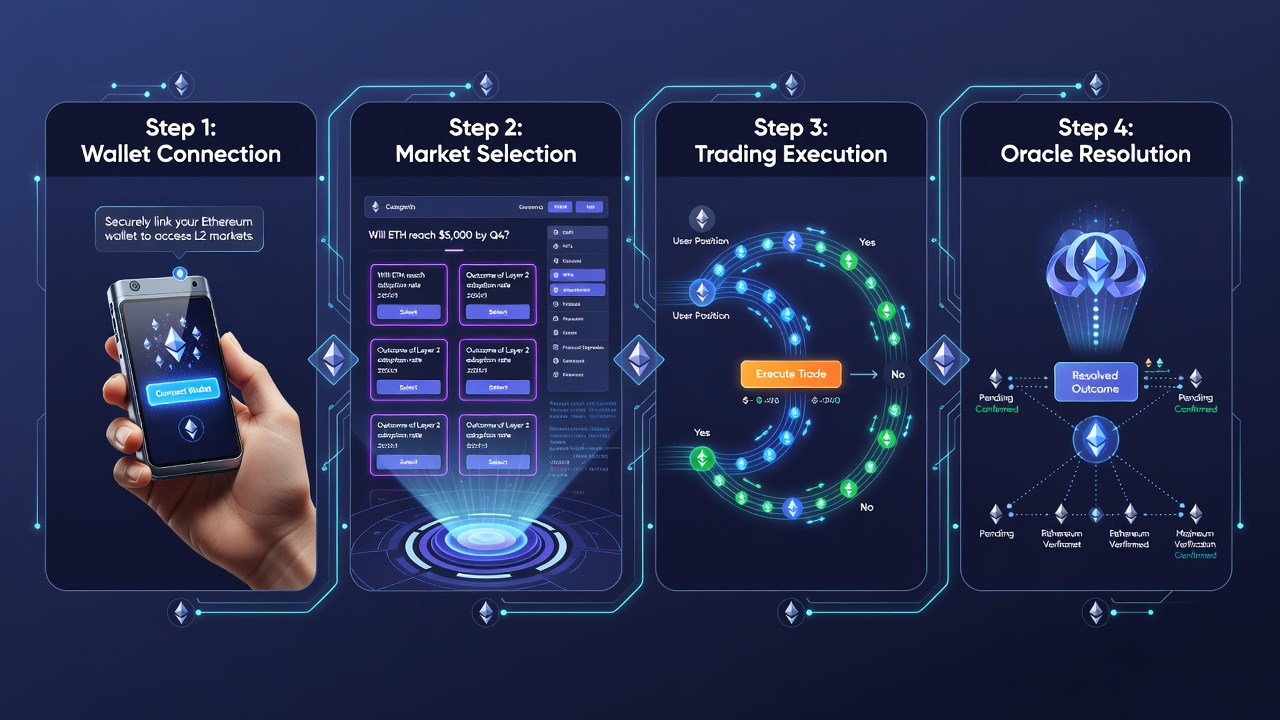
Step-by-Step Guide to Placing and Settling Bets on L2
- Connect a compatible wallet to an L2 network like Arbitrum or Optimism.
- Bridge ETH or stablecoins to the chosen L2 using official bridges.
- Browse available markets and select an outcome based on research and odds.
- Place the bet using the platform interface, confirming gas fees remain minimal.
- Monitor resolution via oracles and claim winnings upon settlement through automated smart contract execution.
- Withdraw funds back to mainnet or another chain if desired after the event concludes.
Comparisons of Different Market Types
- Binary markets: Simple yes/no outcomes with high liquidity and straightforward resolution, ideal for beginners.
- Multi-outcome markets: Offer nuanced predictions but may have lower volume, suiting users seeking detailed forecasting opportunities.
- Conditional markets: Advanced structures tied to multiple events, best for sophisticated users who understand interdependencies.
- Scalar markets: Allow bets on ranges of values, providing continuous outcome possibilities rather than discrete results.
Regulatory Considerations and User Adoption Trends
As adoption grows, regulatory clarity varies by jurisdiction. Users are advised to stay informed through official channels and consider using decentralized identity tools for compliance where required. Trends show increasing institutional interest due to improved scalability and auditability on L2 networks.
Security, Payouts, and Common Concerns: FAQs
How secure are L2 prediction markets?
Security relies on the underlying rollup's fraud proofs or validity proofs, combined with audited smart contracts. Always use reputable platforms and enable wallet protections such as hardware wallets for larger positions.
What about payouts and resolution accuracy?
Payouts occur automatically via smart contracts once oracles confirm results. Accuracy has reached over 99% on major platforms due to improved data feeds and multi-source verification.
Can I participate from any country?
Access depends on local laws; many platforms implement geo-restrictions, so check terms before bridging assets.
Conclusion
The evolution of Ethereum L2 prediction markets in 2026 signals a mature, scalable sector ready for broader adoption. By understanding protocols, following best practices, and staying informed on ETH updates, users can participate confidently while navigating regulatory landscapes. Continued innovation in rollup technology promises even more efficient and feature-rich platforms ahead.
For further reading, explore ethereum.org, defillama.com, and arbitrum.io.


No comments yet. Be the first!