 CryptoChain Blog
Introduction to Ethereum L2 Real-Time Applications
As Ethereum continues its evolution into 2026, Layer 2 solutions have become the backbone for applications requiring instantaneous feedback and high-frequency interactions. Real-time apps built on L2s now support everything from competitive multiplayer gaming to live decentralized finance platforms where traders execute strategies without perceptible delays. This comprehensive guide examines the latest developments, emerging trends, and practical examples while offering actionable advice for developers focused on time-sensitive use cases.
The demand for real-time capabilities arises from user expectations shaped by traditional web applications. Ethereum's base layer alone cannot meet these demands due to its inherent block times, making L2 scaling essential. Recent upgrades across multiple L2 ecosystems have delivered meaningful improvements in throughput and finality, allowing dApps to handle thousands of operations per second while inheriting Ethereum's security model. Builders targeting scalability for live scenarios find these platforms indispensable for creating responsive experiences that feel seamless.
Latency Improvements Driving 2026 Developments
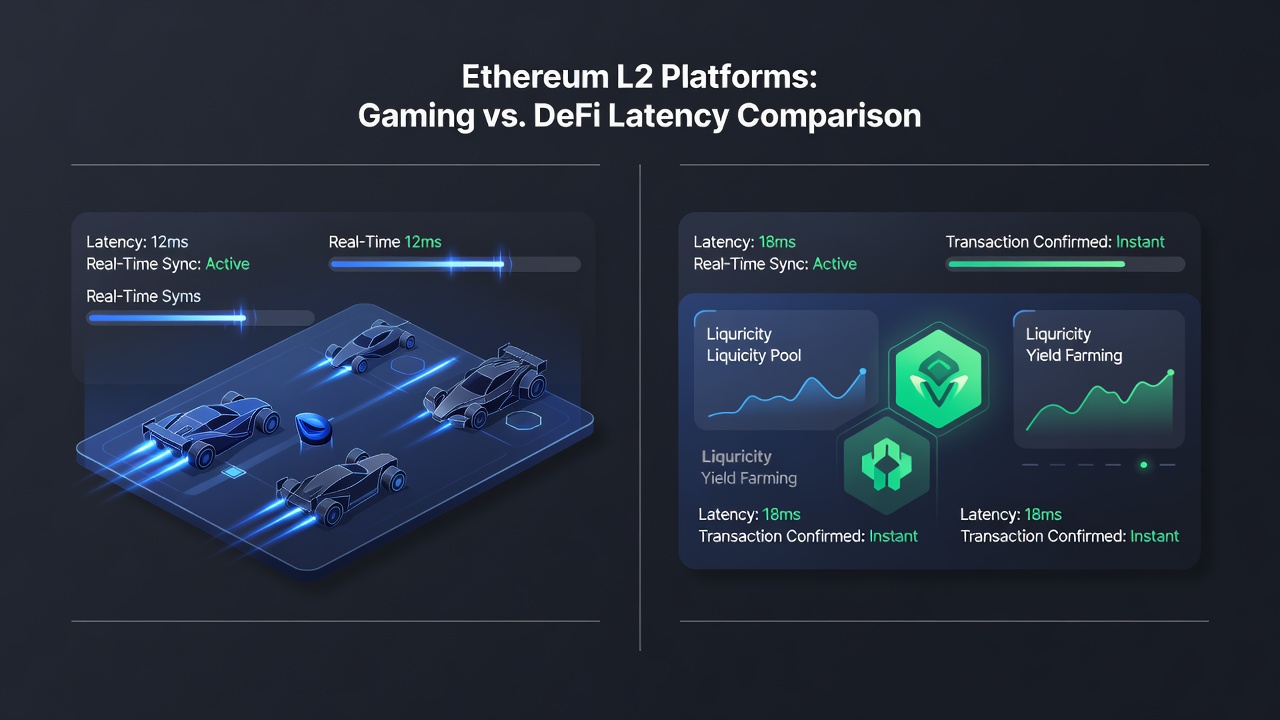
Latency reductions represent one of the most significant advancements in the Ethereum L2 space this year. Modern rollup architectures now achieve sub-second finality through refined sequencing mechanisms and tighter integration with data availability layers. These changes enable applications to process user inputs and reflect state changes almost immediately, often within 100 to 300 milliseconds depending on network conditions.
Developers benefit from enhanced proof aggregation techniques that minimize verification overhead. In practice, this means gaming sessions maintain fluid gameplay loops and DeFi interfaces update order books without lag. Ongoing research into hybrid optimistic and zero-knowledge systems promises even further gains, positioning L2s as viable alternatives to centralized infrastructure for latency-critical workloads. Monitoring tools now provide granular visibility into these metrics, helping teams optimize before deployment.
Key Use Cases in Gaming and Live DeFi
Gaming stands out as a primary driver of real-time L2 adoption. On-chain games featuring dynamic economies and player-versus-player mechanics rely on rapid state transitions to deliver engaging experiences. Titles that incorporate live events, such as tournaments with instant prize distributions, demonstrate how L2s eliminate the friction once associated with blockchain interactions.
In live DeFi, real-time order matching and liquidation engines have matured significantly. Platforms now support continuous trading with price feeds that reflect market movements in near real time. This capability extends to prediction markets where odds adjust dynamically based on incoming data streams. Additional use cases include socialFi applications with instant tipping mechanics and collaborative tools where multiple users edit shared on-chain states simultaneously. Each scenario leverages L2 throughput to maintain responsiveness even under heavy concurrent usage.
Comparisons of Leading L2 Platforms
Selecting the appropriate L2 requires evaluating factors like compatibility, proof systems, and ecosystem maturity. Optimism emphasizes EVM equivalence and has expanded its support for real-time tooling through targeted developer programs. Arbitrum excels in handling complex smart contract logic, with recent sequencer enhancements improving consistency during peak loads. Base has attracted consumer-facing projects thanks to its reliable performance and growing tooling for interactive applications.
zkSync differentiates itself through validity proofs that provide immediate finality, making it suitable for applications where disputes must be resolved without delay. When comparing these options, teams should examine public dashboards for current throughput and latency statistics. For instance, L2Beat offers transparent metrics across ecosystems. Similarly, resources from Ethereum.org provide foundational guidance on choosing scaling solutions. Trade-offs often involve balancing speed against the strength of security assumptions.
- Optimism: Prioritizes developer experience with strong grants for latency-focused tooling and broad EVM compatibility.
- Arbitrum: Ideal for sophisticated DeFi protocols needing robust fraud-proof mechanisms and high reliability.
- Base: Favored for gaming and social apps due to consistent uptime and accessible onboarding for new users.
- zkSync: Best suited for scenarios demanding cryptographic finality without waiting periods.
Developer-Focused Steps for Building Responsive dApps
Creating responsive dApps on Ethereum L2s involves deliberate architectural choices from the outset. Begin by auditing target platforms through testnet experiments to measure real-world latencies under varied conditions. Integrate libraries that support persistent connections for streaming updates rather than relying solely on polling.
- Assess L2 candidates using standardized benchmarks and community reports to align with your application's throughput requirements.
- Design contracts with minimal storage operations and leverage events for efficient client-side synchronization.
- Incorporate optimistic UI updates that anticipate on-chain results while providing rollback mechanisms for rare failures.
- Implement indexing solutions for fast queries on historical and live data without overloading RPC endpoints.
- Conduct stress tests simulating peak user activity to validate performance before mainnet launch.
- Establish ongoing observability with alerts for latency spikes or sequencer issues.
These practices reduce common pitfalls and ensure applications remain fluid across different network states. Additional considerations include gas optimization strategies and fallback paths to alternative L2s if needed.
Recent Project Examples and Performance Benchmarks
Several projects illustrate the practical impact of L2 real-time capabilities in 2026. Multiplayer on-chain games have achieved sustained engagement with thousands of simultaneous participants executing moves that settle rapidly. Decentralized exchanges featuring live perpetual futures demonstrate order book updates that match centralized speeds while preserving transparency. Benchmarks reported across ecosystems indicate average confirmation times frequently below 200 milliseconds during active periods, with some platforms handling over 15,000 transactions per second in controlled evaluations.
These outcomes stem from iterative improvements in data compression and parallel execution environments. Teams behind these projects often share open-source components that accelerate adoption for new builders. By studying their architectures, developers can adapt proven patterns to their own time-sensitive applications.
Conclusion
Ethereum Layer 2 solutions have matured to support sophisticated real-time applications throughout 2026. Through continued focus on latency, thoughtful platform selection, and structured development approaches, creators can deliver experiences that meet modern user standards. The ongoing evolution of these networks reinforces their role in scaling Ethereum for interactive and high-velocity scenarios.
FAQ on Common Integration Hurdles and Optimization Tips
What latency issues commonly arise during L2 integration? Variable sequencer response times can affect consistency; solutions include multiple endpoint fallbacks and client-side prediction layers.
How should developers handle data availability concerns in real-time setups? Prioritize L2s with dedicated availability solutions and implement caching layers to maintain responsiveness during temporary disruptions.
What optimization techniques improve overall dApp performance? Focus on batched transactions, event-driven updates, and regular profiling using tools from established networks like those referenced on Arbitrum's site.
Are there specific testing strategies for time-sensitive features? Yes, simulate concurrent users and monitor end-to-end delays to identify bottlenecks early in the development cycle.

No comments yet. Be the first!