 CryptoChain Blog
Introduction to Ethereum L2 TVL in 2026
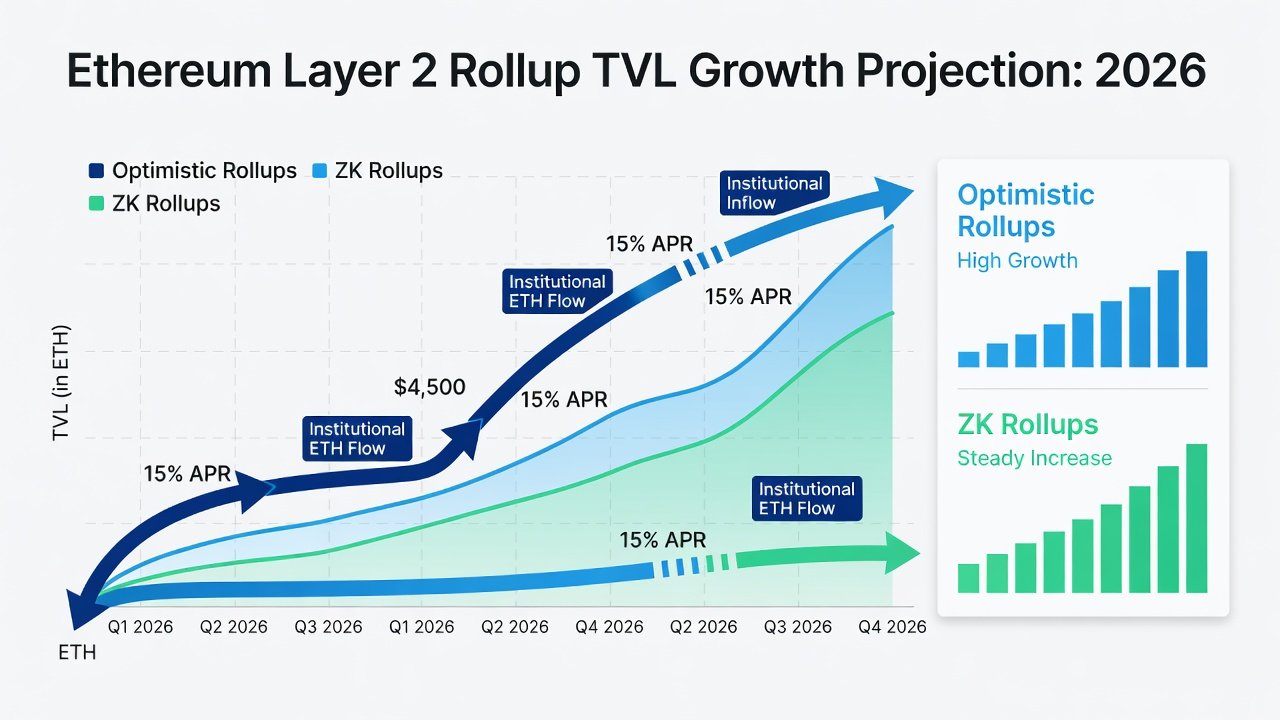
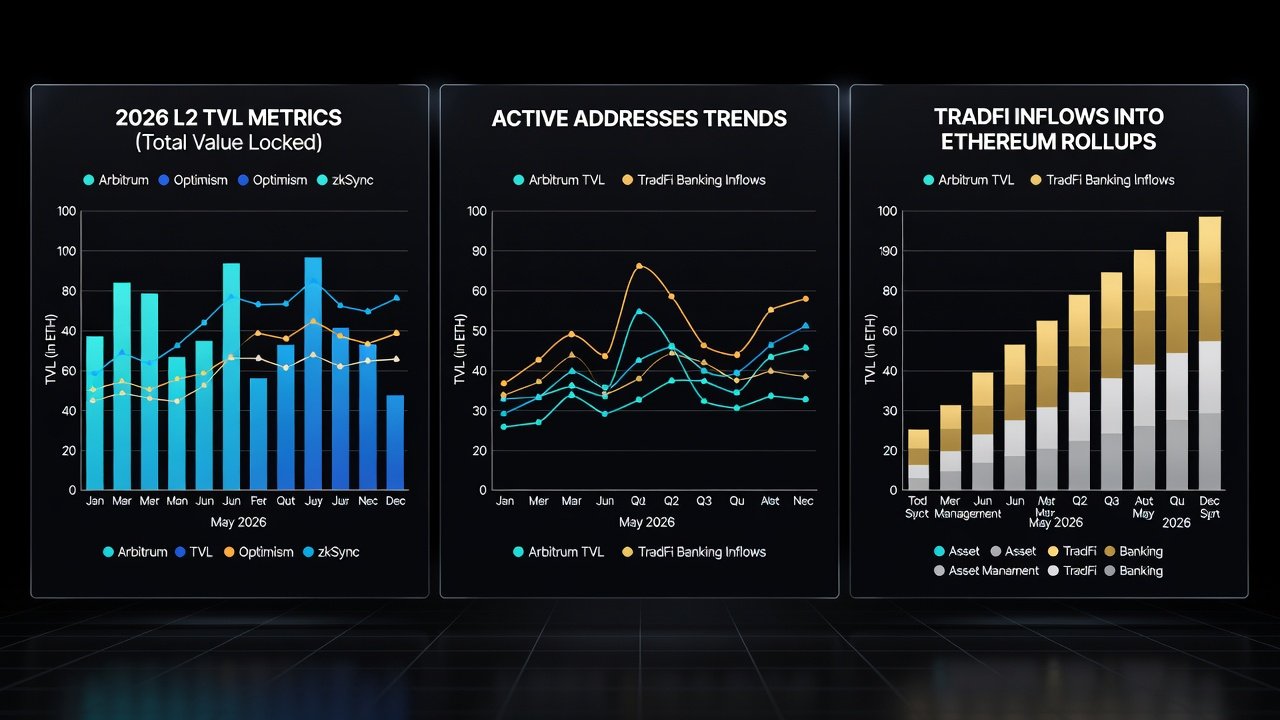
As Ethereum continues its scaling journey, Layer 2 rollups have become the backbone of decentralized finance and institutional adoption. This 2026 analysis examines total value locked (TVL) metrics across leading L2 solutions, drawing from authoritative sources like L2Beat and Dune Analytics. We compare optimistic and zero-knowledge (ZK) rollups, track active addresses, analyze TradFi inflows, and highlight key Ethereum protocol updates driving performance differences. Rollups process transactions off-chain while inheriting Ethereum's security, enabling lower fees and higher throughput. By late 2026, L2 ecosystems host billions in TVL, with institutional players increasingly allocating ETH to these networks for yield, settlement, and DeFi exposure. The shift toward modular blockchain architectures has accelerated this growth, allowing developers to focus on application-specific optimizations rather than base-layer constraints. Investors and institutions now view L2 TVL as a primary indicator of ecosystem health, similar to how market capitalization serves as a benchmark for Layer 1 chains.
TVL Leaders: Benchmarking the Top Rollups
Using data from L2Beat, the leading L2 analytics platform, we rank top performers by TVL. Arbitrum and Optimism remain dominant optimistic rollups, while ZK solutions like zkSync and Starknet show accelerated growth in specific niches such as gaming and privacy-focused DeFi. Beyond raw TVL figures, analysts examine metrics including the percentage of bridged assets, sequencer revenue, and validator participation rates. For instance, Arbitrum often leads in total bridged ETH volume due to its early mover advantage and robust ecosystem of decentralized applications. Optimism has differentiated itself through retroactive public goods funding mechanisms that attract mission-aligned developers. On the ZK side, zkSync has captured attention with its focus on account abstraction and seamless user onboarding, resulting in higher retention rates among retail users who transition to institutional-grade products. Starknet stands out for its Cairo programming language, which enables highly customized smart contracts suited for complex institutional workflows like tokenized securities. These benchmarks illustrate how optimistic rollups prioritize EVM compatibility for broad DeFi migration, whereas ZK rollups excel in scalability for compute-intensive applications. A deeper look at Dune Analytics dashboards reveals that chains with higher TVL concentration also demonstrate more resilient liquidity pools during market volatility periods.
| Rollup | Type | TVL Share | Active Addresses Trend | Key Strength |
|---|---|---|---|---|
| Arbitrum | Optimistic | Leading | Steady institutional inflows | DeFi ecosystem depth |
| Optimism | Optimistic | Strong | Growing developer activity | Public goods funding |
| zkSync | ZK | Rising fast | High in NFT and gaming | Account abstraction |
| Starknet | ZK | Emerging | Privacy-driven adoption | Custom contract logic |
Optimistic vs ZK Rollups: Growth Comparison
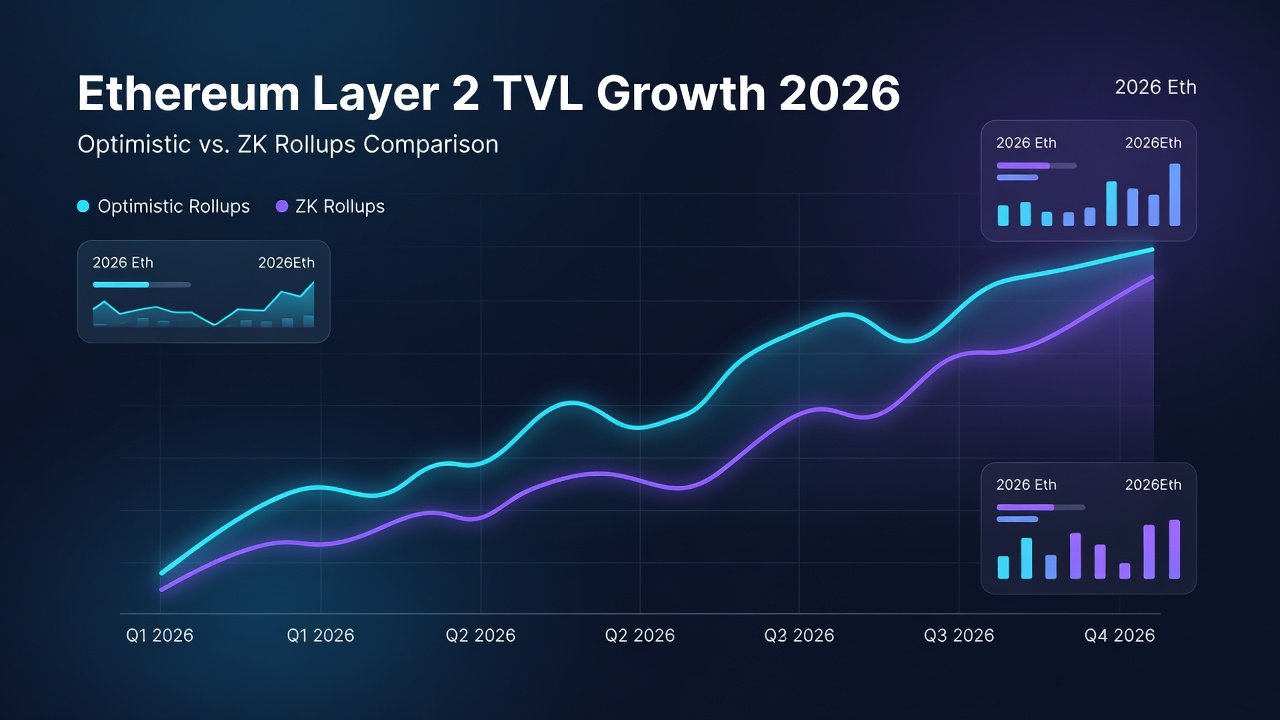
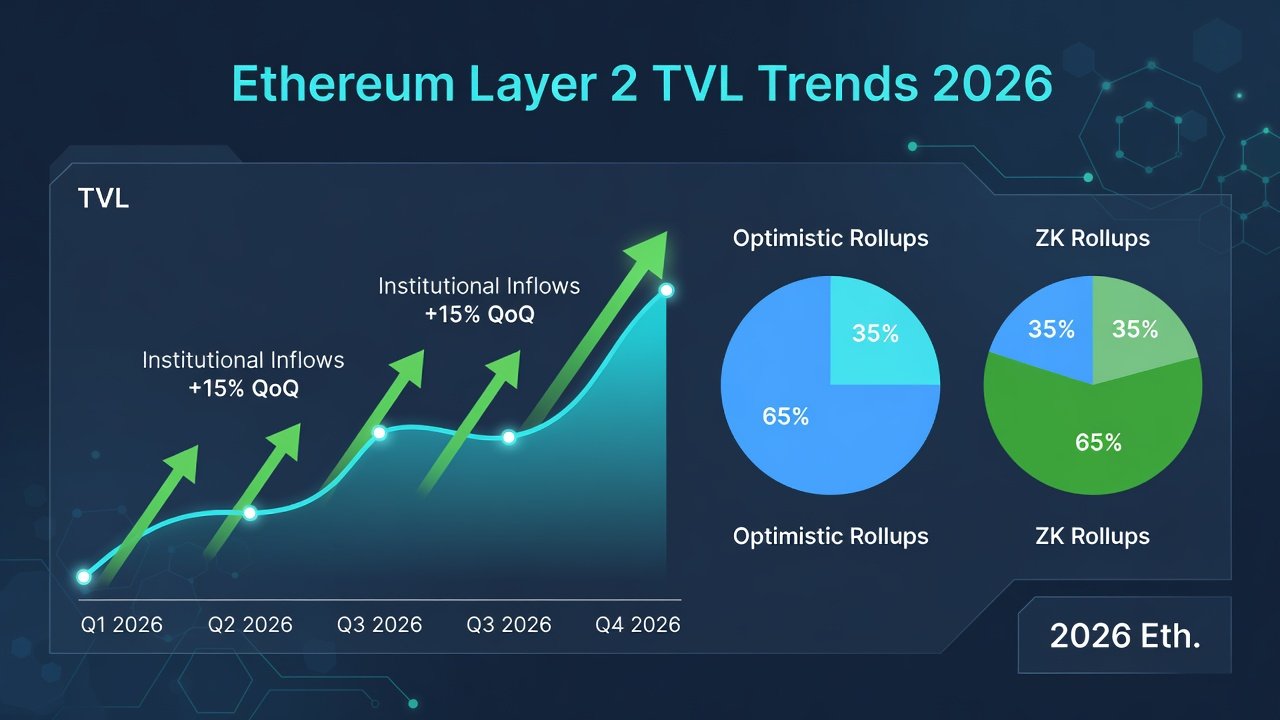
Optimistic rollups like Arbitrum leverage fraud proofs, offering faster deployment but with a challenge period for finality. ZK rollups use validity proofs for immediate finality and enhanced security, attracting institutions wary of disputes. Key metrics from Dune Analytics dashboards reveal ZK rollups posting higher percentage TVL growth in 2026, driven by Ethereum's Dencun upgrade improvements in data availability. Active addresses on ZK networks often spike during high-volume events, while optimistic chains maintain steadier daily usage from established protocols. TradFi inflows favor optimistic solutions for their mature bridging infrastructure, though ZK ecosystems are closing the gap with better interoperability features. When comparing growth trajectories, optimistic rollups benefit from easier migration of existing Ethereum Virtual Machine codebases, allowing protocols like Uniswap and Aave to deploy with minimal adjustments. ZK rollups, however, deliver superior compression of transaction data, which becomes critical as on-chain activity scales into thousands of transactions per second. Institutions evaluating these options often run parallel pilots, testing optimistic chains for high-frequency trading strategies and ZK chains for compliance-heavy applications that require verifiable computation without revealing sensitive data. The performance gap narrows further as both types incorporate shared sequencing layers and cross-rollup messaging standards, creating a more unified liquidity landscape across the Ethereum ecosystem.
Institutional Case Studies and ETH Updates
Several hedge funds and asset managers have deployed ETH on L2s for staking derivatives and yield farming. For example, integrations with Ethereum's post-Dencun blob transactions have reduced costs, boosting institutional participation. Key ETH updates in 2026 include further enhancements to the consensus layer and account abstraction, which improve L2 onboarding. These changes disproportionately benefit ZK rollups by enabling seamless proof verification at scale. Case studies show asset managers using Arbitrum for liquid staking derivatives that integrate directly with traditional settlement systems, while zkSync hosts privacy-preserving vaults that appeal to family offices managing multi-jurisdictional portfolios. Another notable development involves Ethereum's ongoing research into single-slot finality, which promises to reduce L2 withdrawal times and increase capital efficiency for institutional participants. These protocol-level improvements create feedback loops where higher TVL attracts more developers, who in turn build tools that draw additional institutional capital. Monitoring these dynamics requires attention to both on-chain metrics and off-chain signals such as partnership announcements from major financial institutions.
Practical Steps for Tracking Metrics
- Monitor L2Beat for real-time TVL rankings and risk assessments, including detailed breakdowns of native versus bridged assets.
- Use Dune Analytics to query custom dashboards on active addresses and inflow patterns, focusing on wallet cohort analysis for institutional clustering.
- Follow Ethereum core developer calls for protocol update timelines and testnet milestones that could impact L2 performance.
- Track bridge volumes and institutional wallet activity on-chain using explorers integrated with L2-specific indexing services.
- Review quarterly reports from major L2 foundations to understand treasury allocations and ecosystem grant programs driving adoption.
Adoption Trends, Risks, and Emerging Opportunities
2026 trends point to hybrid models where optimistic and ZK rollups interoperate via shared sequencing. Institutions are prioritizing networks with strong compliance tooling and native ETH restaking options. Common mistakes to avoid include ignoring bridge risks or overlooking proof system differences when allocating capital. Emerging opportunities lie in ZK-powered privacy DeFi and optimistic chains expanding into real-world asset tokenization. Additional risks involve sequencer centralization in early-stage rollups and potential regulatory scrutiny around proof verification processes. To mitigate these, sophisticated participants diversify across multiple L2s and maintain contingency plans for forced withdrawals back to Ethereum mainnet. Opportunities also exist in layer-3 application chains built atop L2s, which can capture niche institutional use cases such as supply-chain finance or decentralized identity verification while still settling to Ethereum via the underlying rollup. As the ecosystem matures, the ability to accurately forecast TVL shifts based on upcoming Ethereum hard forks becomes a competitive advantage for portfolio managers.
Conclusion and Key Takeaways
Ethereum L2 TVL in 2026 reflects a maturing ecosystem where data-driven decisions separate leaders from followers. By leveraging L2Beat and Dune Analytics, investors can identify high-growth rollups and capitalize on institutional ETH flows. Focus on protocol updates, compare proof mechanisms, and maintain diversified exposure across optimistic and ZK solutions for balanced risk and reward. Continuous education on new tooling and governance proposals will remain essential for anyone seeking to navigate this rapidly evolving landscape effectively.
No comments yet. Be the first!