 CryptoChain Blog
Introduction to State Channels in Ethereum's 2026 L2 Landscape
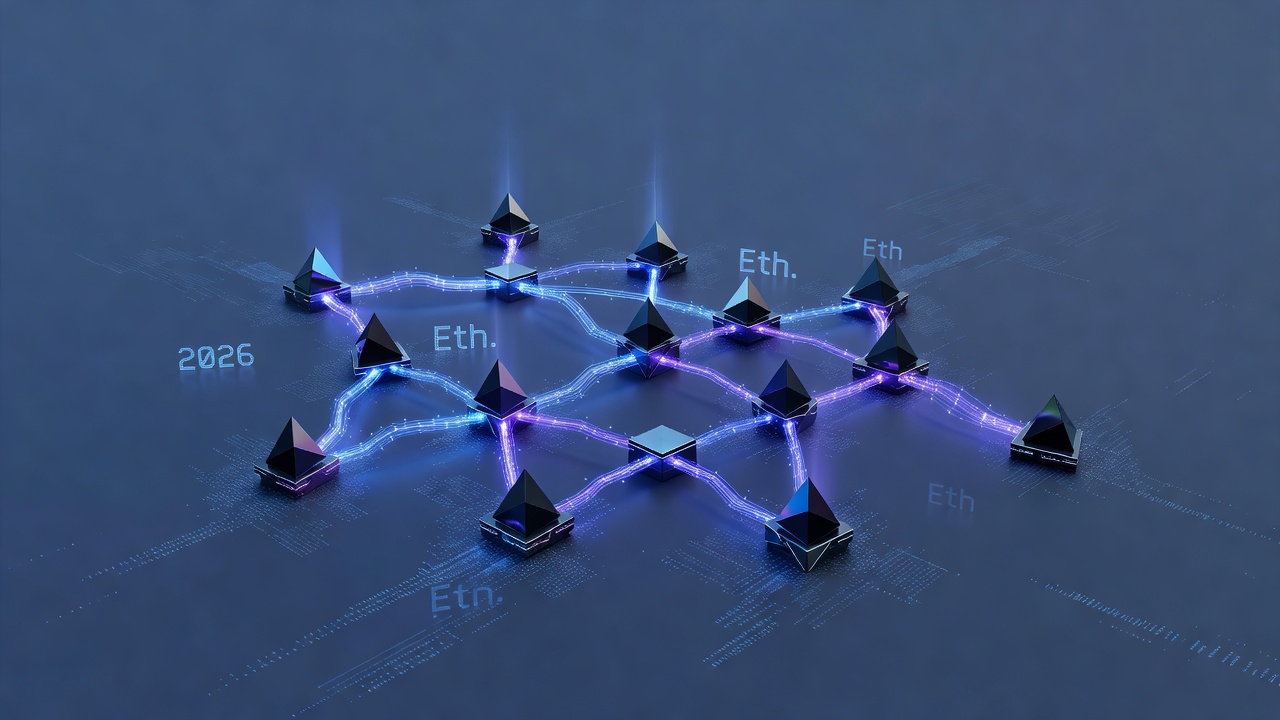
In 2026, Ethereum's Layer 2 ecosystem continues to evolve rapidly, with state channels gaining renewed attention as efficient solutions for high-frequency interactions. While rollups dominate general-purpose scaling, state channels excel in scenarios requiring near-instant finality and minimal on-chain activity. This article explores their role, technical progress, practical applications, and how developers can leverage them alongside existing L2 infrastructure. State channels enable participants to conduct multiple off-chain transactions while only settling the final state on-chain. This approach reduces fees and latency dramatically for use cases like payments and gaming, complementing the security guarantees of rollups. As Ethereum scales through modular designs, understanding state channels becomes essential for building responsive decentralized applications that handle real-time user demands without compromising on security or decentralization principles.
The renewed focus stems from growing demand in sectors requiring thousands of interactions per second, such as decentralized finance micro-lending and blockchain-based gaming economies. By offloading repetitive actions to channels, projects can maintain high throughput while relying on rollups for broader settlement and dispute resolution layers.
How State Channels Complement Rollups for High-Frequency Interactions
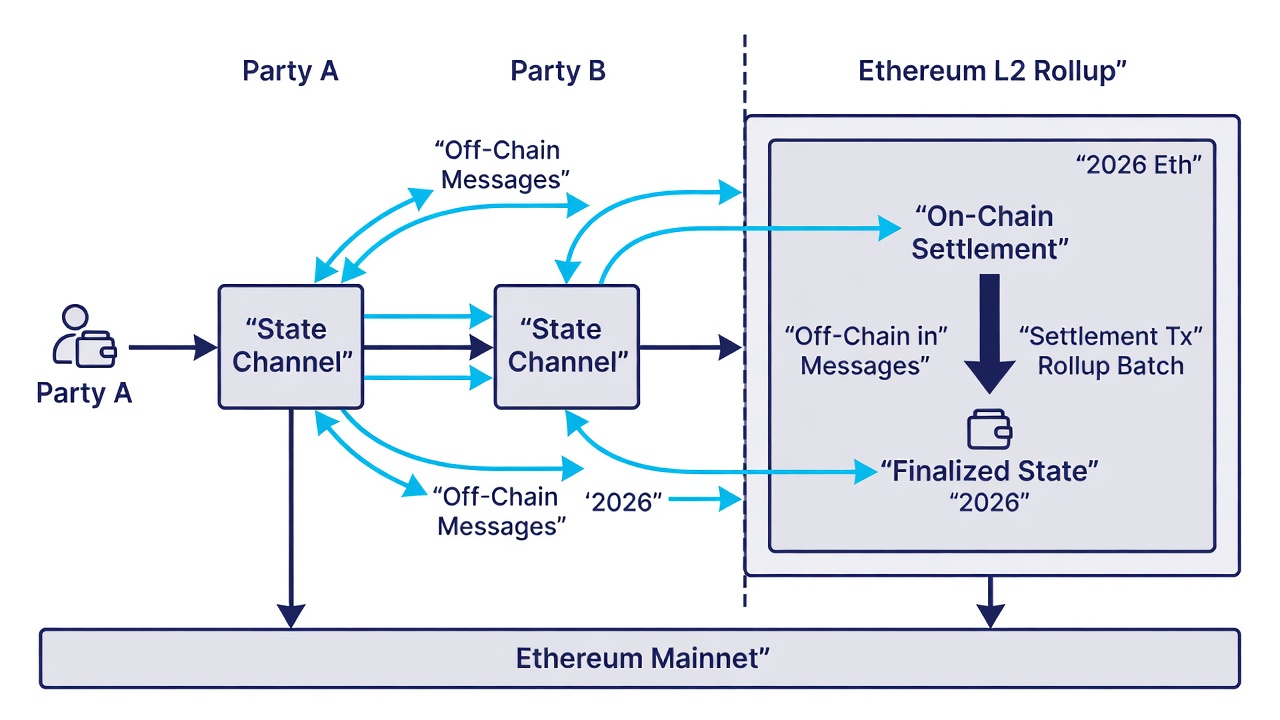
Rollups provide scalable execution environments but still incur some on-chain costs for every batch. State channels, by contrast, allow participants to lock funds in a multisig contract and exchange signed messages off-chain. Only disputes or final settlements touch the blockchain. In 2026, hybrid architectures are emerging where rollups handle complex logic and state channels manage repetitive micro-interactions. This synergy supports applications needing thousands of transactions per second without congesting the main network. Ethereum Foundation resources highlight ongoing research into these layered approaches, emphasizing how channels reduce the data load on rollup sequencers.
Developers often combine the two by opening channels on top of an L2 like Arbitrum or Optimism. The rollup ensures the channel contract's integrity, while the channel itself processes updates instantaneously. This layered model prevents bottlenecks during peak usage periods and allows for more predictable user experiences in applications where delays can lead to lost opportunities.
Technical Advancements: Improved Dispute Resolution
Recent protocol upgrades have refined dispute mechanisms. New virtual channel constructions reduce the need for on-chain challenges by using nested channels and optimistic assumptions. Watchtowers and automated responders now handle disputes more reliably, lowering the risk of fund loss due to offline participants. Key improvements include shorter challenge periods and enhanced fraud proofs that integrate with L2 sequencers. These changes make state channels viable for mainstream adoption in payments and decentralized finance micro-transactions. Additional advancements involve better cryptographic commitments and multi-party channel designs that support more than two participants without exponential complexity growth.
These technical refinements address historical limitations, making channels more robust against adversarial behaviors. Integration with zero-knowledge elements further strengthens verification without requiring full on-chain data availability for every update.
Practical Applications in Payments and Microtransactions
State channels shine in payment networks where users exchange value frequently. Examples include streaming micropayments for content or real-time settlement in DeFi protocols. In gaming, they enable instant item trades without waiting for rollup confirmations. Developers report smoother user experiences when combining channels with optimistic rollups for final settlement. This setup supports use cases previously limited by gas costs or latency, such as live auction systems or subscription-based services on-chain. Another emerging application involves cross-border remittances where small, frequent transfers benefit from near-zero fees after initial setup.
Real-time data feeds and oracle integrations can also leverage channels for continuous updates, ensuring that price or event data reaches participants without repeated on-chain writes. This expands utility beyond simple payments into dynamic smart contract interactions.
Protocol Comparisons and Integration Examples
- Connext vs. Legacy Raiden-style channels: Connext offers better interoperability across L2s with virtual channels, while older designs focus on simple bidirectional payments and require more manual management for multi-hop transfers.
- Integration with Optimism and Arbitrum: State channels can be deployed as smart contracts on these rollups, allowing off-chain interactions that settle back to the L2 while benefiting from the rollup's data availability and fraud proof systems.
- Comparison with Plasma and Validium: Channels provide stronger instant finality guarantees compared to exit-game mechanisms in older sidechain designs, reducing user friction during withdrawals or disputes.
Integration examples include bridging channel liquidity through existing L2 bridges for seamless cross-network transfers. L2Beat dashboards track related projects and their security assumptions, helping teams evaluate trade-offs between throughput, trust models, and composability with other protocols.
Real-World Deployment Case Studies
One notable 2026 pilot involves a European payment processor using state channels on Arbitrum for instant merchant settlements. Participants locked collateral and exchanged thousands of micro-payments daily, settling only net balances weekly. This resulted in over 99% of transactions occurring off-chain, dramatically improving speed for end users. Another case study from a Web3 gaming studio demonstrates reduced latency in player-vs-player economies by routing trades through channels, enabling real-time asset swaps during live events without rollup batch delays.
Additional deployments in decentralized social platforms show channels handling tipping and content monetization at scale, where users perform hundreds of small interactions per session. These examples illustrate how state channels deliver measurable improvements in throughput and cost efficiency compared to pure rollup solutions, particularly when user retention depends on responsive interfaces.
Step-by-Step Guidance for Basic State Channel Setup
- Deploy a multisignature wallet contract on your chosen L2 (e.g., Arbitrum or Optimism) to hold participant funds, ensuring the contract includes robust access controls and event logging for transparency.
- Define channel parameters including timeout periods and dispute logic in the smart contract, incorporating checks for valid state transitions to prevent invalid updates from being accepted.
- Participants sign off-chain messages updating balances according to agreed rules, using standardized message formats that include nonces and signatures to avoid replay attacks.
- Implement a monitoring service or integrate with a watchtower to watch for disputes, with automated responses that can submit the latest valid state if a malicious close attempt occurs.
- Close the channel by submitting the final signed state to the contract for on-chain settlement, verifying all signatures and balances before finalizing to maintain correctness.
- Test edge cases such as offline participants and invalid state submissions in a testnet environment, simulating network partitions and adversarial actions to validate resilience.
Always audit contracts thoroughly and start with small amounts during initial testing. Consider using established libraries for signature verification to reduce implementation errors.
Common Challenges and How to Address Them
Offline participants remain a risk, mitigated by reliable watchtowers and incentive mechanisms that reward responders. Liquidity fragmentation across multiple channels requires careful channel management strategies, such as hub-and-spoke models or liquidity pooling contracts. Developer tooling has improved but still lags behind rollup frameworks, necessitating custom monitoring solutions and integration with existing L2 indexers. Security audits and gradual rollouts help avoid common pitfalls like improper dispute handling or insufficient timeout configurations. Teams should also plan for channel rebalancing to maintain sufficient capacity without frequent on-chain interventions.
Security Models and Trust Assumptions
State channels operate under specific trust assumptions, primarily relying on the honesty of at least one participant or an external watchtower during disputes. In 2026, enhanced models incorporate economic incentives and slashing conditions to deter misbehavior. Developers must evaluate these assumptions against their threat models, especially when integrating with rollups that provide additional settlement guarantees. Regular security reviews and formal verification of channel contracts are recommended to ensure long-term viability.
FAQ: Scalability Benefits and Future ETH Developments
What scalability benefits do state channels offer in 2026?
They enable unlimited off-chain transactions with only two on-chain interactions per channel lifecycle, drastically cutting costs for repetitive interactions while inheriting L2 security and reducing overall network load.
How do state channels fit into upcoming Ethereum roadmap updates?
Future upgrades emphasize modular scaling where channels handle high-frequency layers and rollups manage general computation, aligning with ongoing research at the Ethereum Foundation and supporting more efficient resource allocation across the ecosystem.
Are state channels suitable for investors evaluating ETH infrastructure?
Yes, they represent an important complementary technology that could drive adoption in payments and gaming verticals, supporting broader ecosystem growth and enhancing Ethereum's overall value proposition through improved usability.
What developer resources are available for building with state channels?
Communities around projects like Connext provide documentation, testnet environments, and open-source templates that accelerate development while ensuring compatibility with major L2 platforms.
Conclusion
State channels in Ethereum's 2026 L2 ecosystem provide targeted solutions for high-frequency use cases that rollups alone cannot optimize. With advancing dispute resolution, practical integrations, and clear implementation paths, they are poised to play a significant role in expanding Ethereum's utility. Developers and projects exploring these tools should prioritize security best practices and hybrid architectures for maximum impact.

No comments yet. Be the first!