 CryptoChain Blog
Introduction to Ethereum L2 Token Standards in 2026
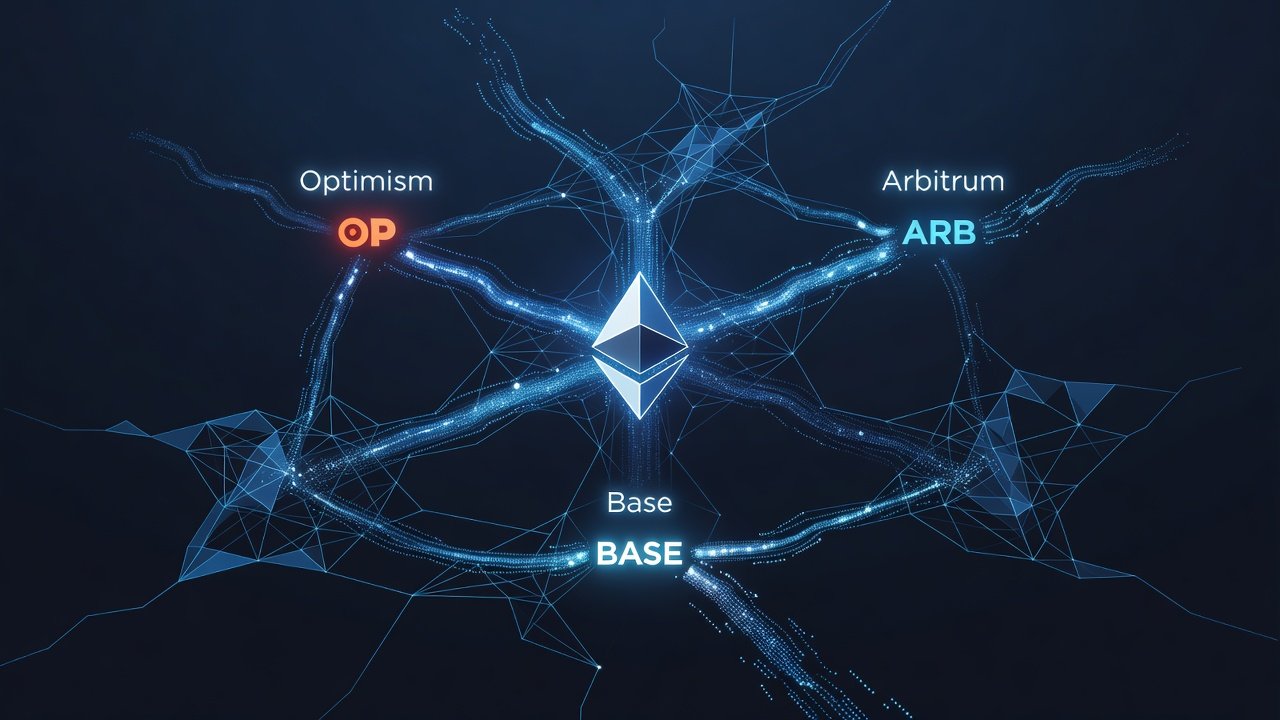
As Ethereum continues its evolution into a more scalable ecosystem in 2026, Layer 2 solutions have become the primary focus for developers building decentralized applications. Token standards such as ERC-7824 and its emerging variants are fundamentally changing how digital assets are represented, transferred, and managed across networks. This comprehensive guide provides actionable comparisons of leading L2 token standards, with a specific focus on bridging efficiency, gas cost differences, and fee abstraction benefits across Optimism, Arbitrum, and Base. Readers will gain insights from recent TVL and transaction data trends, along with a detailed migration checklist for developers transitioning from Ethereum L1. Real-world launch examples, common pitfalls, and TradFi integration opportunities are also covered to support practical implementation decisions.
The search for actionable ETH updates and L2 implementation strategies often leads teams to seek concrete metrics rather than high-level overviews. ERC-7824 addresses longstanding challenges in cross-chain interoperability by embedding native support for abstracted fees and optimized messaging protocols. Understanding these advancements requires examining how each L2 chain adapts the standard to its unique architecture.
Understanding ERC-7824 and Emerging Variants in Detail
ERC-7824 builds upon previous token standards by introducing enhanced metadata fields that facilitate seamless interactions between L1 and L2 environments. It supports batch operations and meta-transactions that reduce the need for direct ETH holdings during routine activities. Emerging variants add layers such as conditional settlement logic and enhanced privacy through zero-knowledge commitments. These features make the standard particularly suitable for high-volume applications like decentralized exchanges and lending protocols. Developers benefit from standardized interfaces that minimize custom code requirements when deploying across multiple L2s. The standard also promotes better composability, allowing tokens to interact predictably with bridges and oracles without extensive modifications.
Bridging Efficiency Across Optimism, Arbitrum, and Base
Bridging efficiency determines how quickly and securely tokens move between Ethereum mainnet and L2 networks. ERC-7824 implementations on Optimism utilize optimistic rollup finality to achieve rapid deposit confirmations, often completing in minutes under normal conditions. Arbitrum employs a fraud-proof system that prioritizes security over speed, resulting in slightly longer but highly reliable bridging windows. Base, with its close integration to Coinbase infrastructure, provides streamlined user on-ramps that simplify the initial deposit process through familiar fiat channels. Ethereum.org documentation highlights how standardized token events improve bridge compatibility across these platforms. Transaction patterns observed in recent months demonstrate that networks adopting updated ERC-7824 variants experience fewer failed bridge attempts and reduced user wait times during peak congestion.
Gas Cost Differences and Fee Abstraction Benefits
Gas optimization remains a central advantage of modern L2 token standards. Fee abstraction enables users to pay transaction costs directly in the token being transferred, eliminating the friction of maintaining separate ETH balances for gas. On Base, this capability has proven especially valuable for consumer applications where users expect seamless experiences similar to traditional web services. Arbitrum and Optimism deliver comparable reductions in operational overhead, though the exact savings depend on implementation choices such as batch size and settlement frequency. Qualitative evaluations show that ERC-7824 variants consistently lower per-transaction costs compared to legacy standards, particularly when networks face elevated activity levels. Developers can further optimize by configuring abstraction parameters to match expected usage patterns, leading to more predictable budgeting for application maintenance.
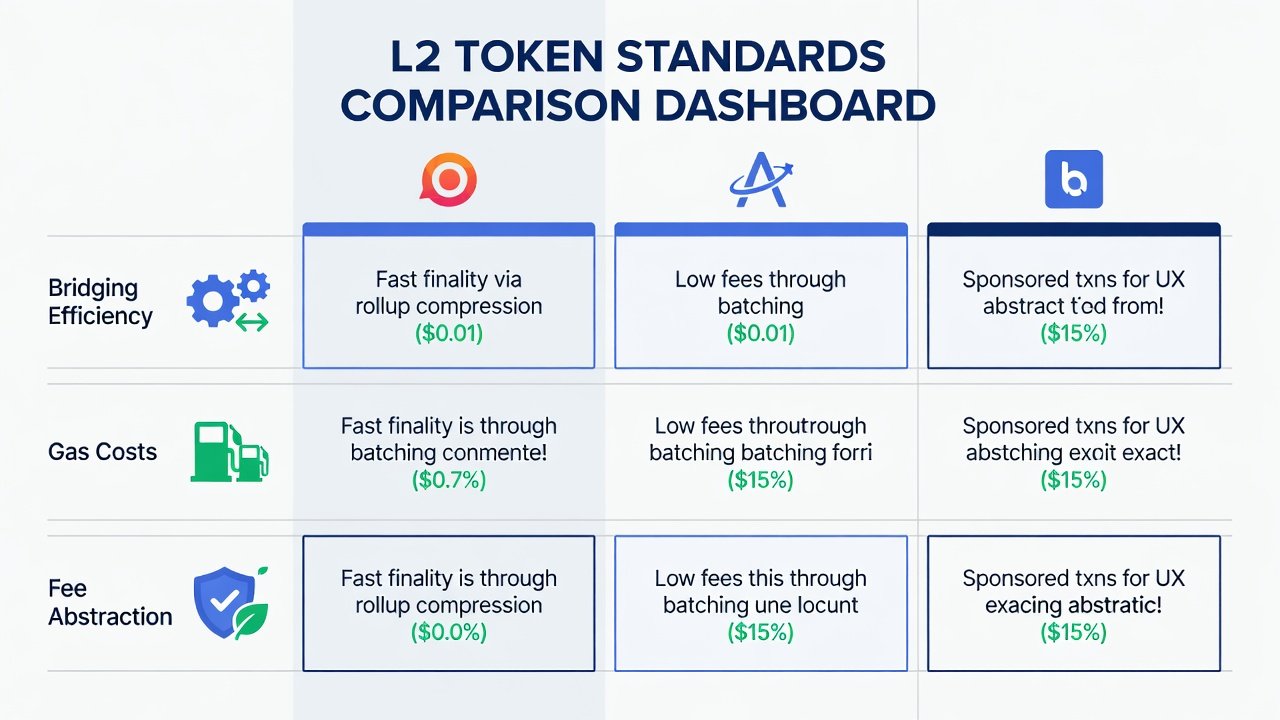
Side-by-Side Metrics and Performance Insights
Comparative analysis of the three chains reveals distinct strengths. Optimism often leads in bridging speed due to its optimistic assumptions, while Arbitrum provides stronger security assurances through its challenge period design. Base stands out for user experience, with reduced onboarding steps that appeal to new participants entering the ecosystem. TVL growth has been notably stronger on chains fully supporting advanced token standards, as liquidity providers favor environments with reliable bridging and low friction. Transaction volume data indicates sustained increases when fee abstraction is enabled, reflecting higher user retention. These metrics help teams prioritize which L2 aligns best with their application requirements.
Step-by-Step Migration Checklist for Developers
Moving from L1 to L2 using ERC-7824 requires careful planning. Begin by auditing existing token contracts to identify any custom logic that may conflict with the new standard interfaces. Next, evaluate target networks based on bridging speed needs and fee abstraction support, selecting Optimism for speed-focused projects or Arbitrum for security emphasis. Implement fee abstraction using official SDKs provided by each chain, ensuring meta-transaction flows are thoroughly tested in testnet environments. Update all frontend components to handle abstracted payments gracefully, and conduct end-to-end bridging simulations to catch edge cases. After mainnet deployment, monitor transaction volumes and gas usage closely to fine-tune parameters. Finally, document all changes and prepare rollback procedures in case of unexpected behavior. This structured approach minimizes downtime and ensures a smooth transition.
Real-World Examples of Successful Launches
Multiple projects have demonstrated the benefits of ERC-7824 adoption. A prominent DeFi lending protocol on Arbitrum achieved faster user onboarding and higher engagement after integrating fee abstraction. An NFT marketplace deployed on Base reported improved retention rates thanks to simplified bridging from mainnet, allowing collectors to move assets with minimal friction. Arbitrum.io and Optimism.io case studies show similar patterns of increased activity following standard upgrades. These examples underscore the importance of aligning token implementation with each chain's core advantages.
Common Pitfalls to Avoid During Implementation
Teams frequently encounter issues when overlooking differences in withdrawal finality windows between optimistic and other rollup designs. Incomplete testing of fee abstraction can result in users facing unexpected payment failures. Another common mistake involves neglecting network-specific deployment requirements, leading to compatibility problems with bridges. Thorough documentation review and staged rollouts help avoid these setbacks.
TradFi Integration Angles and Future Outlook
Traditional finance entities exploring Ethereum L2 opportunities appreciate the consistency provided by ERC-7824. Fee abstraction simplifies treasury management, while efficient bridging supports use cases such as cross-border payments and settlement. Base.org continues to foster partnerships that bridge institutional requirements with decentralized infrastructure. Looking ahead, these standards are expected to further influence how scalable applications are built and adopted.
Conclusion
ERC-7824 and its variants mark significant progress for Ethereum L2 ecosystems in 2026. By applying the practical comparisons and migration guidance outlined above, development teams can select and implement standards that enhance efficiency, reduce costs, and improve overall user experience on Optimism, Arbitrum, and Base.
FAQ on Compliance and Scalability Impacts
How do these standards affect regulatory compliance? Standardized event emissions create clearer audit trails that support KYC and AML requirements for institutional participants.
What scalability gains can developers expect? Networks report sustained throughput improvements when incorporating batching and abstraction features into token designs.
Are there notable risks in the migration process? Primary risks involve bridge security and contract upgrade paths; comprehensive testing and monitoring substantially reduce exposure.
How does fee abstraction influence user adoption? By removing the need for separate gas tokens, applications become more accessible to newcomers unfamiliar with wallet management.
No comments yet. Be the first!