 CryptoChain Blog
Introduction to Ethereum Layer 2 Scaling in 2026
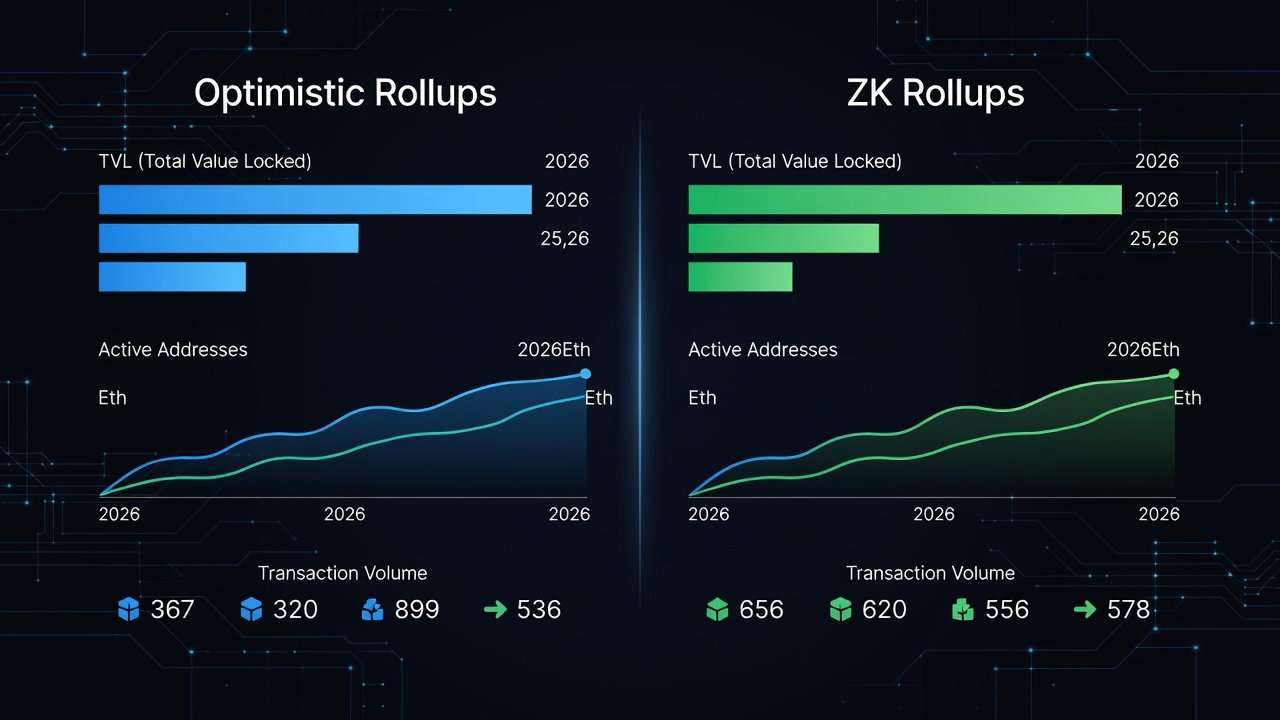
Ethereum continues to dominate the blockchain landscape through its Layer 2 solutions, which handle the bulk of decentralized activity while inheriting the security of the mainnet. In 2026, total value locked (TVL) across L2s reflects maturing infrastructure, with both Optimistic and ZK rollups competing for DeFi and TradFi adoption. This article breaks down the latest metrics from authoritative sources to help investors and developers understand which networks lead in key areas such as daily active addresses, transaction volumes, and institutional inflows. Understanding these trends is crucial for anyone evaluating scaling solutions, as TVL alone does not tell the full story of network health or future potential.
Optimistic rollups like Optimism and Arbitrum rely on fraud proofs, offering simpler implementation but longer withdrawal periods. ZK rollups such as zkSync and Starknet use zero-knowledge proofs for instant finality and enhanced privacy. Data from L2Beat and Dune Analytics shows divergent growth patterns as of late 2026, highlighting how each approach addresses different user needs in the ecosystem.
Current TVL Landscape Across Leading L2 Networks
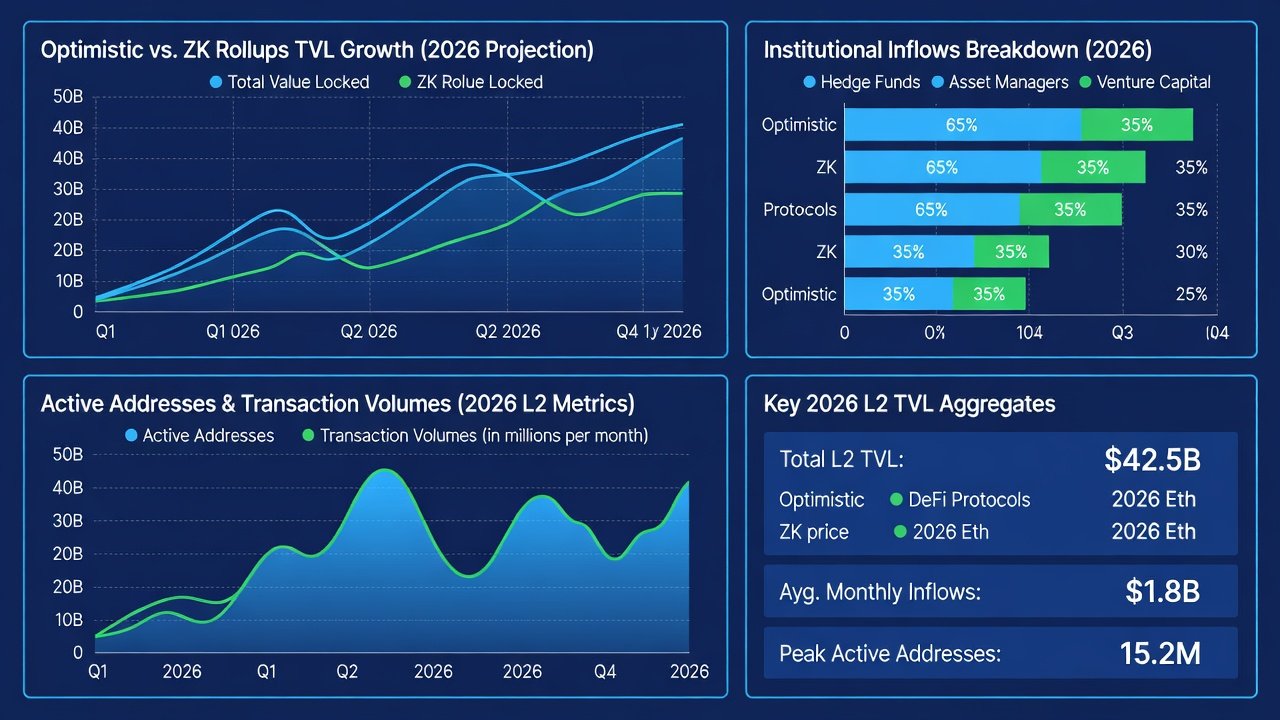
As of October 2026, Ethereum L2 TVL has stabilized around multi-billion-dollar levels with ZK solutions gaining ground on established Optimistic chains. Leading networks include Arbitrum, Optimism, Base, zkSync Era, and Polygon zkEVM. Metrics highlight that while Optimistic rollups still hold a slight TVL edge in established DeFi protocols, ZK rollups excel in transaction efficiency and institutional interest. Ecosystem grants from foundations and token incentive programs continue to play a major role in attracting liquidity, but sustainable growth now depends more on organic usage and developer activity.
Key factors driving TVL include token incentives, ecosystem grants, and integration with traditional finance platforms. Institutional inflows have accelerated, particularly into ZK networks due to their scalability advantages for high-frequency trading and compliance features. Cross-referencing multiple dashboards reveals that bridged assets can inflate TVL figures, so analysts often focus on native asset distribution for a clearer picture of true economic activity.
Optimistic Rollups: Strengths and Performance Metrics
Optimistic rollups prioritize ease of EVM compatibility, making them popular for rapid DeFi deployment. Arbitrum leads with strong daily active addresses and robust transaction volumes in perpetual futures and lending protocols. Optimism has focused on governance upgrades and Superchain expansion, boosting cross-chain activity across its growing network of chains. Base, built on Optimism technology, has captured significant user growth through seamless onboarding experiences tied to major consumer applications.
Practical example: Arbitrum's ecosystem supports major protocols like GMX and Uniswap, correlating high TVL with real usage. However, the seven-day withdrawal window remains a drawback for users seeking immediate liquidity, often pushing traders toward faster alternatives during volatile market periods. Recent upgrades have improved sequencer performance, leading to more consistent transaction throughput even during peak demand. Developers appreciate the mature tooling and large existing user base, which lowers the barrier for launching new applications compared to newer ZK environments.
ZK Rollups: Advantages in Efficiency and Adoption
ZK rollups deliver superior scalability through validity proofs, resulting in lower fees and faster confirmations. zkSync Era and Starknet have seen notable growth in active addresses and on-chain volumes, particularly in gaming and payments sectors. These networks attract institutional players due to better privacy and auditability. Polygon zkEVM has also carved out a niche by offering EVM equivalence alongside ZK security guarantees, appealing to teams migrating from Ethereum mainnet.
Recent trends show ZK solutions capturing increasing market share in TVL as proof generation costs decline. Ethereum.org documentation emphasizes ZK's role in future scaling roadmaps, noting how these proofs enable more complex computations without compromising decentralization. In practice, this translates to smoother experiences for high-volume applications like decentralized exchanges handling thousands of trades per minute. Institutional inflows often favor ZK networks when compliance reporting and verifiable computation become priorities, as the cryptographic assurances reduce counterparty risks in large-scale deployments.
Side-by-Side Metrics Comparison
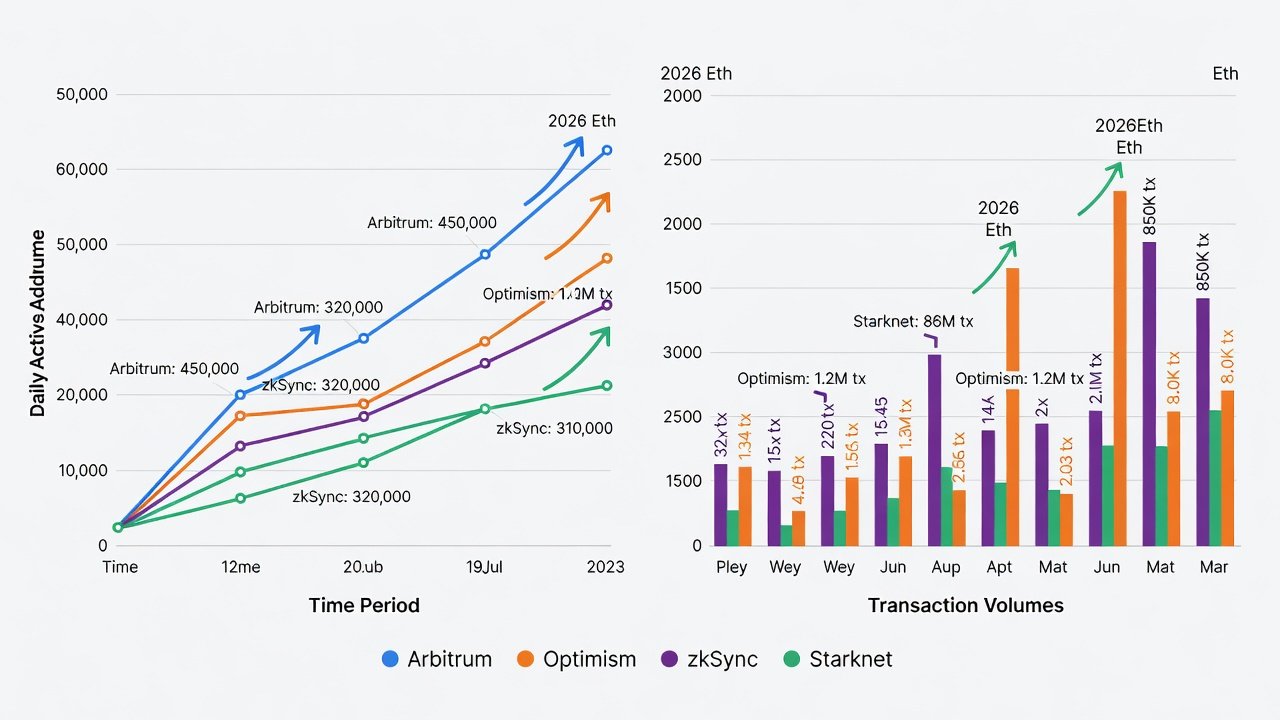
Comparing key indicators reveals clear patterns across the two rollup types. Daily active addresses tend to favor Optimistic chains like Base during onboarding campaigns, yet ZK networks demonstrate faster month-over-month growth in developer-driven activity. Transaction volumes provide another lens: ZK rollups frequently process higher throughput with lower per-transaction costs, especially beneficial for micro-transactions and gaming economies.
Institutional inflows correlate strongly with ZK ecosystems in recent quarters, driven by partnerships in tokenized real-world assets and structured products. For instance, networks with advanced proof systems show tighter integration with traditional settlement rails. When examining these metrics together, a strong correlation emerges between sustained high active addresses and resilient TVL during market downturns, suggesting usage quality matters more than headline TVL numbers alone.
Growth Forecasts and Sector Leadership
Analysts project continued TVL expansion through 2027, with ZK rollups potentially overtaking Optimistic TVL dominance in specific verticals like tokenized assets. Leading L2s in DeFi remain Arbitrum and Optimism, while ZK solutions dominate in emerging sectors such as decentralized identity and AI-integrated applications. Forecasts also point to increased interoperability between rollup types via shared sequencing and bridging standards, which could further accelerate overall ecosystem growth.
Practical takeaways include monitoring correlations between active addresses and TVL sustainability—high TVL without corresponding usage often signals speculative bubbles that deflate quickly. For investment decisions, prioritize networks with diversified ecosystems and transparent on-chain data via Dune dashboards. Sector-specific leadership shows Optimistic rollups excelling in lending and derivatives, whereas ZK networks lead in payments and privacy-focused DeFi primitives.
Common Mistakes to Avoid When Evaluating L2 Metrics
- Over-relying on raw TVL without adjusting for bridged assets or temporary incentive programs that may not reflect long-term commitment.
- Ignoring withdrawal times and security assumptions unique to each rollup type, which can significantly impact user experience during stress events.
- Failing to cross-reference multiple data sources for accurate volume figures, leading to skewed perceptions of network performance.
- Neglecting the impact of ecosystem grants on short-term metrics while overlooking organic developer retention rates.
FAQ: Interpreting TVL for Investment Decisions
What does TVL really indicate about an L2's health?
TVL measures locked capital but must be paired with usage metrics like active addresses to gauge genuine adoption rather than temporary incentives that may disappear after campaigns end.
How do Optimistic and ZK rollups differ in risk profiles?
Optimistic rollups carry fraud-proof risks during challenge periods, whereas ZK rollups provide cryptographic guarantees but may face higher initial complexity in proof generation and verification.
Which metrics best predict future TVL growth?
Transaction volumes and institutional inflows often serve as leading indicators, especially when tracked over 30-90 day windows using tools like Dune Analytics for granular on-chain insights.
Should investors focus more on TVL or active addresses?
Both matter, but active addresses provide better signals of real utility and retention, helping distinguish between hype-driven TVL spikes and sustainable network effects.
Conclusion
Ethereum L2 evolution in 2026 underscores the complementary strengths of Optimistic and ZK rollups. By analyzing detailed metrics from L2Beat and Dune, stakeholders can identify opportunities aligned with DeFi utility or TradFi integration. Continued monitoring of these indicators, combined with awareness of common evaluation pitfalls, will be essential for navigating the scaling landscape effectively and making informed decisions in a rapidly maturing market.
No comments yet. Be the first!