 CryptoChain Blog
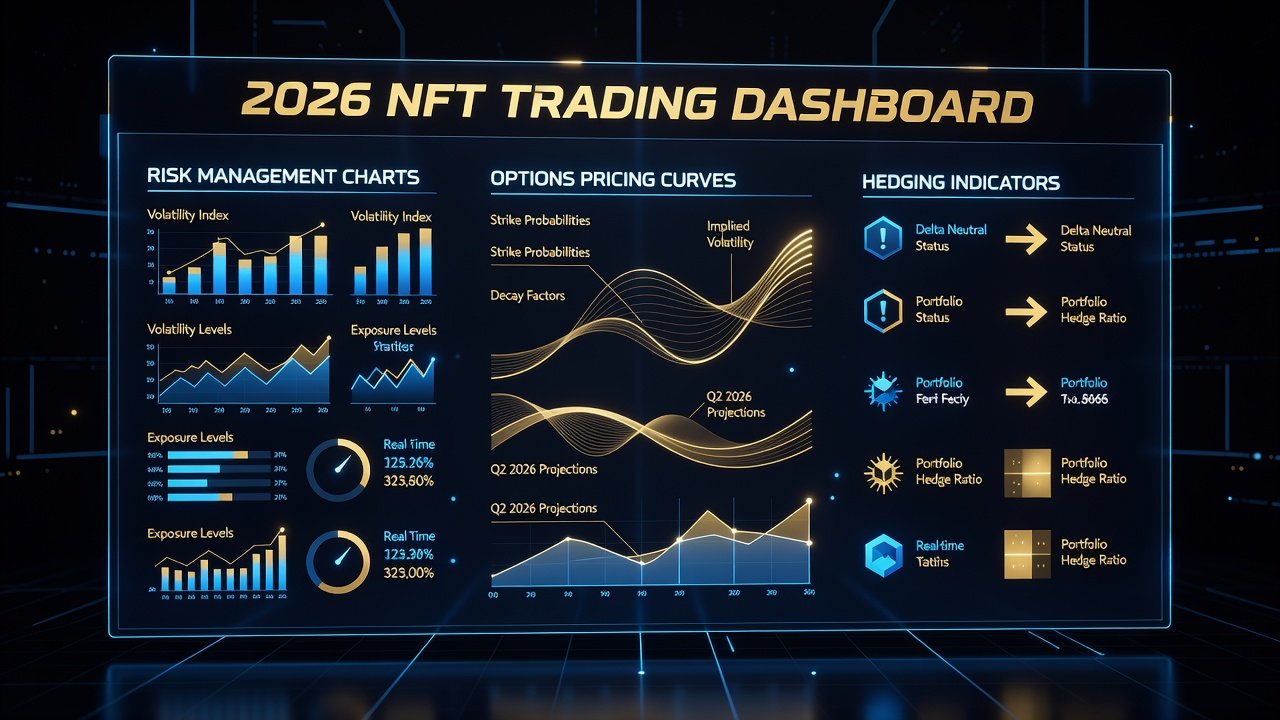
Introduction to NFT Derivatives in 2026
The NFT market has evolved significantly by 2026, with derivatives offering sophisticated tools for traders seeking leverage, hedging, and speculation beyond spot ownership. NFT derivatives encompass options, futures, and perpetual contracts tied to non-fungible assets or their indices, allowing participants to manage exposure without holding underlying tokens. This article explores advanced strategies, emphasizing risk management frameworks and execution tactics for sustainable participation. Traders now face heightened volatility from macroeconomic shifts and regulatory developments, making structured approaches essential for long-term success. Understanding these instruments starts with recognizing how they differ from traditional crypto derivatives while sharing core mechanics like margin trading and settlement processes.
Mechanics of NFT Options, Futures, and Perpetuals
Options provide the right but not obligation to buy or sell an NFT derivative at a strike price by expiration. Call options profit from rising NFT index values, while puts protect against declines. Futures contracts obligate settlement at a future date based on an NFT index price, enabling both long and short positions with defined expiration. Perpetual contracts, lacking expiration, use funding rates to align with spot markets through periodic payments between long and short holders. These instruments enable precise positioning in volatile NFT sectors like digital art and collectibles. For instance, a trader might use a perpetual contract on a blue-chip NFT index to maintain exposure during illiquid spot market periods. Mechanics also involve oracle feeds for accurate pricing and smart contract execution on platforms supporting Ethereum or alternative layer-2 solutions. Mastering these requires familiarity with concepts such as delta hedging and implied volatility surfaces specific to NFT underlyings.
Leading Platform Comparisons
Major exchanges in 2026 support NFT derivatives with varying liquidity, fees, and security features. Traders should evaluate order book depth, margin requirements, and supported assets. Key platforms include those integrated with established blockchain ecosystems for seamless execution. Comparisons often highlight differences in supported indices, such as those covering PFPs versus generative art collections. Security audits, insurance funds, and withdrawal speeds further differentiate providers. 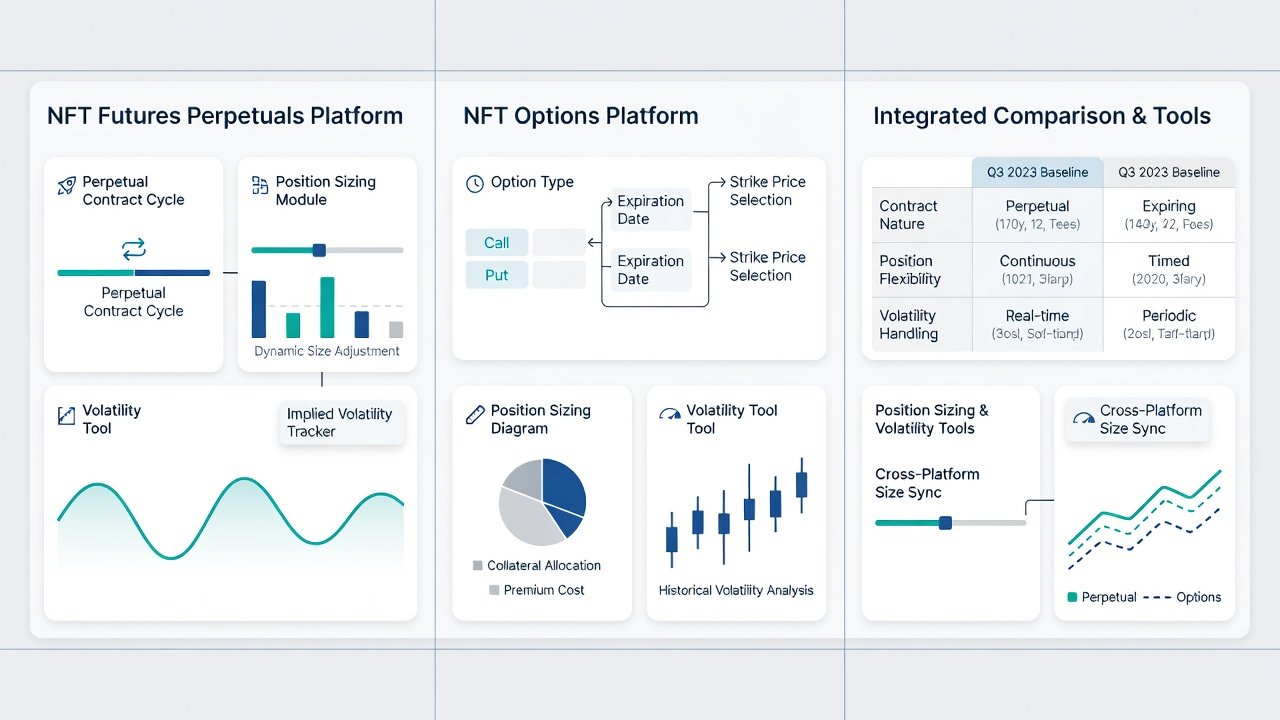
Risk Assessment Frameworks
Effective risk management begins with volatility analysis and scenario modeling. Frameworks incorporate value-at-risk calculations, stress testing against market shocks, and correlation assessments between NFT categories. Position sizing rules limit exposure to 1-5% of portfolio capital per trade to preserve capital during drawdowns. Additional layers include monitoring on-chain metrics like wallet concentration and floor price movements. Advanced practitioners build custom dashboards integrating on-chain data with derivatives pricing models. Risk frameworks also account for liquidity risks unique to NFTs, where sudden volume drops can amplify slippage in related derivative positions.
Step-by-Step Position Sizing Guide
- Determine total portfolio value and risk tolerance percentage based on overall financial goals.
- Calculate maximum loss threshold based on stop-loss levels derived from historical volatility data.
- Adjust for leverage ratios inherent in futures or perpetuals to ensure margin buffers remain adequate.
- Monitor margin utilization to avoid forced liquidations through automated alerts and regular reviews.
- Reassess positions after each trade cycle incorporating updated market conditions and portfolio performance.
Hedging Examples from Recent Trades
Consider a 2026 scenario where a collector hedges a blue-chip NFT portfolio using index futures during anticipated regulatory announcements. By shorting perpetual contracts equivalent to 30% of holdings, downside protection was achieved while retaining upside participation through options overlays. Another example involves pairing long spot NFTs with short futures on correlated indices to create a market-neutral stance during earnings seasons for related metaverse projects. These tactics demonstrate how derivatives can isolate specific risks such as event-driven volatility. Detailed trade logs from mid-2026 illustrate success when combined with real-time oracle updates and strict exit rules.
Volatility Tools and Liquidation Avoidance
Advanced traders leverage implied volatility indicators and on-chain metrics for timing entries. Tools include historical volatility charts, beta calculations relative to broader crypto markets, and custom alerts for funding rate spikes. Liquidation avoidance strategies include maintaining conservative leverage below 3x, setting dynamic stop orders, and diversifying across uncorrelated NFT sub-sectors. Regular portfolio rebalancing further mitigates cascade risks. Practical implementation often involves simulation environments to test strategies against past flash crashes. Integrating machine learning models for predictive volatility can enhance decision-making but requires validation against live market data.
Regulatory Considerations
Participants must navigate evolving oversight from bodies like the CFTC and SEC, which classify certain derivatives as commodities or securities. Compliance involves KYC protocols, tax reporting, and awareness of jurisdiction-specific restrictions on leveraged products. International traders also monitor guidelines from bodies overseeing cross-border crypto activities. Staying updated through official channels helps avoid unintended violations that could result in account freezes or penalties. Legal frameworks continue to adapt to NFT-specific nuances such as fractional ownership and royalty structures embedded in derivatives.
Portfolio Integration Tips
- Allocate derivatives as a tactical overlay rather than core holdings to maintain strategic flexibility.
- Combine with spot NFTs for delta-neutral strategies that reduce directional bias.
- Use automated alerts for funding rate anomalies in perpetuals to optimize carry costs.
- Review performance against benchmarks quarterly using standardized risk-adjusted metrics.
- Incorporate educational resources from reputable sources to refine execution over time.
FAQs on Common Pitfalls and 2026 Benchmarks
What are beginner mistakes in NFT derivatives? Over-leveraging and ignoring funding rates often lead to rapid losses, especially when traders neglect margin maintenance during high-volatility periods. How do 2026 benchmarks compare? Data shows hedged strategies outperforming unhedged positions by maintaining stability amid 40% sector swings observed earlier in the year. Always start with demo accounts to build familiarity before scaling real capital. Additional pitfalls include overlooking oracle reliability and failing to diversify across multiple platforms. Performance benchmarks from 2026 highlight the value of consistent rebalancing and volatility targeting in achieving superior risk-adjusted returns.
Conclusion
Successful 2026 NFT derivatives trading demands disciplined risk frameworks, platform due diligence, and continuous adaptation to market conditions. By integrating the tactics outlined, traders can pursue opportunities while safeguarding capital and contributing to a more mature ecosystem.
No comments yet. Be the first!