 CryptoChain Blog
Introduction to NFT Lending in 2026
NFT lending has matured significantly by 2026, transforming from a niche experiment into a core component of decentralized finance strategies. Participants can now generate passive yields by offering their non-fungible tokens as collateral for loans, allowing borrowers to unlock liquidity while retaining potential upside from asset appreciation. This evolution stems from improved smart contract security, deeper liquidity pools, and integration with broader DeFi primitives like automated market makers. Lenders benefit from interest accrual without selling prized digital collectibles, while the market overall sees increased efficiency through standardized valuation oracles and cross-chain compatibility. Understanding these dynamics is essential for anyone seeking sustainable returns in a space still marked by volatility and innovation cycles.
P2P Versus Protocol Lending Models
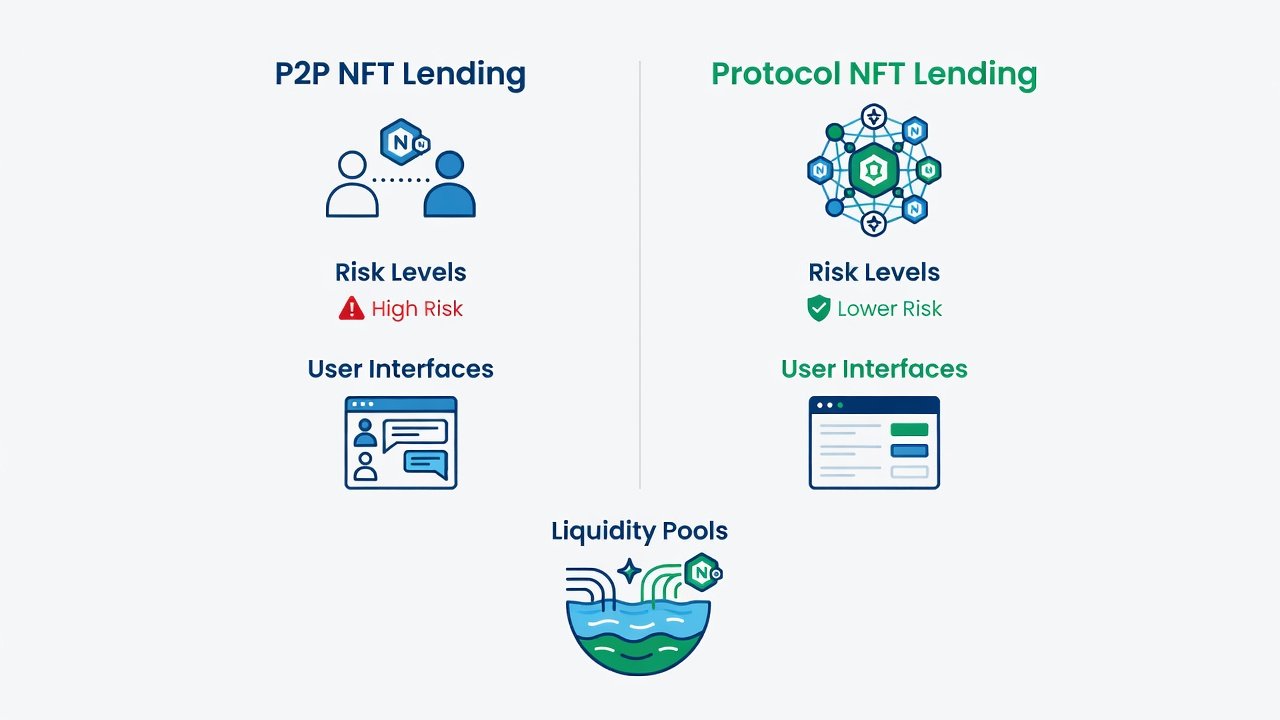
Peer-to-peer lending platforms facilitate direct negotiations between lenders and borrowers, enabling customized loan terms such as duration, interest rates, and collateral specifics. This model excels for rare or high-value NFTs where standard pools may undervalue uniqueness. However, it demands more active management and carries higher counterparty risk. Protocol-driven models aggregate liquidity into shared pools governed by immutable rules, automating matching and repayments via smart contracts. These often provide superior scalability and transparency. Benchmark comparisons reveal that protocol approaches frequently achieve higher utilization rates during bull markets, while P2P can command premium rates in illiquid segments. Users should evaluate both based on portfolio size and risk tolerance, perhaps starting with protocols for simplicity before exploring P2P for specialized opportunities.
- Flexibility in term setting favors P2P for bespoke arrangements.
- Automated risk controls and liquidation engines strengthen protocol reliability.
- Liquidity depth typically favors protocols with established user bases.
Risk Assessment Frameworks
Constructing a robust risk assessment begins with quantitative metrics like loan-to-value ratios, typically capped below 50 percent for volatile NFTs, and qualitative factors including collection popularity and historical price stability. Incorporate stress testing against market downturns by simulating 30-50 percent floor price drops. Additional layers involve reviewing platform insurance funds, oracle decentralization levels, and past incident reports. A step-by-step framework includes: first, catalog all holdings and assign volatility scores; second, calculate potential liquidation timelines; third, diversify across at least three unrelated collections; and fourth, set automated alerts for threshold breaches. Real examples demonstrate that neglecting volatility led to premature liquidations in 2025 bear phases, underscoring the need for ongoing monitoring rather than set-and-forget approaches.
Step-by-Step Onboarding for Top Platforms
Onboarding to leading NFT lending platforms follows a consistent sequence but varies in interface details. Begin by preparing a non-custodial wallet compatible with major chains, ensuring seed phrases remain secure offline. Connect the wallet to the chosen marketplace and complete any required wallet signature verifications. Next, browse available lending pools or create listings by selecting NFTs from your collection and inputting desired parameters such as minimum interest or maximum duration. Deposit collateral into escrow contracts, then monitor repayment schedules through integrated dashboards that display accrued interest and health factors. For advanced users, enable features like auto-compounding or cross-platform bridging. Always review gas fee estimates and test transactions with minimal amounts. Multiple platforms support this flow, with differences in supported standards like ERC-721 versus ERC-1155 influencing asset eligibility.
Real-World Examples of Passive Income Generation
One documented case involved a digital artist who collateralized a limited-edition series on a protocol pool, earning consistent interest over eight months while the underlying value appreciated modestly. Returns compounded automatically, funding further acquisitions without additional capital outlay. In another instance, a collector diversified across gaming assets and virtual land NFTs via P2P agreements, achieving layered income from varying interest schedules that offset seasonal market dips. A third example highlights institutional-style participation where a fund allocated portions to blue-chip profiles, using hedging overlays to stabilize yields amid fluctuating demand. These scenarios illustrate how combining multiple strategies amplifies outcomes beyond single-asset lending.
Balancing Returns with Collateral Volatility
Effective hedging integrates derivatives such as put options on correlated tokens or stablecoin allocations to buffer against sharp declines. Diversification extends beyond collections to include geographic or thematic spreads, such as mixing art NFTs with utility-focused tokens. Practical tips encompass maintaining a 60-40 split between high-yield emerging assets and established ones, rebalancing quarterly based on on-chain analytics, and employing partial loan closures during rallies. This balanced methodology helps sustain target returns even when individual collateral experiences drawdowns, preserving capital for reinvestment opportunities.
Platform Comparisons: Fees, Liquidity, and User Experience
Evaluating marketplaces requires examining origination fees, interest spreads, withdrawal penalties, and liquidity metrics across daily volumes. Some platforms prioritize low-friction experiences with intuitive mobile apps and real-time notifications, while others emphasize advanced analytics for sophisticated users. Liquidity stands out as a differentiator, with deeper pools enabling faster loan fulfillment and reduced slippage on exits. User feedback often praises transparent fee breakdowns and responsive community governance. Cross-reference current data through resources like DefiLlama for yield benchmarks and Ethereum.org for foundational protocol standards. Selecting the optimal fit depends on individual priorities such as asset focus or desired automation level.
Conclusion
Mastering NFT lending in 2026 involves blending model selection, rigorous risk evaluation, and adaptive hedging to pursue reliable yields. Platforms continue evolving, rewarding informed participants who prioritize education and diversification.
FAQ
What triggers liquidations in NFT loans?
Liquidations activate automatically when collateral value drops below the platform's specified loan-to-value threshold, typically enforced by oracles to protect lender funds through timely asset sales.
How are taxes handled on NFT lending income?
Interest payments received are commonly classified as ordinary income under many jurisdictions; participants should track all transactions meticulously and seek advice from tax professionals familiar with digital assets.
Can beginners start with small positions?
Absolutely, most platforms accommodate fractional lending or low-value entries, allowing novices to experiment safely while learning interface mechanics and market behaviors.
What role do oracles play in valuation?
Oracles provide real-time price feeds from multiple sources to determine fair collateral values, reducing manipulation risks but introducing dependency on data accuracy and uptime.
How does diversification mitigate risks?
Spreading loans across varied NFT categories and platforms lessens the impact of any single collection's price swing, creating a more resilient overall portfolio performance.

No comments yet. Be the first!