 CryptoChain Blog
Introduction to Quantum Risks in NFT Marketplaces
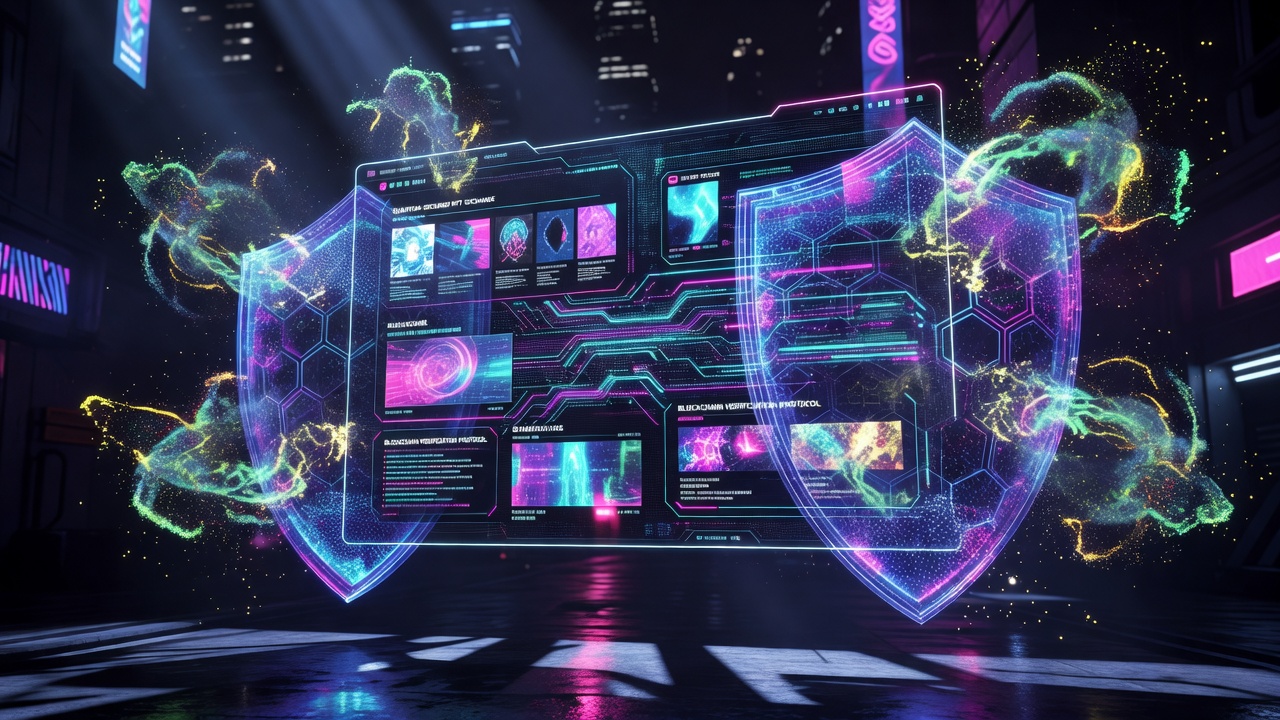
As blockchain technology powers the growing NFT ecosystem, security remains a top priority for traders and platforms alike. In 2026, quantum computing advancements pose emerging threats to the cryptographic foundations of NFT marketplaces. This comprehensive guide examines these risks in depth and provides actionable defenses for security-conscious users seeking the latest nft news and nft updates. Quantum computers leverage principles like superposition and entanglement to solve complex problems exponentially faster than classical machines, potentially rendering current encryption obsolete within the next decade. While full-scale quantum threats are still developing, experts warn that Shor's algorithm could break widely used public-key cryptography such as RSA and ECC, which underpin many NFT wallets and smart contracts. The NFT market has seen explosive growth, with billions in transaction volume, making proactive security measures essential to protect digital assets from future attacks. Understanding these dynamics helps users stay ahead in an evolving landscape where nft updates frequently highlight new vulnerabilities and solutions.
Current Blockchain Encryption Vulnerabilities
Most NFT marketplaces rely on elliptic curve cryptography (ECC) for transaction signing and wallet security. Vulnerabilities arise because quantum algorithms can efficiently factor large numbers or compute discrete logarithms. This means encrypted private keys could be exposed, allowing unauthorized access to NFT holdings. Platforms must prepare now, as data harvested today could be decrypted retroactively once quantum capabilities mature. Additional risks include side-channel attacks amplified by quantum speed and the potential compromise of decentralized storage solutions tied to NFTs. Forward-looking nft updates emphasize migrating to quantum-resistant standards before widespread adoption of fault-tolerant quantum hardware. Historical incidents, such as early blockchain exploits, demonstrate how encryption weaknesses have already led to significant losses, underscoring the urgency for quantum preparedness. Developers and users should consider the full attack surface, including smart contract interactions and cross-chain bridges that often inherit classical cryptographic dependencies.
Quantum-Resistant Algorithms Explained
Post-quantum cryptography (PQC) offers solutions through algorithms resistant to both classical and quantum attacks. Leading candidates include lattice-based schemes like CRYSTALS-Kyber for key encapsulation and CRYSTALS-Dilithium for digital signatures. These rely on hard mathematical problems such as learning with errors, which quantum computers struggle to solve efficiently. Hash-based signatures like SPHINCS+ provide another layer, though they require larger key sizes. NIST has standardized several PQC algorithms, guiding industry adoption. Integrating these into blockchain protocols involves updating consensus mechanisms and smart contract libraries without disrupting existing NFT ecosystems. NIST Post-Quantum Cryptography resources detail implementation guidelines for developers. Additional considerations involve performance benchmarks showing that some PQC methods introduce minimal latency increases while maintaining robust security margins. Hybrid models that combine classical and quantum-resistant elements are gaining traction as transitional strategies.
Real-World Examples from Major Platforms
Leading NFT marketplaces such as OpenSea and Blur have begun exploring quantum-safe upgrades. OpenSea’s infrastructure already incorporates multi-signature wallets that can evolve toward PQC. In contrast, some smaller platforms lag, highlighting risks for users holding high-value digital art and collectibles. Case studies from 2025 demonstrate early migrations on Ethereum testnets, where hybrid classical-quantum schemes protected simulated NFT transfers. These examples underscore the need for proactive compliance, as regulatory bodies increasingly reference quantum readiness in crypto guidelines. Other platforms like Binance NFT have announced pilot programs testing lattice-based signatures for high-volume auctions, while Foundation has focused on educating creators about wallet upgrades. Such initiatives reflect broader industry momentum toward resilience against quantum threats.
Step-by-Step Preparation Guide for Traders
Traders can safeguard assets with the following practical steps:
- Audit current wallets for ECC dependencies using open-source tools and identify any legacy smart contract interactions.
- Transition to hardware wallets supporting firmware updates for PQC, ensuring compatibility with major chains like Ethereum and Solana.
- Monitor marketplace announcements for quantum-resistant feature rollouts and participate in beta testing programs.
- Backup seed phrases offline and test recovery processes regularly to avoid data loss during migrations.
- Participate in community governance to advocate for PQC integration and stay informed via reliable nft news sources.
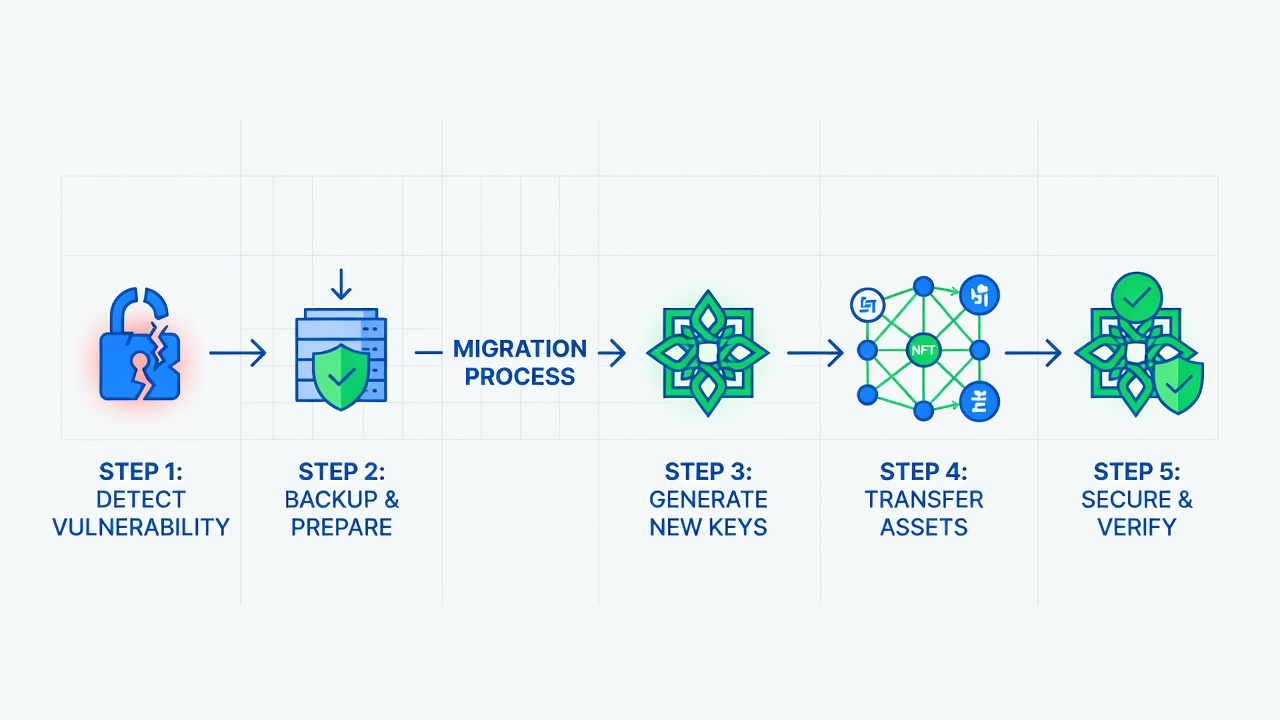
Wallet migration involves generating new quantum-safe key pairs, transferring NFTs via secure bridges, and verifying transactions on upgraded networks. Always use multi-factor authentication during this process and consider phased rollouts starting with low-value assets. Additional best practices include diversifying across multiple wallets and maintaining detailed records of all transfers for tax and security audits.
Comparisons of Post-Quantum Solutions
Lattice-based algorithms excel in speed and key size efficiency compared to hash-based alternatives. For instance, Kyber offers compact keys suitable for mobile NFT apps, while Dilithium provides strong signature security with moderate computational overhead. Code-based schemes like Classic McEliece offer long-term robustness but demand larger storage. Marketplaces should evaluate trade-offs in performance, compatibility, and auditability. Hybrid approaches combining classical and PQC methods provide transitional security, balancing immediate usability with future-proofing. IBM Quantum resources offer further insights into real-world testing of these algorithms. Performance metrics from recent benchmarks indicate lattice methods often outperform others in transaction throughput scenarios typical of NFT marketplaces.
Timeline of Quantum Computing Developments and Market Impact
Quantum computing progress has accelerated, with major firms achieving milestones in qubit stability and error correction by early 2026. Projections suggest cryptographically relevant quantum computers may emerge by 2030, giving NFT platforms a narrow window to adapt. Economic impacts could include reduced investor confidence if vulnerabilities surface, potentially affecting overall market liquidity. Proactive defenses help mitigate these risks and sustain growth in the NFT sector.
Regulatory Landscape and Compliance Considerations
Global regulators are beginning to incorporate quantum readiness into crypto frameworks. The EU's digital finance strategy and U.S. executive orders on cybersecurity both reference post-quantum standards. NFT marketplaces must align with these to avoid penalties and maintain user trust. Compliance checklists should include regular cryptography audits and documentation of migration plans.
Practical FAQ on NFT Security Concerns
How does wallet migration work under quantum threats?
Users generate PQC key pairs, export NFTs to temporary secure storage, and import them into updated wallets. Testing on testnets first minimizes risks. Detailed tutorials from platform documentation walk through each phase, emphasizing verification at every step to prevent errors.
Are major marketplaces becoming quantum-compliant?
Yes, platforms are piloting PQC integrations. Check official roadmaps for timelines aligned with NIST standards. OpenSea and others have shared progress reports indicating phased implementations starting with new listings before retrofitting older assets.
What if my NFT is stored on a vulnerable chain?
Bridge assets to quantum-ready layer-2 solutions or await protocol upgrades. Diversify across multiple marketplaces for resilience. Monitoring chain-specific announcements ensures timely action when upgrades become available.
Will quantum threats affect NFT royalties and ownership proofs?
Indirectly yes, if signatures are forged. Post-quantum signatures will preserve verifiable ownership records. Smart contract developers are already exploring PQC for royalty enforcement mechanisms to future-proof revenue streams for creators.
Conclusion
Preparing for quantum threats ensures the longevity of NFT investments. By understanding vulnerabilities, adopting PQC algorithms, and following structured guides, traders can navigate 2026 and beyond with confidence. Stay informed through reliable nft updates to maintain security in this evolving landscape. Continued vigilance and community collaboration will be key to sustaining a secure and thriving NFT ecosystem.
No comments yet. Be the first!