 CryptoChain Blog
Introduction to 2026 NFT Brand Collaborations
In 2026, brand-NFT partnerships are reshaping digital marketplaces by blending physical products with blockchain-verified assets. These collaborations allow companies to engage younger audiences while creating new revenue streams through limited-edition digital collectibles. Search intent around strategic integrations focuses on practical ways to leverage these trends without falling into common legal or operational pitfalls. Brands across industries recognize that NFTs offer more than mere speculation; they provide verifiable ownership, scarcity mechanics, and interactive experiences that deepen customer relationships. As marketplaces evolve, the emphasis shifts toward utility-driven NFTs that deliver ongoing value, such as access to exclusive events, customization options, or community governance rights. This evolution reflects broader Web3 adoption, where authenticity and scarcity remain core value propositions for both consumers and corporations seeking differentiation in crowded markets.
Successful examples span fashion, entertainment, and consumer goods, highlighting co-creation, revenue sharing, and audience tactics that drive sustained growth. Companies that approach these partnerships strategically often see improved brand loyalty metrics and diversified income sources that extend beyond traditional retail channels.
Key Trends in 2026 Brand-NFT Partnerships
Marketplaces are seeing increased integration of NFTs with real-world utility, such as exclusive event access or product customization. Brands are moving beyond simple drops to immersive experiences that foster community loyalty. Emerging patterns include hybrid physical-digital bundles where purchasing an NFT unlocks real-world perks like limited-edition merchandise or personalized services. Another trend involves cross-platform interoperability, allowing NFTs to function across multiple virtual environments and social networks. This evolution reflects broader Web3 adoption, where authenticity and scarcity remain core value propositions. Data from recent marketplace reports indicate rising interest in sustainable NFT projects that incorporate carbon-offset mechanisms, appealing to environmentally conscious consumers.
Case Studies from Major Sectors
Fashion leaders have partnered with platforms to release virtual apparel tied to physical counterparts. For instance, a prominent luxury house launched a collection of digital handbags that holders could redeem for matching physical items at select boutiques, resulting in heightened social media engagement and press coverage. Entertainment companies use NFTs for fan tokens that unlock behind-the-scenes content, such as virtual meet-and-greets with artists or early access to music releases. One major studio created a series of character-based NFTs that allowed fans to influence storylines in upcoming projects through community voting mechanisms. Consumer goods firms experiment with traceability NFTs that verify product origins, enhancing trust and premium positioning. A global beverage brand introduced NFTs that tracked supply chain details from farm to shelf, enabling consumers to scan codes for provenance information and earn loyalty rewards.
These case studies demonstrate how sector-specific needs shape NFT strategies, from exclusivity in fashion to interactivity in entertainment and transparency in consumer goods.
Co-Creation Models and Revenue-Sharing Frameworks
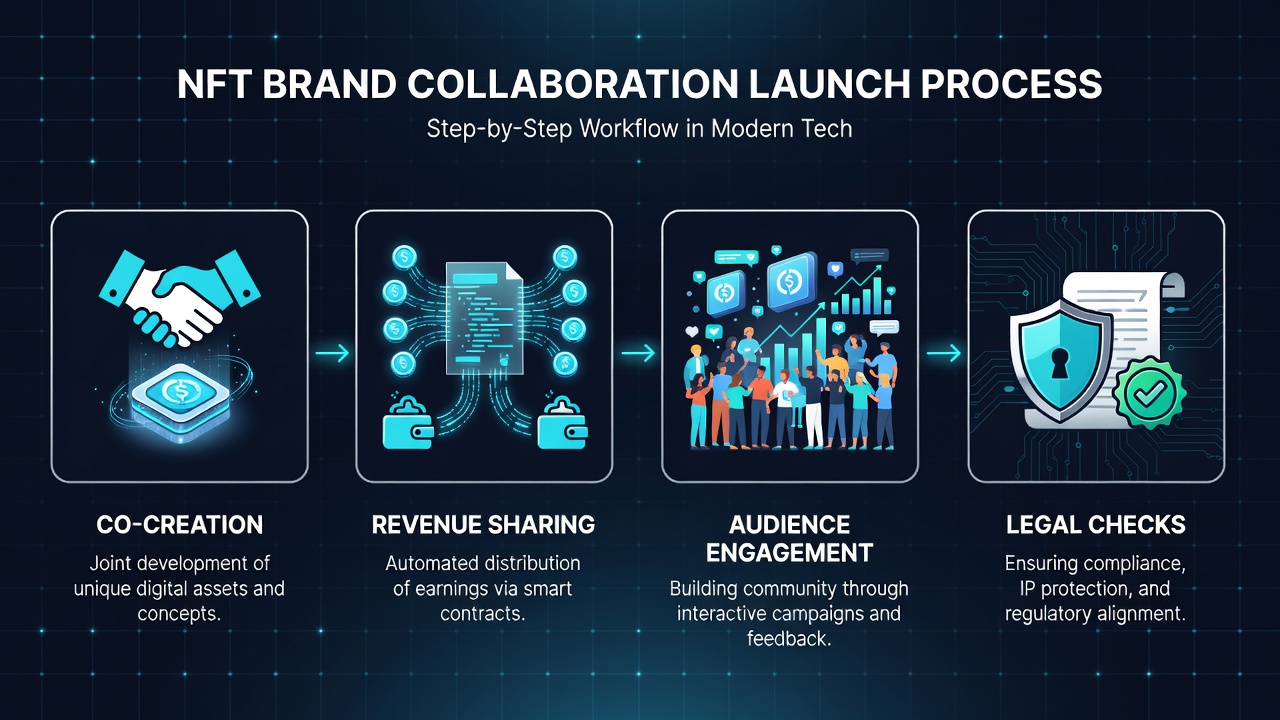
Effective models emphasize joint IP development where brands and creators share design input from the initial concept phase. This collaborative approach often involves iterative feedback loops using digital tools that allow real-time adjustments to NFT attributes. Revenue-sharing often splits proceeds from secondary sales, with smart contracts automating distributions to ensure transparency and reduce administrative overhead. Typical structures allocate percentages between the brand, original creator, and platform, with clauses for milestone-based bonuses tied to sales volume or community growth. These frameworks reduce disputes and align incentives for long-term partnerships by incorporating vesting schedules that reward sustained engagement.
Audience engagement tactics include gamified minting events, social media challenges, and loyalty programs that reward holders with evolving NFT utilities. Brands that implement tiered membership systems tied to NFT ownership frequently report higher retention rates and organic word-of-mouth promotion.
Step-by-Step Collaboration Launch Guide
- Identify target audience and marketplace alignment by analyzing demographic data and competitor activities.
- Define NFT utility and legal terms early, including clear usage rights and resale conditions.
- Select platform with strong security and user base, evaluating factors like transaction speed and developer support.
- Develop co-creation assets with clear ownership rights documented in partnership agreements.
- Launch with marketing campaigns across channels, incorporating influencer partnerships and targeted advertising.
- Monitor performance and iterate based on feedback, using analytics dashboards to track engagement and sales patterns.
Following these steps helps avoid rushed executions that damage brand reputation. Each phase benefits from cross-functional teams that include legal, marketing, and technical experts to address potential roadblocks proactively.
Platform Feature Comparisons
Major NFT marketplaces differ in fees, tools, and brand support. Some offer advanced analytics for tracking engagement, while others prioritize low-cost minting and robust community features. Comparing these features allows brands to choose environments that match their scale and goals. For example, platforms with built-in royalty enforcement tools simplify revenue sharing, while those with strong mobile apps improve accessibility for global audiences. Key differentiators include integration with social platforms, customizable storefronts, and compliance tools for global operations. Brands should also consider factors such as moderation policies and support for multi-chain deployments when evaluating options.
Common Pitfalls and Legal Considerations
Brands frequently overlook IP ownership clarity, leading to post-launch conflicts over derivative works or licensing extensions. Another issue is underestimating regulatory scrutiny around digital assets, which can result in unexpected compliance costs or project delays. Consulting experts on securities laws and consumer protection is essential from the planning stage. Additional pitfalls include inadequate community management that leads to backlash over perceived exclusivity or poor utility design that fails to deliver promised benefits. Proactive risk assessments and pilot testing with small user groups can mitigate these challenges effectively.
Resources like U.S. Securities and Exchange Commission provide guidance on NFT classifications. Similarly, Federal Trade Commission outlines advertising standards for digital promotions, and World Intellectual Property Organization covers international trademark protections. The United States Patent and Trademark Office offers additional resources on protecting digital innovations in collaborative projects.
FAQ: Addressing Reader Questions
What legal steps are required before launching a brand NFT?
Secure trademarks, draft clear terms of service, and ensure compliance with data privacy regulations in target markets. Early involvement of legal counsel helps navigate jurisdiction-specific requirements for digital asset offerings.
How do revenue-sharing models work in practice?
Smart contracts typically allocate percentages automatically upon each sale, with initial agreements specifying splits between brand, creator, and platform. Regular audits of contract performance ensure ongoing fairness and accuracy.
Which pitfalls most often derail collaborations?
Poor utility design, inadequate community management, and failure to plan for secondary market volatility are top issues. Addressing these through detailed planning and stakeholder alignment significantly improves success rates.
Conclusion
2026 presents expanded opportunities for brands to grow through thoughtful NFT integrations. By studying case studies, implementing structured launch processes, and prioritizing legal safeguards, companies can capitalize on marketplace momentum while building lasting audience connections. Continuous adaptation to emerging technologies and consumer preferences will remain critical for sustained success in this dynamic space.
No comments yet. Be the first!