 CryptoChain Blog
Introduction to NFT Insurance in 2026
The NFT ecosystem continues to evolve rapidly in 2026, with marketplaces handling billions in transactions across diverse platforms. As adoption grows among collectors, traders, and creators, so do the associated risks including theft through sophisticated phishing schemes, failures in smart contract execution during minting or transfers, and extreme market volatility that can erode portfolio values overnight. This comprehensive guide examines emerging insurance products designed specifically for NFT holders and traders, offering practical risk management strategies tailored to major platforms. Whether you are a beginner entering the space or an experienced user managing large collections, understanding these protections is essential for safeguarding digital assets in an increasingly complex environment.
Understanding Key Risks in NFT Marketplaces
NFT participants encounter unique threats that traditional financial insurance often overlooks. Theft frequently stems from compromised wallets or social engineering attacks that drain entire collections without warning. Smart contract vulnerabilities can result in lost assets when code executes incorrectly during high-stakes trades or automated sales. Market volatility exposes holders to sudden devaluations, particularly in trending collections where hype cycles create rapid swings. Insurance products now address these by providing coverage for asset recovery, financial compensation, and even hedging mechanisms against price drops.
Real-world examples from platforms like OpenSea illustrate cases where users lost valuable NFTs due to unauthorized access. Actionable tips include enabling multi-factor authentication on all connected wallets, conducting regular audits of smart contract permissions, and monitoring transaction histories for anomalies. Additional risks involve regulatory shifts that could impact ownership rights and platform-specific issues such as delistings or liquidity problems. By recognizing these layers of exposure, users can better align insurance selections with their actual trading behaviors and asset profiles.
Comparing Leading NFT Insurance Providers
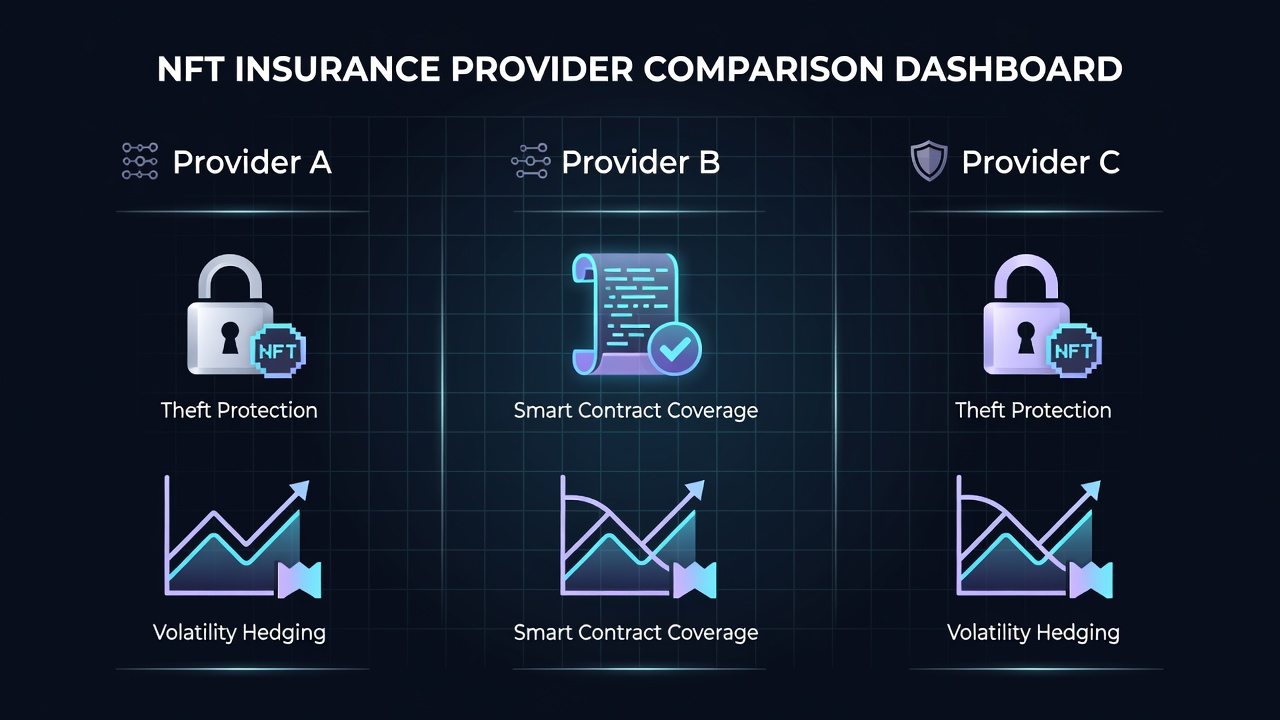
Several specialized insurers have developed policies tailored to the NFT sector, differing significantly in coverage scope, claim processing efficiency, and ease of integration with existing wallets. Key evaluation factors include the breadth of theft protection, safeguards against smart contract exploits, and options for volatility mitigation through customizable riders. Some providers emphasize modular add-ons that allow users to scale coverage based on portfolio size and activity level, while others focus on streamlined claims for rapid resolution.
- Evaluate providers based on their track record with major blockchain networks and partnerships with popular marketplaces.
- Examine claim approval timelines and the documentation required to avoid delays during stressful loss events.
- Review policy exclusions carefully, especially those related to user error or emerging threats not yet addressed in standard terms.
- Consider customer support quality and educational resources offered alongside policies for ongoing risk education.
Case studies from leading marketplaces demonstrate successful claims where insured users recovered losses following contract exploits on Ethereum-based platforms, highlighting the importance of selecting a provider with proven expertise in decentralized environments.
Integration Steps with Major NFT Platforms
Integrating insurance into daily NFT activities requires a methodical approach that begins with wallet verification and extends through ongoing policy management. The process ensures continuous monitoring and quick access to protections during trades or transfers. Follow these detailed steps for effective implementation across supported platforms:
- Connect your primary wallet to the insurer's secure portal and complete identity verification to confirm NFT ownership details.
- Analyze your current holdings to identify high-risk assets and select appropriate coverage categories such as theft or contract failure.
- Link the policy directly to marketplace accounts for automated alerts on suspicious activity or contract interactions.
- Configure notification preferences to receive real-time updates on potential threats or claim status changes.
- Conduct periodic reviews of coverage limits as your portfolio evolves, adjusting for new acquisitions or market conditions.
This structured integration works seamlessly with major platforms and helps reduce vulnerabilities during periods of intense trading volume. Users should also test the claims interface early to familiarize themselves with submission requirements.
Coverage Examples and Real Case Studies
Standard policies typically encompass full asset replacement for verified theft incidents and partial financial support for losses tied to smart contract malfunctions or volatility events. One prominent case study involved a trader on a top marketplace who recovered significant value after a smart contract failure disrupted a batch sale, thanks to targeted coverage that addressed execution errors. Another example highlights protection for a collector whose wallet was compromised through a phishing campaign, resulting in full reimbursement after thorough verification. These real scenarios emphasize how tailored policies can transform potential disasters into manageable outcomes.
Additional examples show users leveraging volatility protections during market downturns to offset losses on high-value blue-chip NFTs. Such cases underscore the practical benefits of proactive policy selection based on individual trading patterns, asset diversity, and risk tolerance levels.
Actionable Tips for Selecting the Right Policy
Start by thoroughly assessing your NFT portfolio's unique exposures, including the proportion of assets held long-term versus those traded frequently. Prioritize insurers with clear, transparent policy language and established integrations with reputable marketplaces. Avoid options featuring overly restrictive exclusions that could leave gaps in protection during common scenarios. Maintain regular reviews of your coverage as market dynamics and personal strategies shift over time.
Common Mistakes to Avoid
Many users overlook the need for ongoing policy updates or fail to read fine print regarding blockchain-specific risks. Others select the cheapest option without verifying claim reliability, leading to denied requests when incidents occur. Always cross-reference provider reviews from trusted sources and consult community forums for recent user experiences before committing.
Beginner FAQ on NFT Insurance
What does NFT insurance typically cover?
Policies generally address theft, smart contract malfunctions, and value volatility with customizable options that can be expanded as needed.
How do I file a claim?
Users submit transaction proofs, wallet addresses, and supporting evidence through the provider's online dashboard for streamlined review and approval.
Is coverage available for all marketplaces?
Most established platforms now integrate with leading insurers, although compatibility depends on the specific blockchain protocol and marketplace policies.
Can beginners start with basic policies?
Yes, entry-level options focus on essential theft protection, allowing users to add advanced features like volatility hedging as their experience and holdings grow.
What documentation is usually required for claims?
Typical requirements include transaction hashes, timestamps, and sometimes third-party verification of the incident to ensure legitimacy.
Future Trends and Legal Considerations
Looking ahead, NFT insurance is expected to incorporate more advanced analytics for predictive risk assessment and deeper collaborations with decentralized protocols. Legal frameworks continue to develop, making it important to stay updated on compliance requirements that could affect policy validity. Resources such as Ethereum.org provide foundational blockchain knowledge, while SEC.gov offers guidance on regulatory aspects relevant to digital assets.
Conclusion
Successfully navigating 2026 NFT marketplaces demands thoughtful insurance strategies to counter evolving risks. By comparing providers thoroughly, following detailed integration steps, learning from real case studies, and applying targeted tips, users can protect their digital assets with greater confidence. Additional insights are available through authoritative outlets like FTC.gov for consumer protection perspectives. Staying proactive ensures long-term resilience in this dynamic space.

No comments yet. Be the first!