 CryptoChain Blog
Introduction to 2026 NFT Tax Landscape
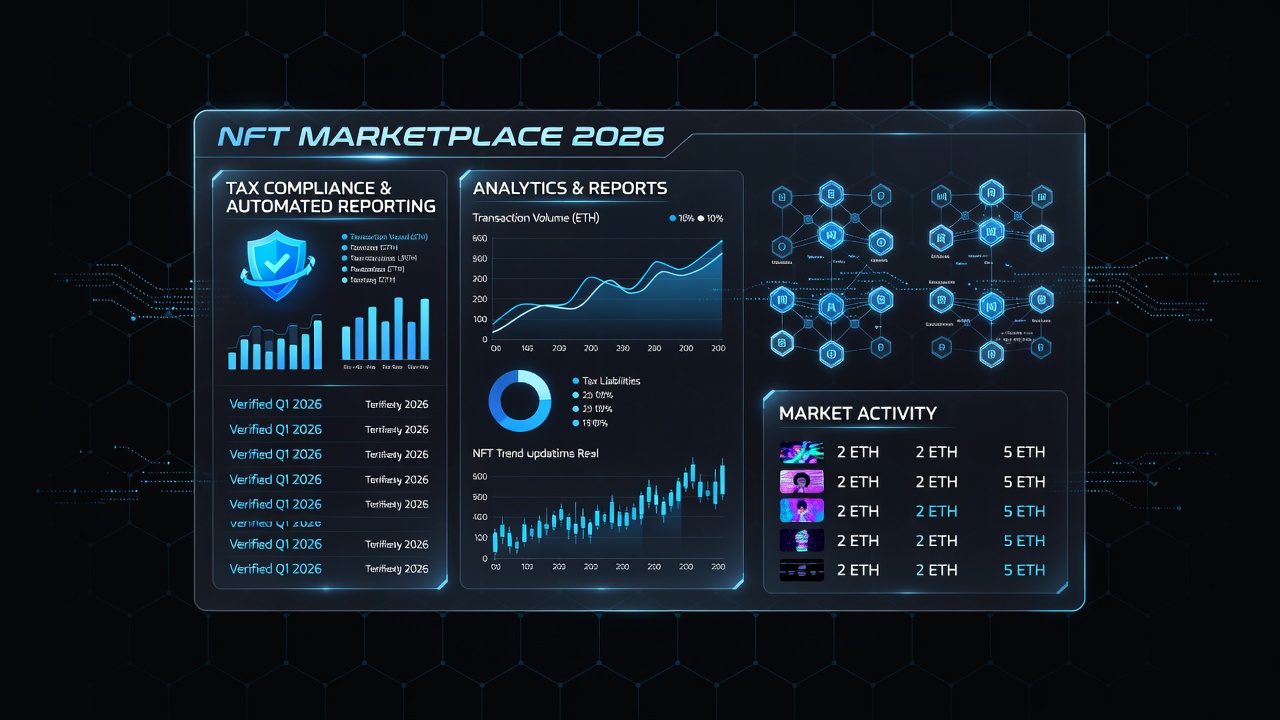
The NFT market continues evolving rapidly into 2026, bringing new regulatory scrutiny to trading and ownership. Marketplaces now integrate automated tax reporting tools and user alerts for capital gains to help traders stay compliant. This guide provides intermediate users with actionable strategies, jurisdiction-specific insights, record-keeping practices, and platform comparisons. As digital assets mature, tax authorities are closing loopholes that previously allowed underreporting of NFT profits. Traders who ignore these shifts risk audits, penalties, and missed opportunities for legitimate deductions. Understanding these updates is essential for minimizing risks and optimizing NFT portfolios. Platforms like OpenSea, Blur, and emerging alternatives are adapting to global tax frameworks, making proactive compliance a priority for anyone active in the space.
Intermediate traders often juggle multiple wallets and platforms, which complicates tracking. The introduction of real-time alerts changes this dynamic by surfacing taxable events immediately after a sale or transfer completes. This article expands on those tools while delivering practical frameworks that go beyond basic overviews.
Key 2026 Tax Developments Impacting NFT Trading
Regulatory bodies worldwide have introduced measures requiring marketplaces to report transactions above certain thresholds. Automated alerts notify users of potential capital gains events in real time, reducing the burden of manual tracking. These developments build on earlier guidance from financial regulators and now include mandatory data sharing between platforms and tax agencies in several major jurisdictions. Traders must now account for both federal and local obligations when buying, selling, or transferring NFTs. Gas fees, royalty payments, and secondary market activity all factor into calculations, requiring careful attention to timing and valuation methods.
Marketplaces have responded by embedding compliance features directly into their interfaces. Users receive prompts to confirm cost basis before finalizing a sale, and export functions generate reports formatted for popular tax software. These changes reflect broader alignment of digital assets with traditional financial reporting standards.
Jurisdiction-Specific Rules
Tax treatment varies significantly by location. In the United States, the IRS treats NFTs as collectibles, applying specific capital gains rates. European jurisdictions often follow MiCA guidelines, while Asian markets emphasize transaction reporting through local exchanges. In Canada and the United Kingdom, similar rules apply but with different holding period requirements and loss offset provisions. Traders operating across borders should consult local authorities or use compliance software to handle multi-jurisdictional reporting accurately. IRS official guidance provides foundational resources for U.S. users navigating these platforms. International traders can also reference OECD standards for consistent cross-border approaches.
Platform Comparisons: OpenSea, Blur, and Emerging Alternatives
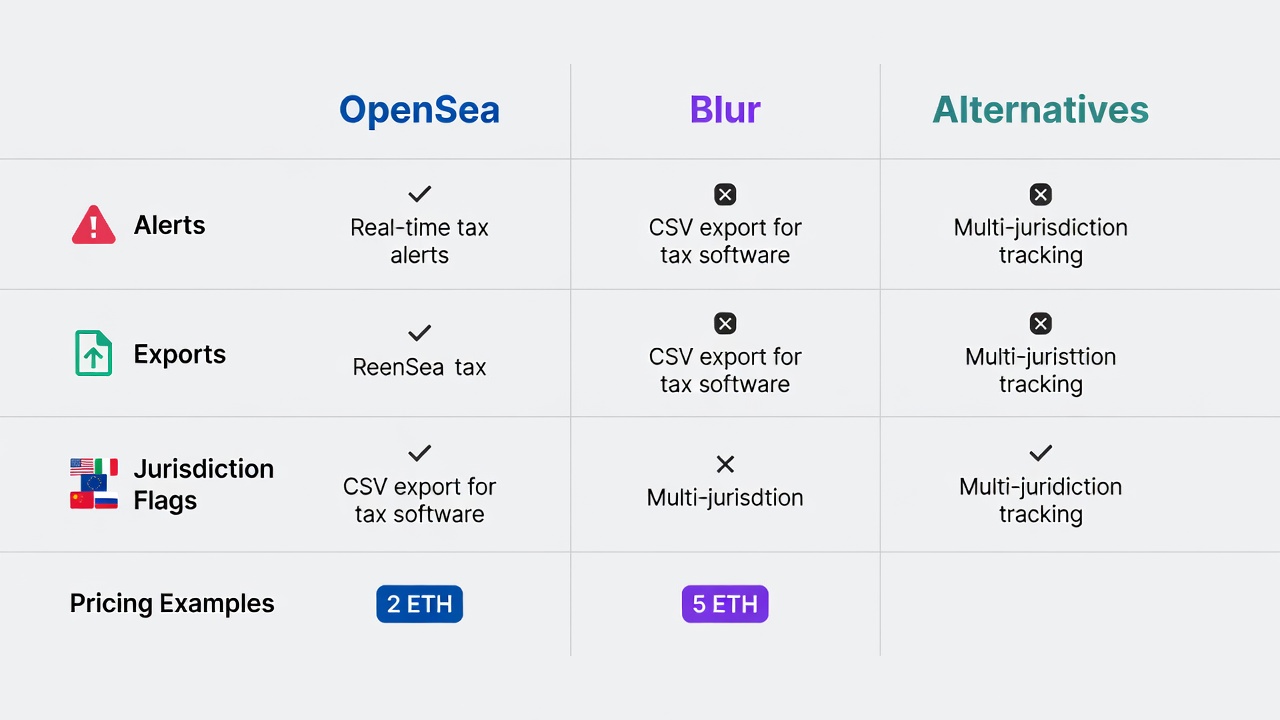
OpenSea has rolled out enhanced reporting dashboards that categorize sales by asset type and automatically flag taxable events. The platform now includes filters for royalty payments and gas costs, helping users isolate deductible expenses. Blur focuses on high-volume traders with streamlined export options for tax software integration, including CSV and API connections that sync directly with accounting programs. Emerging alternatives emphasize privacy features alongside compliance, offering users more control over data shared with tax authorities. Each platform differs in fee structures and alert customization, influencing overall tax strategy. OpenSea tends to provide more educational pop-ups for newer users, whereas Blur prioritizes speed and bulk actions suited to professional traders. Newer platforms often incorporate on-chain analytics that estimate fair market value at the moment of sale, reducing disputes during audits. UK government tax resources offer additional context for users comparing these marketplaces from an international perspective.
Record-Keeping Best Practices
Accurate records form the backbone of NFT tax compliance. Maintain detailed logs of acquisition dates, purchase prices, sale proceeds, and associated fees. Digital wallets should be synchronized with accounting tools for automated reconciliation. Beyond basic transaction data, traders benefit from storing metadata such as collection names, token IDs, and any promotional airdrops received. These details become critical when proving holding periods or identifying wash-sale equivalents in NFT markets.
- Store transaction hashes and timestamps from blockchain explorers.
- Track cost basis adjustments from upgrades or royalties paid.
- Retain screenshots of marketplace confirmations for audit support.
- Use encrypted cloud storage with regular backups.
- Log wallet-to-wallet transfers separately to avoid double-counting gains.
- Document any staking rewards or utility received from NFT ownership.
Step-by-Step Compliance Checklists
Pre-Trade Checklist
- Verify your jurisdiction's current NFT tax classification.
- Enable automated reporting features on your chosen marketplace.
- Set up alerts for transactions exceeding reporting thresholds.
- Review wallet connectivity to tax tracking software.
- Confirm cost basis entries for all held NFTs before listing.
Post-Trade Checklist
- Confirm capital gains calculations match platform reports.
- Export transaction data in compatible formats for filing.
- Document any losses for potential carryforward benefits.
- Consult a tax professional for complex multi-platform activity.
- Reconcile on-chain data with marketplace statements monthly.
Real-World Examples of NFT Transactions
Consider a trader who purchases an NFT for 2 ETH in January 2026 and sells it for 5 ETH later that year. The capital gain must be reported based on the fair market value at each step, including gas fees and platform royalties. A second scenario involves a user who mints an NFT at negligible cost and later sells it during a market surge; the entire proceeds may be treated as ordinary income rather than capital gains depending on the jurisdiction. Another example involves cross-border sales where a U.S. resident sells to a European buyer. Reporting obligations may trigger in both jurisdictions, requiring careful documentation to avoid double taxation issues. A fourth case shows how royalty payments on secondary sales can be deducted as business expenses when the trader actively manages a collection.
Mistakes to Avoid in NFT Tax Compliance
Many traders overlook royalty payments when calculating cost basis, leading to overstated gains. Others fail to track wallet-to-wallet transfers, creating gaps that trigger automated flags. Ignoring jurisdiction differences often results in missed filings or incorrect rates. Using outdated valuation methods instead of platform-provided fair market values can also cause discrepancies during reviews.
Tools and Software for Streamlined Compliance
Several third-party solutions integrate directly with major marketplaces to pull transaction history automatically. These tools categorize events, calculate gains, and generate jurisdiction-specific forms. Users should verify that any chosen software receives regular updates reflecting 2026 regulatory changes. Combining platform-native alerts with external software creates a layered approach that catches errors early.
Frequently Asked Questions
How do marketplaces handle capital gains alerts?
Most major platforms now send in-app notifications and email summaries when sales occur, estimating gains based on on-chain data and user-provided cost basis.
Are there differences in tax handling between OpenSea and Blur?
OpenSea offers more granular category filters, while Blur prioritizes speed for professional traders with bulk export capabilities.
What records should I keep for audits?
Blockchain transaction IDs, wallet addresses, timestamps, and marketplace receipts are essential. Pair these with third-party valuation reports when needed.
Can losses from NFT sales offset other gains?
Many jurisdictions allow capital losses to offset gains within the same tax year, with carryforward options available in certain regions.
How do royalties affect taxable income?
Royalties paid on sales are typically treated as expenses that reduce net proceeds, while royalties received may be reported as additional income.
Conclusion
Staying ahead of 2026 NFT tax requirements demands a combination of platform tools, diligent record-keeping, and awareness of jurisdictional nuances. By following the checklists and examples outlined, traders can navigate evolving regulations with confidence. Regular reviews of marketplace updates and official resources ensure ongoing compliance and protect against unexpected liabilities.


No comments yet. Be the first!