 CryptoChain Blog
Introduction to Zero-Knowledge Proofs in NFT Marketplaces
As NFT trading evolves in 2026, zero-knowledge proofs (ZK-proofs) are emerging as a transformative technology for privacy and security. These cryptographic methods allow users to verify transactions without revealing sensitive details, addressing growing concerns over data exposure in decentralized marketplaces. The rapid growth of NFT ecosystems has brought increased scrutiny from regulators and users alike, making privacy features not just desirable but essential for sustainable adoption.
Search intent around NFT news and updates highlights demand for practical insights into this adoption. This article examines ZK-proofs in depth, covering mechanics, benefits, real-world platforms, comparisons, and actionable strategies for enthusiasts at all levels. Beyond basic overviews, we explore implementation challenges, integration patterns, and long-term implications for collectors, creators, and platforms operating in this space.
How Zero-Knowledge Proofs Work in NFT Marketplace Transactions
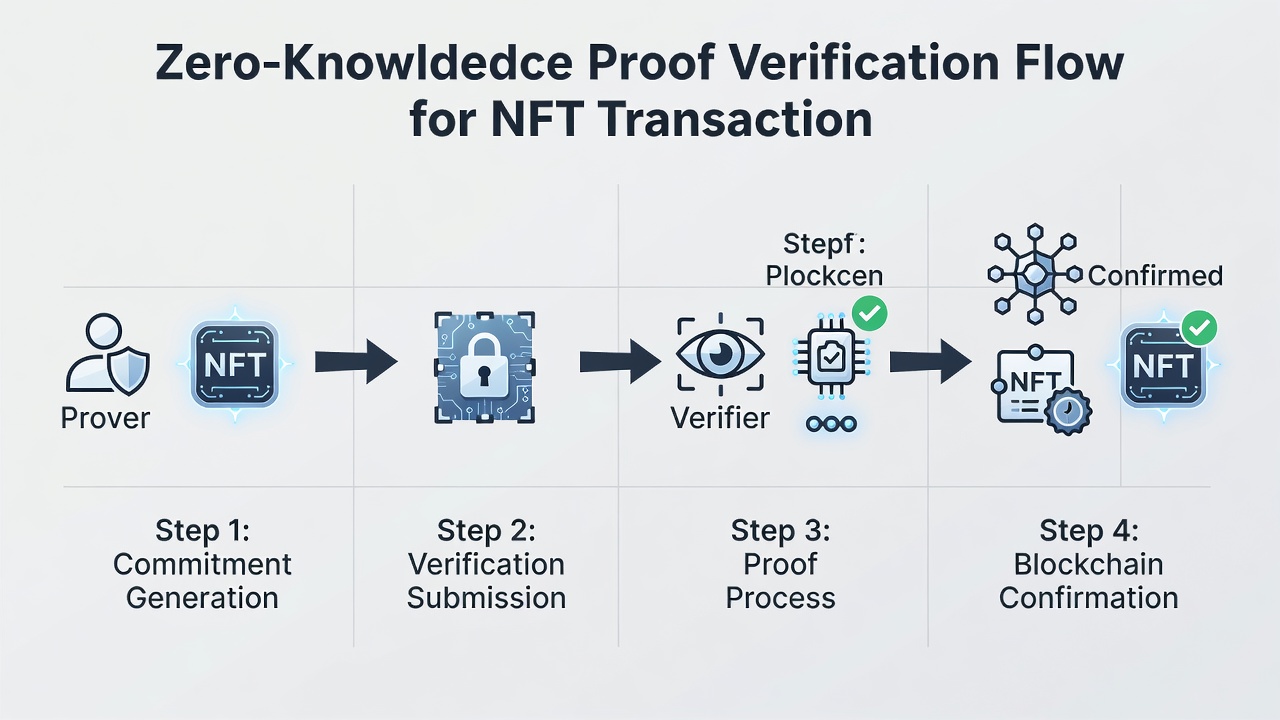
ZK-proofs enable one party to prove knowledge of information without disclosing it. In NFT contexts, this means confirming ownership or transaction validity while keeping wallet addresses, asset details, or bid amounts private. The underlying mathematics relies on complex cryptographic protocols that generate succinct proofs verifiable in milliseconds on-chain.
The process typically involves a prover generating a proof based on private inputs and a verifier checking it against public parameters. Leading implementations use zk-SNARKs or zk-STARKs for efficiency on blockchains like Ethereum. For example, during an NFT sale, the seller can prove they hold the token without exposing the full transaction history or the specific metadata of the asset. Smart contracts are programmed to accept only valid proofs, rejecting any that fail cryptographic checks.
This integration occurs at the protocol level in marketplaces, where smart contracts validate proofs before executing transfers. Developers often rely on libraries such as circom or halo2 to build custom circuits tailored to NFT use cases. These circuits define the exact conditions under which a proof is considered valid, such as proving a minimum bid threshold without revealing the actual amount offered.
Advanced users can further customize these proofs for conditional transfers, such as time-locked sales or multi-party escrows, all while preserving anonymity across the entire process.
Benefits Compared to Traditional Verification Methods
Traditional NFT verification relies on public blockchain data, exposing user identities and trading patterns. ZK-proofs offer superior privacy by hiding these elements while maintaining transparency of the overall ledger. This shift reduces the attack surface for malicious actors who previously scraped on-chain data to target high-value wallets.
Key advantages include reduced risk of targeted attacks, compliance with data protection standards, and enhanced user trust. They also scale better for high-volume trading without compromising security, unlike older methods that require full disclosure. In practice, this translates to lower phishing success rates and decreased instances of wallet draining attacks linked to visible transaction histories.
Users gain from anonymous bidding and ownership proofs, fostering a more secure ecosystem overall. Additional benefits encompass improved regulatory alignment in jurisdictions with strict privacy laws and the ability to conduct large trades without signaling market movements that could influence prices. Compared to simple encryption approaches, ZK-proofs provide mathematical guarantees rather than relying on trusted intermediaries.
Real-World Examples from Leading Platforms
Several prominent NFT marketplaces have adopted ZK-proofs by 2026. Platforms like those built on Ethereum leverage tools from the Ethereum Foundation to implement private trading features. These implementations often appear in specialized sections of major marketplaces where users opt into shielded trading modes.
Another example involves integrations with Zcash-inspired privacy layers, allowing shielded NFT transfers. These cases demonstrate how ZK technology prevents front-running and protects high-value collectors from exposure. One platform introduced private auction mechanisms in early 2026, resulting in measurable increases in participation from institutional collectors wary of public bidding wars.
Adoption is particularly strong among platforms prioritizing regulatory compliance and user anonymity. Emerging marketplaces focused on gaming NFTs have also begun experimenting with ZK-proofs to hide in-game asset ownership from competitors. These real-world deployments highlight both the technical feasibility and the tangible user demand driving the trend.
Comparisons of Marketplaces Adopting ZK-Proof Technology
When comparing platforms, those with ZK integration outperform traditional ones in privacy metrics. For instance, marketplaces using full ZK setups offer better protection against data leaks than those relying on basic encryption. Performance differences become apparent during peak trading periods, where ZK-enabled platforms maintain consistent verification speeds without exposing metadata.
Speed and gas costs vary; ZK-STARK variants often provide faster verification with fewer computational demands. Beginners may prefer user-friendly interfaces on established platforms, while advanced traders seek customizable proof systems for complex trades. Platforms that combine ZK with layer-2 scaling solutions generally deliver the best balance of cost and privacy.
Overall, ZK-adopting marketplaces excel in security but may require a learning curve for setup. When evaluating options, users should examine supported proof types, wallet compatibility, and the availability of educational resources. Some platforms also provide audit reports detailing the security of their ZK circuits, which serve as an important differentiator.
Step-by-Step Guide to Using Privacy-Enabled Features
Follow these steps to leverage ZK-proofs in supported NFT marketplaces:
- Choose a compatible wallet that supports ZK circuits, such as those integrated with Ethereum tools. Ensure the wallet has been updated to the latest version and test connectivity on a testnet before proceeding.
- Connect to a ZK-enabled marketplace and navigate to privacy settings. Review the available proof options and select the level of anonymity that matches your trading needs.
- Generate a zero-knowledge proof for your NFT ownership using built-in tools. This step may involve uploading metadata or selecting specific attributes to prove without full disclosure.
- Initiate a trade or listing, verifying the proof during the transaction process. Monitor gas estimates closely and consider batching multiple proofs if the platform supports it.
- Confirm the trade completes with all details shielded from public view. Always save proof receipts for personal records in case of disputes.
Always test with small transactions first and consult official documentation for specific platform variations. Advanced users can explore scripting automated proof generation for recurring trades.
Common Mistakes to Avoid When Implementing ZK-Proofs
Many new users overlook circuit compatibility issues, leading to failed transactions. Another frequent error is neglecting to verify proof validity off-chain before submission, which wastes gas fees. Always cross-check wallet permissions and avoid sharing proof generation keys across multiple devices.
FAQ on Drawbacks and Future Outlook
What are the main drawbacks of ZK-proofs in NFTs?
Potential downsides include higher initial setup complexity and computational overhead during proof generation. Some users report slightly longer transaction times compared to non-private methods, though optimizations continue to narrow this gap.
How will ZK technology evolve in NFT marketplaces?
The future points toward broader integration with layer-2 solutions, improving scalability and accessibility. Continued development from organizations like the Web3 Foundation will likely reduce barriers for mainstream adoption and introduce new use cases such as private fractional ownership.
Are ZK-proofs suitable for beginners?
Yes, with intuitive interfaces on leading platforms, though starting with educational resources is recommended for full understanding. Many marketplaces now offer guided tutorials that walk users through the entire proof generation workflow.
What regulatory considerations should users keep in mind?
While ZK-proofs enhance privacy, users must still comply with local tax reporting requirements. Platforms are increasingly providing export tools that allow private transaction summaries without compromising anonymity.
Conclusion
Zero-knowledge proofs represent a pivotal advancement for NFT marketplaces in 2026, balancing privacy with verifiable security. By exploring these technologies, traders can adopt strategies that protect their assets while participating in a more robust ecosystem. Stay informed on ongoing updates to maximize benefits in this dynamic space, and consider experimenting with privacy features on supported platforms to experience the advantages firsthand.
No comments yet. Be the first!