 CryptoChain Blog
Introduction to NFT Verification in 2026
As NFT marketplaces continue to expand rapidly in 2026, beginners face increasing risks from counterfeit listings and fraudulent sellers. Verifying authenticity is essential for safe trading amid ongoing nft news and nft updates. This guide provides actionable methods to protect your investments using blockchain tools and platform features. With the growth of decentralized marketplaces and new collections launching daily, understanding verification techniques helps separate legitimate assets from fakes that can lead to significant financial losses. Whether you are purchasing digital art, collectibles, or virtual real estate, following structured verification processes builds confidence in every transaction.
Understanding NFT Authenticity Basics
NFTs derive their value from unique digital ownership recorded on blockchains like Ethereum. Authenticity hinges on verifiable provenance, meaning the complete ownership history from creation to current listing. Without proper checks, buyers risk purchasing fakes that lack true blockchain backing. Provenance includes the original mint transaction, all subsequent transfers, and any royalty payments to creators. In 2026, many projects incorporate advanced metadata standards that embed creator signatures directly into the token, making verification even more reliable when users know where to look. Educating yourself on these fundamentals reduces exposure to common scams that circulate through social channels and unofficial marketplaces.
Spotting Counterfeit Listings on Marketplaces
Counterfeits often appear with duplicated images, mismatched metadata, or suspiciously low prices. Always cross-reference the NFT's contract address and token ID against official sources. Look for red flags like incomplete seller profiles or sudden high-volume listings from new accounts. Examine the visual quality of the artwork or media file, as many fakes use compressed or altered versions of the original. Check collection descriptions for grammatical errors or inconsistencies with the project's official website. Real-world examples include buyers who avoided losses by noticing that a popular collection's token IDs did not match the verified smart contract deployed by the original team. Developing a habit of screenshotting listings and comparing them side-by-side with known authentic examples sharpens your ability to detect anomalies quickly.
Using Blockchain Explorers for Provenance Checks
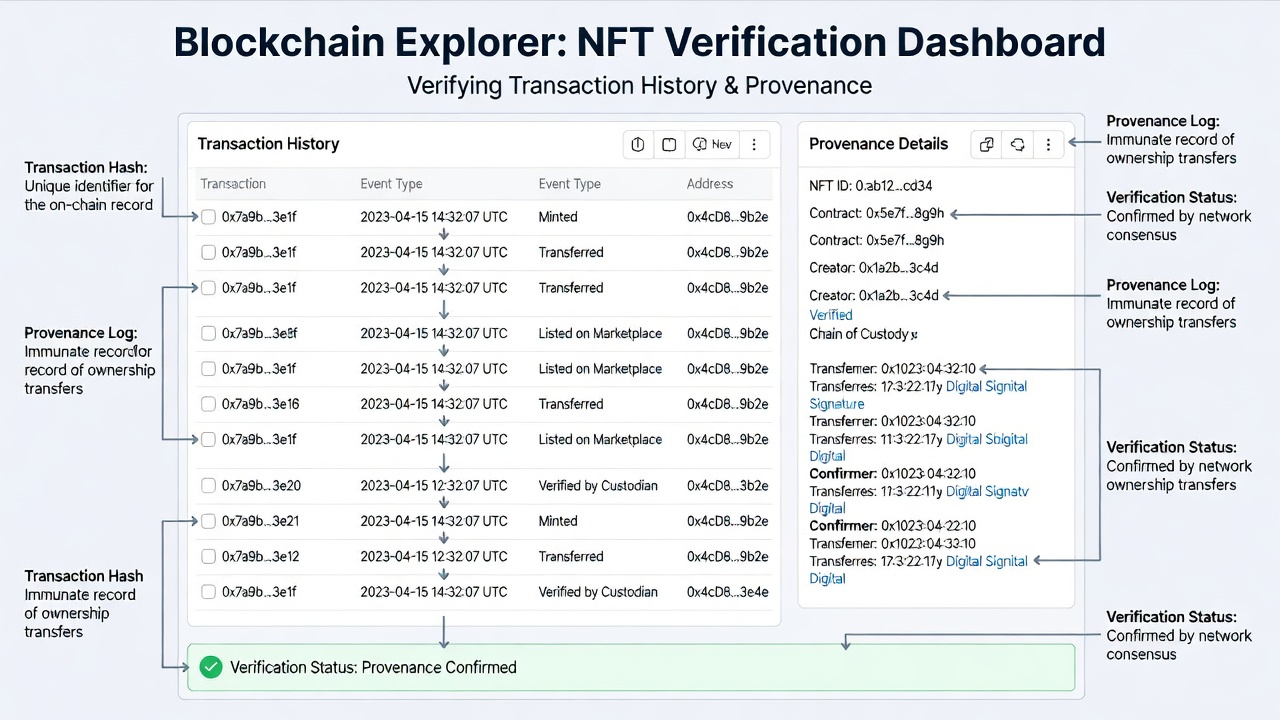
Blockchain explorers such as Etherscan enable detailed transaction tracing. Start by copying the NFT's contract address from the marketplace listing, then paste it into the explorer to view creation details, past transfers, and ownership changes. This process confirms the item is not a replica minted separately. Advanced users can filter transactions by date range to see how long the asset has been held by the current seller. Multiple transfers in a short period may indicate wash trading or artificial inflation attempts. Integrating explorer bookmarks for frequently used contracts speeds up future checks. Always verify the chain ID matches the marketplace network to avoid confusion between Ethereum mainnet items and those on layer-two solutions.
Evaluating Seller Reputations Across Platforms
Review seller history through transaction volume, feedback scores, and verification badges. Established sellers with consistent positive interactions over months reduce fraud risk. Compare activity on multiple platforms to identify patterns of legitimate trading. Pay attention to response times in community forums and whether the seller participates in official project discussions. Some marketplaces display on-chain reputation scores derived from successful sales and buyer ratings. Cross-referencing a seller's wallet address across different nft marketplace sites reveals if they maintain consistent behavior or if suspicious activity appears on secondary platforms.
Step-by-Step Wallet Integrations for Verification
- Connect your wallet such as MetaMask to the marketplace by approving the connection request in your browser extension.
- Navigate to the NFT listing and access the details panel that displays contract information and token metadata.
- Integrate with explorer tools via wallet extensions for one-click provenance views that automatically populate the contract address.
- Confirm ownership transfer eligibility before purchase by reviewing any locked or escrowed status indicators shown in the interface.
- Disconnect the wallet after completing checks to maintain security hygiene during extended browsing sessions.
These steps ensure seamless interaction between your wallet and verification tools while minimizing exposure of private keys.
Comparing Popular Marketplaces on Built-in Features
Leading platforms like OpenSea offer integrated verification badges and collection approvals that highlight trusted projects. Others provide advanced filtering for verified creators and on-chain royalty enforcement. Evaluate each based on explorer integrations and fraud detection algorithms to choose the safest option for your needs. Some platforms now include AI-assisted image matching that flags potential duplicates before they reach the listing stage. Comparing user interfaces reveals differences in how clearly they surface contract addresses and transaction histories directly on the product page.
Third-Party Tools and Real-World Examples
Tools integrated with Ethereum networks enhance checks by analyzing smart contract interactions. For example, a collector successfully verified a rare digital art piece by tracing its minting event back to the original creator via explorer logs, avoiding a scam listing on a secondary marketplace. Another user combined wallet analytics with third-party reputation dashboards to confirm a seller's multi-year history of authentic sales before completing a high-value acquisition. These cases demonstrate how layering multiple verification layers creates robust protection against evolving fraud tactics reported in recent nft updates.
Common Mistakes to Avoid During Verification
- Relying solely on marketplace thumbnails without examining full-resolution media files hosted on decentralized storage.
- Ignoring gas fee patterns that might indicate rushed or automated minting of counterfeit tokens.
- Skipping community Discord or forum checks where project moderators often confirm legitimate collections.
- Accepting private sales without on-chain verification even when the seller appears trustworthy in direct messages.
FAQ: Common Pitfalls and Solutions
What if metadata appears altered?
Always verify against the original smart contract on the blockchain to detect tampering that may not show in the marketplace interface.
How do I handle cross-chain NFTs?
Use compatible explorers for each chain and confirm bridge transactions for authenticity before proceeding with purchases.
Are there risks with new marketplaces?
Stick to established platforms with proven security until reputation builds, reviewing nft marketplace updates regularly through trusted news sources.
Can social media verification replace blockchain checks?
No, social proof should only supplement on-chain data because fake accounts frequently impersonate verified creators.
Conclusion
By combining explorer checks, reputation analysis, and platform features, you can trade NFTs confidently in 2026. Stay updated on nft news to refine these practices and minimize risks in the evolving landscape. Regular application of these methods supports safer participation in the growing ecosystem of digital assets.
No comments yet. Be the first!