 CryptoChain Blog
Introduction to Secure Crowdfunding Contracts
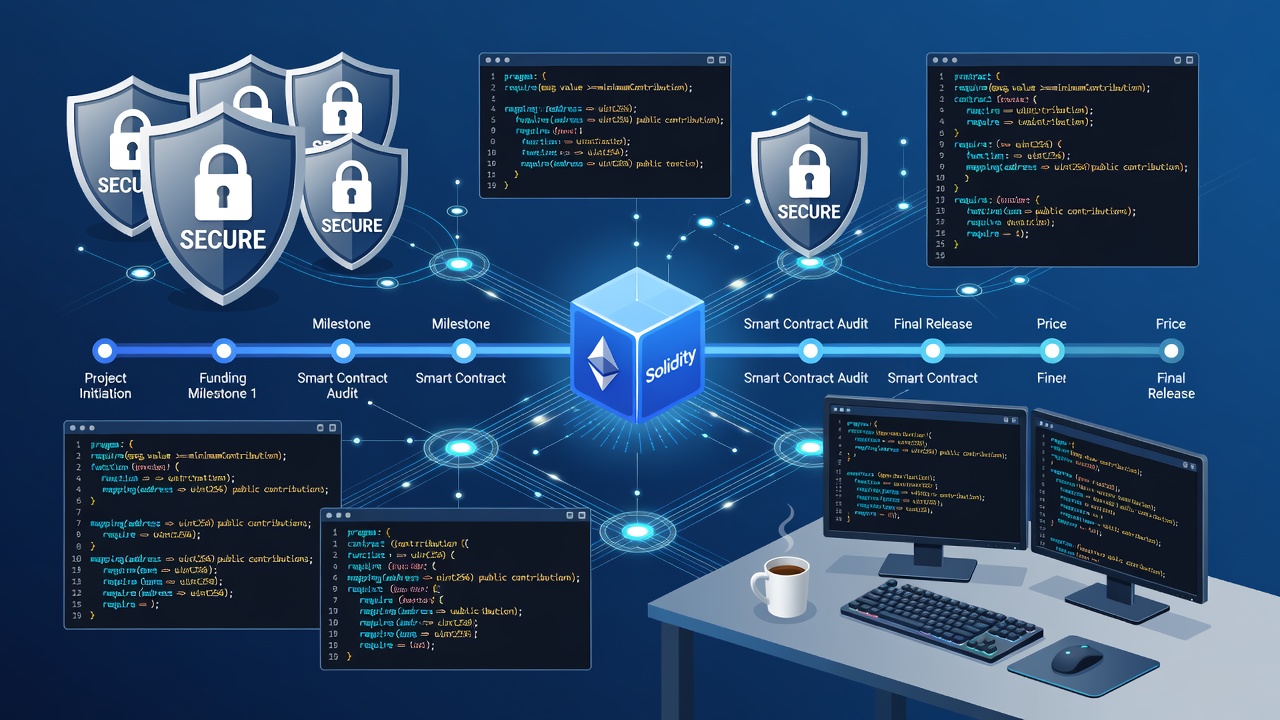
Building a crowdfunding smart contract in Solidity requires careful attention to security to prevent common exploits such as unauthorized withdrawals and fund locking. This 2026 tutorial provides a hands-on guide for developers, focusing on robust access controls and time-bound logic to ensure funds are released only under predefined conditions. Crowdfunding on blockchain platforms like Ethereum enables transparent peer-to-peer funding without intermediaries, but it also introduces risks if the contract is not properly secured. Developers must address vulnerabilities like reentrancy, improper access controls, and missing deadline enforcement to protect contributors and project creators alike.
By the end of this guide, you will understand contract structure, implement milestone-based releases, add transparency through events, and apply testing strategies before deploying to Ethereum testnets. We will explore practical code examples, security patterns from established libraries, and real deployment workflows. This approach ensures your contract remains resilient against attacks while optimizing for gas efficiency on the Ethereum network.
Contract Structure and Core Components
A secure crowdfunding contract typically includes state variables for tracking contributions, deadlines, and milestones. Use OpenZeppelin's Ownable and ReentrancyGuard for access control and to prevent reentrancy attacks. Start by defining the contract inheritance and key variables such as funding goal, deadline timestamp, and a mapping of contributor addresses to their deposited amounts. Additional mappings can track milestone progress and released funds to maintain clear state throughout the contract lifecycle.
pragma solidity ^0.8.20;
import "@openzeppelin/contracts/access/Ownable.sol";
import "@openzeppelin/contracts/security/ReentrancyGuard.sol";

contract SecureCrowdfunding is Ownable, ReentrancyGuard {
    uint256 public goal;
    uint256 public deadline;
    uint256 public totalRaised;
    mapping(address => uint256) public contributions;
    bool public goalReached;
    // Additional milestone logic here
}
Initialize these variables in the constructor with parameters for the funding goal and campaign duration. This setup allows the contract to enforce that contributions cannot exceed the goal unnecessarily and automatically calculates whether the campaign succeeded once the deadline passes. Always validate inputs in the constructor to avoid zero-value goals or past deadlines that could lock funds permanently.
Implementing Milestone-Based Fund Releases
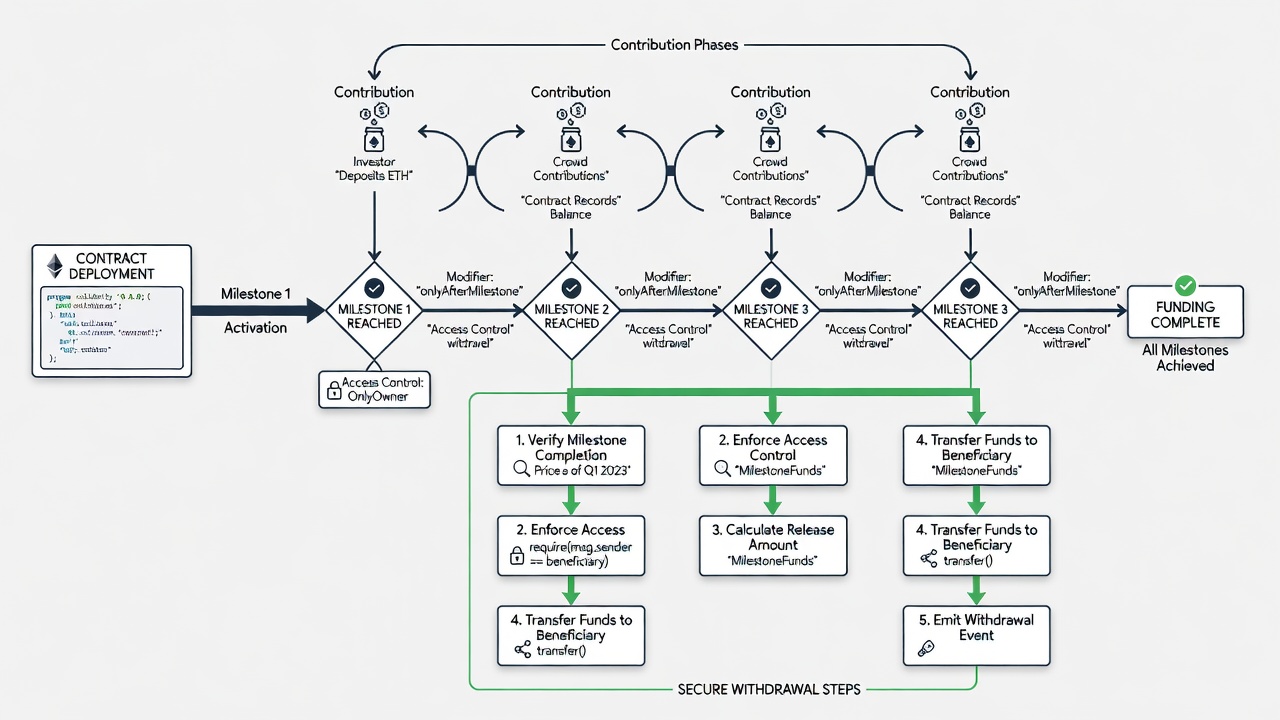
Milestones ensure funds are not released until specific goals are met. Define an array of milestones with required amounts and release percentages. Only the owner can trigger releases after verification. This structure prevents the creator from accessing all funds at once and instead ties releases to verifiable progress, such as completing development phases or reaching user adoption targets.
struct Milestone {
    uint256 amountRequired;
    uint256 releasePercentage;
    bool released;
}
Milestone[] public milestones;

function releaseMilestone(uint256 index) external onlyOwner nonReentrant {
    require(block.timestamp > deadline, "Deadline not reached");
    require(!milestones[index].released, "Already released");
    // Check milestone conditions and transfer funds securely
    uint256 releaseAmount = (totalRaised * milestones[index].releasePercentage) / 100;
    milestones[index].released = true;
    payable(owner()).transfer(releaseAmount);
}
Extend this logic with require statements that verify cumulative contributions meet each milestone threshold before allowing release. For example, the first milestone might unlock 25 percent after 50 percent of the goal is reached, with subsequent stages requiring further proof of concept delivery.
Event Logging for Transparency
Events provide an immutable record of all actions, enhancing trust. Emit events for contributions, milestone releases, and refunds. These logs enable external applications and contributors to monitor activity without needing to query storage variables directly, improving both transparency and auditability on public blockchains.
event ContributionReceived(address indexed contributor, uint256 amount);
event MilestoneReleased(uint256 indexed index, uint256 amount);
event RefundIssued(address indexed contributor, uint256 amount);
Integrate event emissions inside payable functions and release functions so that every state change is publicly visible. This practice aligns with Ethereum best practices for decentralized applications where users rely on indexed events for efficient frontend updates.
Comprehensive Testing Strategies
Testing is critical. Use Hardhat or Foundry to write unit tests covering edge cases like failed goals, multiple contributors, and reentrancy attempts. Deploy first to Sepolia or Goerli testnets for real-world simulation. Begin with basic functionality tests that confirm contributions update mappings correctly and that only the owner can call privileged functions.
- Unit tests for access control modifiers using impersonation accounts
- Integration tests for milestone logic with simulated time progression
- Fuzz testing for contribution amounts and deadline scenarios
- Gas usage profiling for optimization opportunities
- Reentrancy simulation using attack contract mocks
Write at least twenty test cases to cover both happy paths and failure modes. For instance, test that refunds execute only when the goal is not met and that partial milestone releases respect percentage calculations exactly.
Deployment Steps on Ethereum Testnets
Compile with the latest Solidity compiler, then deploy via Hardhat scripts. Verify the contract on Etherscan for public auditability. Ethereum.org provides official testnet guides. Begin by configuring your Hardhat network settings for Sepolia, obtain test ETH from a faucet, and run the deployment script while logging the contract address for subsequent verification steps.
After deployment, interact with the contract using a web3 library or Etherscan's read/write interface to confirm initial state variables match constructor inputs. This verification step builds community confidence before any mainnet migration.
Gas Optimization Tips
Optimize by using uint256 sparingly, packing storage variables, and minimizing external calls. Avoid loops in payable functions to reduce gas costs significantly. Consider replacing dynamic arrays with fixed-size structures where possible and caching frequently accessed storage variables in memory within functions. These techniques can lower transaction costs for contributors during high-traffic campaigns.
Common Pitfalls vs Secure Alternatives
Pitfall: Direct balance transfers without checks. Alternative: Use nonReentrant and require statements. Pitfall: No time bounds leading to locked funds. Alternative: Enforce deadlines with block.timestamp checks. Solidity documentation highlights these patterns. Another common issue is failing to handle failed campaigns gracefully, which can be mitigated by implementing a pull-based refund mechanism that lets contributors claim funds themselves rather than pushing transfers.
Conclusion
Following these practices results in a crowdfunding contract that is both functional and secure. Always audit before mainnet deployment and consider integrating oracle services for advanced milestone verification. OpenZeppelin libraries remain the foundation for reliable access control and security primitives.
FAQ
What testnet should I use in 2026?
Sepolia remains the primary testnet for Ethereum development.
How do I handle refunds securely?
Implement a refund function that checks contribution mapping and uses pull-over-push patterns.
Are there audit recommendations?
Always audit with firms before mainnet; reference OpenZeppelin for secure libraries.
Can this contract integrate with oracles?
Yes, for milestone verification using Chainlink or similar decentralized oracles.
What happens if the campaign is extended?
Include an onlyOwner function with strict conditions to update the deadline before it expires, emitting an event for transparency.


No comments yet. Be the first!