 CryptoChain Blog

Introduction to Regulatory Compliance in Solidity Development
As blockchain adoption accelerates in 2026, developers must ensure Solidity smart contracts align with evolving regulations like the EU's Markets in Crypto-Assets (MiCA) framework and updated U.S. SEC guidelines. Non-compliance can lead to severe penalties, halted deployments, or loss of user trust. This guide provides actionable strategies for integrating compliance features directly into contract architecture. The focus remains on practical implementation rather than high-level theory, helping teams avoid common regulatory pitfalls in DeFi and enterprise blockchain projects. Search intent around contract security tutorials often highlights the need for real code examples that balance security, efficiency, and legal adherence, making this resource particularly valuable for teams building production-grade applications.
Key focus areas include audit logging for traceability, role-based access controls, on-chain identity verification, privacy-preserving techniques, and automated reporting. We'll compare compliant versus vulnerable code patterns and include step-by-step Solidity examples that developers can adapt immediately. By addressing these elements comprehensively, the article supports both novice and experienced Solidity programmers seeking to meet 2026 standards without compromising on performance.
Understanding 2026 Regulatory Landscape
MiCA emphasizes transparency, consumer protection, and anti-money laundering (AML) requirements for crypto-asset service providers. It mandates clear disclosure of risks and requires mechanisms for tracing transactions across decentralized networks. Meanwhile, SEC rules continue to target decentralized finance (DeFi) protocols that may qualify as securities offerings, with increased scrutiny on smart contract governance and token issuance. Developers targeting global audiences need contracts that support both frameworks through modular design patterns that can accommodate jurisdiction-specific overrides.
Integrating compliance early reduces retrofitting costs and supports long-term scalability. Authoritative guidance is available from the SEC website and official EU regulatory resources. Staying current with these standards means monitoring updates quarterly and incorporating flexible parameters in contracts that can adapt to new rules without full redeployment. Failure to do so often results in projects facing enforcement actions or restricted access to major markets.
Implementing Audit Logging in Smart Contracts
Audit logs create immutable records of transactions and state changes, essential for regulatory audits. Use events and mappings to track actions without excessive gas costs. Effective logging captures user addresses, action types, timestamps, and relevant parameters while avoiding storage bloat that could inflate deployment expenses. In practice, developers should prioritize indexed events for faster off-chain analysis by compliance teams.
pragma solidity ^0.8.20;

contract AuditLogger {
    event ActionLogged(address indexed user, bytes32 indexed action, uint256 timestamp, bytes data);
    mapping(bytes32 => bool) private loggedActions;

    function logAction(bytes32 action, bytes calldata data) external {
        require(!loggedActions[action], "Action already logged");
        loggedActions[action] = true;
        emit ActionLogged(msg.sender, action, block.timestamp, data);
    }

    function verifyLog(bytes32 action) external view returns (bool) {
        return loggedActions[action];
    }
}
Compliant versions include timestamping and access restrictions, unlike vulnerable contracts that omit events or allow unauthorized logging. Best practice involves batching logs where possible and using indexed parameters for efficient off-chain querying. Teams should also implement log verification functions that allow external auditors to confirm integrity without exposing sensitive details. Additional considerations include handling edge cases such as contract upgrades and ensuring logs remain accessible even after proxy implementations.
Role-Based Access Controls for Compliance
Access controls prevent unauthorized modifications and enforce regulatory separation of duties. OpenZeppelin's AccessControl library remains a standard in 2026. Granular roles such as COMPLIANCE_OFFICER, AUDITOR, and OPERATOR allow precise permissioning aligned with MiCA's governance expectations. This setup helps prevent insider threats and supports clear accountability trails during investigations.
Comparison: Vulnerable contracts use simple owner modifiers that create single points of failure; compliant ones implement role hierarchies with revocation capabilities and event emissions on every role change. Here is an expanded example:
pragma solidity ^0.8.20;
import "@openzeppelin/contracts/access/AccessControl.sol";

contract CompliantContract is AccessControl {
    bytes32 public constant COMPLIANCE_OFFICER = keccak256("COMPLIANCE_OFFICER");
    bytes32 public constant AUDITOR = keccak256("AUDITOR");

    constructor() {
        _grantRole(DEFAULT_ADMIN_ROLE, msg.sender);
    }

    function performRestrictedAction() external onlyRole(COMPLIANCE_OFFICER) {
        // compliant logic here
    }

    function auditReport() external onlyRole(AUDITOR) view returns (string memory) {
        return "Report generated";
    }
}
Always test role assignments in staging environments and include emergency pause mechanisms tied to specific roles. Regular audits of role assignments further strengthen the overall compliance posture.
On-Chain Identity Solutions
Integrate decentralized identity (DID) protocols to meet KYC/AML demands. Store hashed identifiers and verify via zero-knowledge proofs where possible. This approach reduces on-chain data exposure while satisfying regulatory verification needs. Practical steps include mapping user addresses to verified credential hashes and providing view functions for regulators. Developers should evaluate solutions compatible with Ethereum standards for seamless integration.
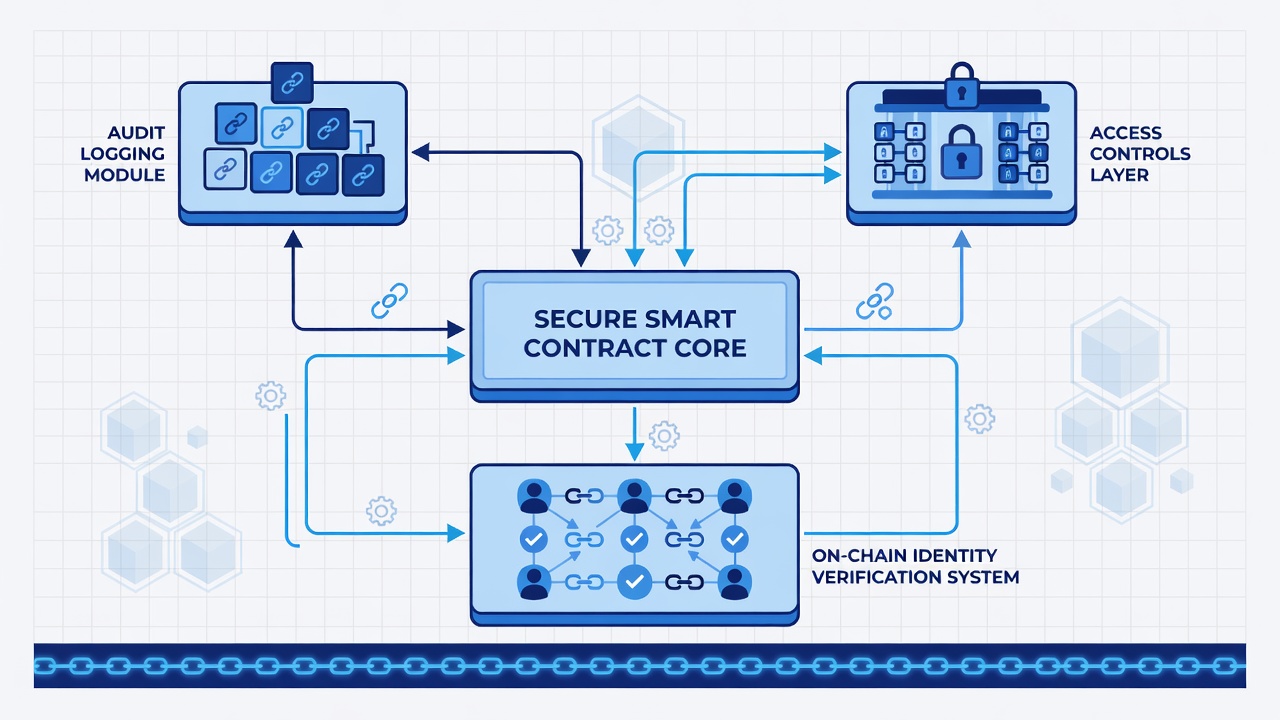
Additional best practices involve using established libraries for DID resolution and ensuring that identity proofs can be refreshed without requiring users to re-submit documents. This modular approach future-proofs contracts against evolving identity standards.
Privacy-Preserving Data Handling
Use encryption and selective disclosure to handle personal data. Techniques like zk-SNARKs allow verification without revealing underlying information, aligning with MiCA's data minimization principles. Implement circuits that prove compliance attributes such as age or residency without storing raw data. Another effective method is using commit-reveal schemes combined with off-chain storage references. This keeps sensitive information encrypted at rest while still enabling on-chain proofs. Always document the cryptographic assumptions and conduct third-party audits of the zero-knowledge circuits to maintain trust and regulatory alignment.
Automated Reporting Mechanisms
Build contracts that emit standardized reports for regulators. Schedule events or integrate with oracles for periodic compliance snapshots. Reporting functions should output structured data including transaction volumes, user counts, and risk flags in a machine-readable format. Step-by-step implementation: First define report structs, then create a restricted function that aggregates data and emits events. Include pagination support for large datasets to avoid gas limits. Regular testing with simulated regulatory queries ensures the mechanism functions correctly under load. These automated systems significantly reduce manual overhead for compliance officers.
Mistakes to Avoid When Building Compliant Contracts
Common errors include over-logging sensitive user data, failing to implement revocable roles, and neglecting upgradeability patterns that preserve historical compliance records. Another frequent issue is hardcoding regulatory parameters instead of using configurable variables. Developers should also avoid relying solely on off-chain compliance without corresponding on-chain safeguards. Conducting thorough threat modeling sessions early in the development lifecycle helps surface these risks before mainnet deployment.
Common Pitfalls and FAQs
- How do I handle cross-border compliance? Start with modular designs that allow jurisdiction-specific extensions and use configuration variables for regional rules.
- What about gas optimization? Balance logging frequency with efficiency using batching and off-chain aggregation where permitted.
- Are there tools for testing compliance? Use frameworks like Hardhat with custom plugins for regulatory simulations and include automated checks for role integrity.
- How to avoid over-logging sensitive data? Apply data minimization by logging only necessary fields and hashing personal identifiers.
- What if a contract needs upgrades after deployment? Utilize proxy patterns that maintain audit trails across versions.
Conclusion
By embedding compliance features such as logging, access controls, and identity solutions into Solidity contracts, developers can future-proof their DeFi and enterprise applications against 2026 regulations. Continuous monitoring of updates from bodies like the SEC and Ethereum Foundation ensures ongoing adherence. Regular code reviews and integration of best practices will help teams deliver secure, regulatory-ready smart contracts that stand the test of time.

No comments yet. Be the first!