 CryptoChain Blog

Introduction to Secure Escrow Smart Contracts
Escrow smart contracts serve as trusted intermediaries in blockchain transactions, holding funds until predefined conditions are met. In 2026, developers continue to rely on Solidity to create these contracts with robust security features that prevent common exploits. This tutorial provides a complete, step-by-step guide to building a secure escrow contract, emphasizing safeguards against reentrancy attacks and unauthorized access. Escrow mechanisms are particularly valuable in decentralized marketplaces, freelance agreements, and cross-border payments where trust between parties is limited. By following this guide, you will learn how to define contract requirements, implement role-based controls using modifiers, log events for transparency, and apply rigorous testing strategies before mainnet deployment. The focus remains on practical, production-ready patterns that have evolved with the latest Solidity compiler improvements.
Defining Requirements for an Escrow Contract
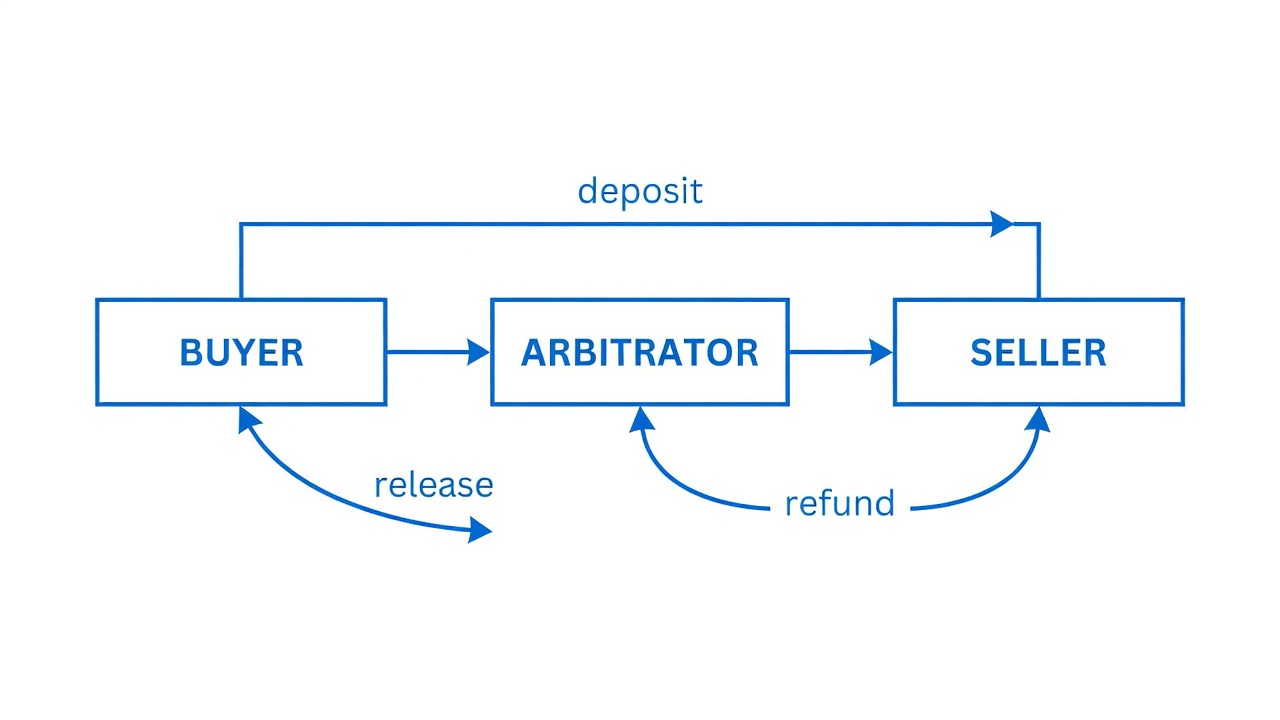
Before writing code, outline the core functionality in detail. A basic escrow involves three parties: a buyer who deposits funds, a seller who delivers goods or services, and an arbitrator who resolves disputes. The contract must allow the buyer to deposit Ether, release funds only upon mutual agreement or arbitrator decision, and refund the buyer if conditions are not satisfied within a specified timeframe. Additional requirements include time-bound releases, partial refunds for complex deals, and logging all actions for auditability. Security requirements encompass preventing reentrancy, restricting function access via modifiers, ensuring atomic state changes, and handling failed external calls gracefully. Developers should also consider gas efficiency and compatibility with ERC-20 tokens for broader use cases beyond native Ether.
Structuring the Contract Logic
Start by setting up the contract skeleton with state variables for tracking deposits, parties, and contract status. Use enums to represent states such as AWAITING_PAYMENT, AWAITING_DELIVERY, COMPLETE, and REFUNDED. Include mappings for multiple escrows if building a factory pattern. The following code establishes the foundation:
pragma solidity ^0.8.20;

contract SecureEscrow {
    enum State { AWAITING_PAYMENT, AWAITING_DELIVERY, COMPLETE, REFUNDED }
    State public currentState;
    address payable public buyer;
    address payable public seller;
    address public arbitrator;
    uint public amount;
    uint public depositTime;
    mapping(address => uint) public balances;

    constructor(address payable _buyer, address payable _seller, address _arbitrator) {
        buyer = _buyer;
        seller = _seller;
        arbitrator = _arbitrator;
        currentState = State.AWAITING_PAYMENT;
    }
}
This structure allows the contract to be instantiated for each unique transaction while maintaining clear ownership and state tracking.
Implementing Security Modifiers and Role Controls
Modifiers enforce access control and state checks. Create custom modifiers for onlyBuyer, onlySeller, and onlyArbitrator to prevent unauthorized calls. Combine them with state validation to avoid race conditions.
modifier onlyBuyer() {
    require(msg.sender == buyer, "Only buyer can call this");
    _;
}

modifier onlySeller() {
    require(msg.sender == seller, "Only seller can call this");
    _;
}

modifier onlyArbitrator() {
    require(msg.sender == arbitrator, "Only arbitrator can call this");
    _;
}

modifier inState(State _state) {
    require(currentState == _state, "Invalid state");
    _;
}
These modifiers integrate seamlessly into functions to maintain strict control over who can execute sensitive operations. For instance, the deposit function uses onlyBuyer and inState to ensure correct execution context.
Protecting Against Reentrancy Attacks
Reentrancy remains a critical vulnerability even in 2026. Use the checks-effects-interactions pattern and consider inheriting from OpenZeppelin's ReentrancyGuard. Always update state before external calls and limit gas forwarded in transfers. A secure release function looks like this:
function releaseFunds() external onlySeller inState(State.AWAITING_DELIVERY) {
    currentState = State.COMPLETE;
    (bool success, ) = seller.call{value: amount}("");
    require(success, "Transfer failed");
    emit Released(seller, amount);
}
This pattern ensures the state is updated first, mitigating the risk of recursive calls draining the contract.
Adding Core Functions: Deposit, Release, Refund, and Dispute
Expand the contract with full implementations. The deposit function records the amount and timestamp while emitting an event. Release and refund functions transition states appropriately. For disputes, the arbitrator can decide outcomes after off-chain verification.
function deposit() external payable onlyBuyer inState(State.AWAITING_PAYMENT) {
    require(msg.value > 0, "Amount must be greater than zero");
    amount = msg.value;
    depositTime = block.timestamp;
    currentState = State.AWAITING_DELIVERY;
    emit Deposited(buyer, amount);
}

function refundBuyer() external onlyArbitrator inState(State.AWAITING_DELIVERY) {
    currentState = State.REFUNDED;
    (bool success, ) = buyer.call{value: amount}("");
    require(success, "Refund failed");
    emit Refunded(buyer, amount);
}
These functions demonstrate how to handle multiple outcomes while preserving funds until conditions are verified.
Event Logging for Transparency
Events provide an immutable audit trail essential for debugging and user trust. Define events for deposit, release, refund, and dispute resolution. Index key parameters for efficient querying on block explorers.
event Deposited(address indexed buyer, uint amount);
event Released(address indexed seller, uint amount);
event Refunded(address indexed buyer, uint amount);
event Disputed(address indexed arbitrator, string reason);
Logging every state change allows external applications to monitor escrow progress in real time.
Testing Strategies and Common Pitfalls
Comprehensive testing uses frameworks like Hardhat or Foundry. Write unit tests for each state transition and simulate attack scenarios. Test cases should cover successful deposits, unauthorized access attempts, reentrancy simulations, and edge cases such as zero-value transactions or expired deadlines. Common pitfalls include missing state checks that allow repeated releases, improper use of transfer versus call leading to gas limit issues, failing to handle arbitrator disputes correctly, and neglecting to verify contract balances before state changes.
- Always verify contract balance before state changes
- Test edge cases including zero-value deposits and maximum uint values
- Simulate concurrent calls to detect reentrancy vulnerabilities
- Review gas costs for mainnet deployment and optimize loops
- Ensure time-dependent logic accounts for block timestamp manipulation risks
Deployment Considerations on Mainnet
Before deploying, audit the contract with tools like Slither or Mythril. Start on a testnet such as Sepolia, verify the source code, and monitor initial transactions. Consider gas optimization techniques such as using immutable variables and avoiding unnecessary storage writes. For further reading on best practices, consult the Solidity documentation, Ethereum developer resources, and OpenZeppelin security resources. Always conduct at least two independent audits for high-value escrows.
Security Checklist
- Implement ReentrancyGuard or checks-effects-interactions pattern
- Use modifiers for all privileged functions
- Log all state-changing events with indexed parameters
- Handle failed transfers gracefully with require statements
- Conduct multiple rounds of testing and professional audits
- Limit external calls and validate return values
- Document all assumptions and edge cases in NatSpec comments
FAQ
What is the primary benefit of using an escrow smart contract?
It eliminates the need for trusted third parties by enforcing rules programmatically on the blockchain, reducing counterparty risk.
How do I handle disputes in the contract?
Include an arbitrator role that can release or refund funds after reviewing evidence off-chain, with clear event logs for transparency.
Is this contract suitable for production use in 2026?
With thorough auditing and testing, yes. Always follow the latest security guidelines and update for new Solidity versions.
Can the contract support ERC-20 tokens instead of Ether?
Yes, extend the contract with IERC20 interfaces and approve/transferFrom patterns while maintaining the same security modifiers.
Conclusion
Building a secure escrow smart contract in Solidity requires careful attention to access control, state management, and attack prevention. By applying the patterns, code examples, and checklist outlined in this tutorial, developers can create reliable contracts ready for 2026 mainnet deployments across various decentralized applications.


No comments yet. Be the first!