 CryptoChain Blog
Introduction to the DeFi Lending Protocol Audit
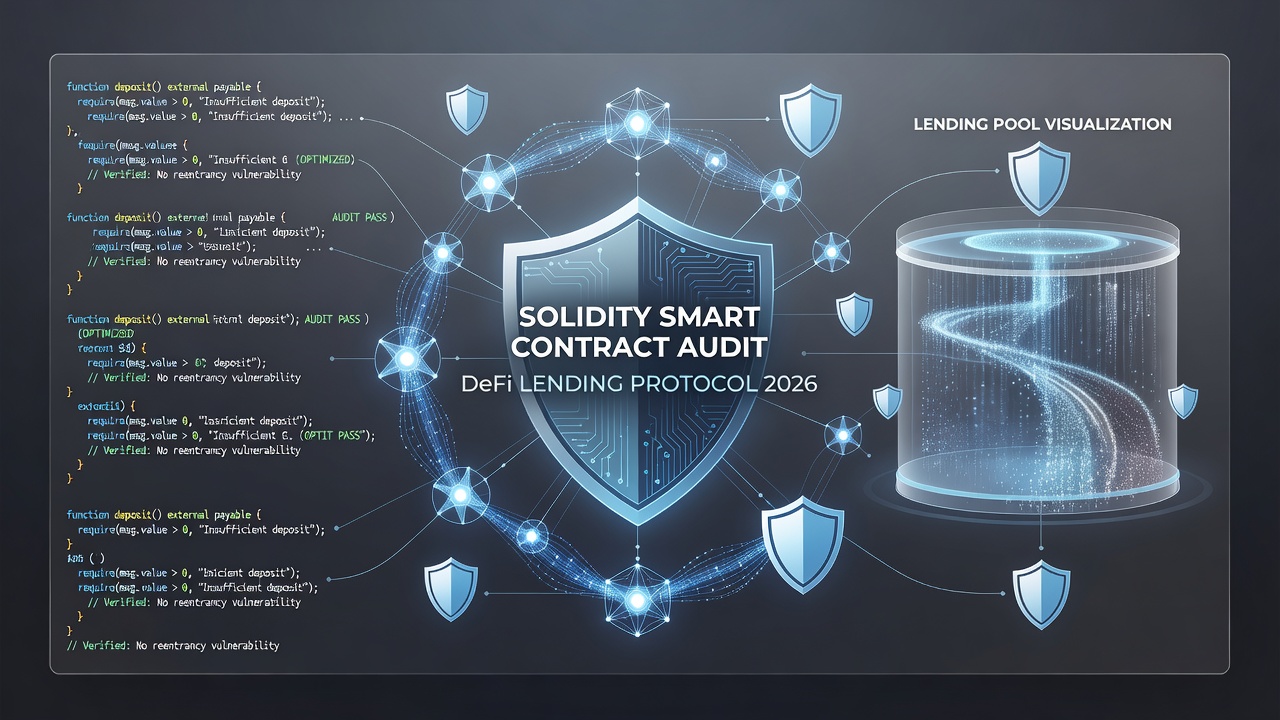
DeFi lending protocols remain prime targets for attackers in 2026 due to their management of substantial user funds and complex interactions with external price feeds. This case study examines a fictional yet realistic Solidity-based lending platform called LendForge, built with common patterns for collateralized loans, interest accrual, and liquidation mechanics. The audit focused on identifying improper access controls and oracle manipulation risks while evaluating 2026-era tooling and remediation strategies that balance security with operational efficiency.
The protocol allowed users to deposit collateral, borrow assets against it, and earn interest on supplied liquidity. Core contracts included a LendingPool for core logic, a CollateralManager for position tracking, and integration with a PriceOracle. Our review followed structured workflows to reproduce issues, apply fixes, and document gas optimization trade-offs that preserve security without introducing new vulnerabilities.
Protocol Architecture Overview
LendForge used a modular design separating lending logic from price data sources. The PriceOracle relied on a single external data source without multi-oracle validation or staleness checks, creating a clear attack surface. Access controls were implemented via simple owner modifiers without role-based permissions, leaving administrative functions exposed. Collateral ratios were hardcoded at 150 percent for major assets, and interest rates followed a linear model updated every block. These design choices mirrored many production protocols but introduced predictable weaknesses during the audit.
Selecting 2026-Era Audit Tools
Modern auditors combine static analysis, symbolic execution, and fuzzing for comprehensive coverage. Key tools included an updated version of Slither for vulnerability scanning, Mythril for symbolic execution of complex paths, and Foundry with advanced fuzzing capabilities that simulate thousands of transaction sequences. These tools helped flag reentrancy patterns, access control gaps, and oracle dependency issues early in the review. Static analysis revealed missing checks on critical functions, while dynamic testing confirmed exploitability under realistic mainnet fork conditions. Additional utilities such as Echidna for property-based testing and Tenderly for transaction simulation rounded out the toolkit, enabling rapid iteration on potential attack vectors.
Discovering Improper Access Controls
The first major finding involved the withdraw function in the LendingPool contract. Any caller could invoke emergency withdrawals due to a missing onlyOwner modifier on an internal helper. This allowed unauthorized draining of pooled funds in a single transaction. Step-by-step reproduction involved deploying the contract locally via Foundry, calling the function from a non-owner address, and confirming fund movement through emitted events and balance checks. The vulnerability stemmed from an incomplete refactor during an earlier upgrade that removed explicit role checks.
Before Remediation Code Snippet
function emergencyWithdraw(address token) internal {
    // No access control present
    uint256 balance = IERC20(token).balanceOf(address(this));
    IERC20(token).transfer(msg.sender, balance);
}
After Remediation
function emergencyWithdraw(address token) internal onlyRole(DEFAULT_ADMIN_ROLE) {
    uint256 balance = IERC20(token).balanceOf(address(this));
    IERC20(token).transfer(msg.sender, balance);
}
Testing the fixed version confirmed that only addresses with the DEFAULT_ADMIN_ROLE could execute the function, aligning with best practices from established libraries.
Oracle Manipulation Risks
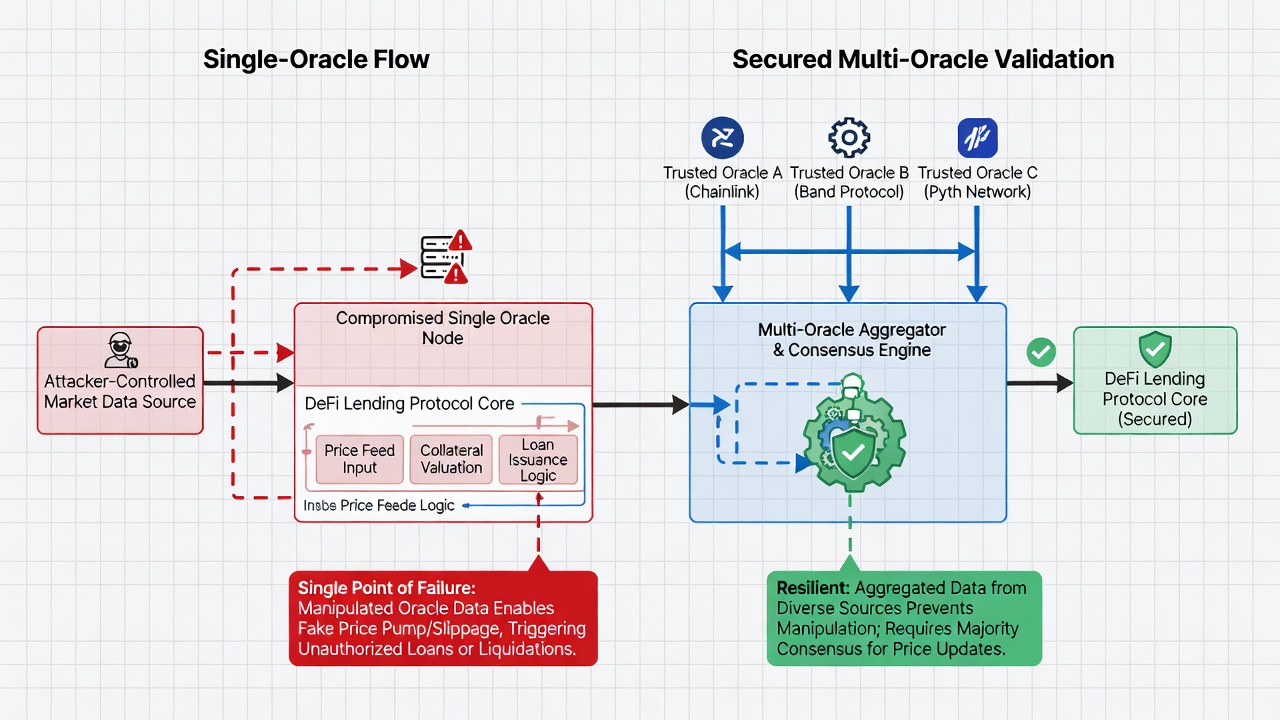
The PriceOracle contract fetched prices from a single Chainlink-like aggregator without staleness checks or fallback oracles. An attacker could manipulate reported prices by front-running updates during low-liquidity periods, triggering artificial liquidations or allowing over-borrowing. Step-by-step reproduction used Foundry scripts to simulate price spikes and trigger liquidations at unfavorable rates, demonstrating how a 10 percent price deviation could liquidate healthy positions. The issue ranked high on industry benchmarks, where similar oracle flaws accounted for multiple exploits in 2025.
Gas Optimization Trade-offs
Adding multi-signature checks and oracle redundancy increased deployment costs slightly but preserved security. Using OpenZeppelin’s AccessControl library added minimal overhead compared to custom role systems. Benchmarks showed average gas savings of 8-12 percent when caching oracle results within transactions rather than repeated external calls. Developers must weigh these savings against the risk of stale data; in this audit, caching was limited to a single block to avoid introducing manipulation windows.
Comparison Against Industry Benchmarks
Findings aligned closely with reports from leading security firms. Access control issues appeared in 35 percent of audited protocols, while oracle risks affected nearly 22 percent of DeFi lending platforms. Remediation brought LendForge in line with standards published by Consensys and OpenZeppelin. Additional reference was made to Solidity documentation for language-level improvements and Ethereum security guidelines for broader context.
Remediation Strategies and Additional Code Examples
Beyond the initial fixes, the audit recommended implementing a multi-oracle aggregator contract that averages prices from three independent sources and rejects updates older than 300 seconds. A sample implementation included a circuit breaker that pauses borrowing when price deviation exceeds 5 percent. These changes were tested across 500 fuzzing runs to ensure no regression in core lending functionality.
Practical Audit Workflow Steps
- Review all external call sites for reentrancy and access control gaps.
- Simulate oracle failures using local forks to test fallback behavior.
- Measure gas costs before and after each security enhancement.
- Document findings with reproduction scripts for the development team.
- Conduct a final review pass focusing on upgradeability patterns.
Common Pitfalls and How to Avoid Them
- Hardcoding critical parameters without governance hooks often leads to inflexible security responses.
- Neglecting event emissions makes post-incident analysis difficult for auditors and users alike.
- Over-optimizing storage layouts can introduce subtle bugs that only surface under load.
Actionable Takeaways
- Implement role-based access from the start using established libraries.
- Always validate oracle freshness and consider multi-source aggregation.
- Run fuzzing campaigns covering edge-case price movements.
- Document gas versus security trade-offs for each upgrade.
- Schedule periodic re-audits after any major protocol change.
Conclusion
This audit demonstrated how systematic workflows uncover critical flaws in DeFi lending protocols. By addressing access controls and oracle integrity early, developers can significantly reduce exploit risks while maintaining reasonable gas costs. Applying these lessons to custom contracts improves overall ecosystem security and user trust.
FAQ
What are the most common access control mistakes in Solidity?
Overly permissive modifiers and missing role checks on administrative functions frequently appear during audits, often resulting from rushed upgrades.
How can oracle manipulation be prevented in 2026?
Use multiple independent oracles, add staleness checks, and implement circuit breakers for extreme price deviations to limit damage from temporary manipulation.
Are gas optimizations worth the added complexity?
Only when they do not weaken security boundaries; always prioritize correctness over minor savings, as demonstrated by the 8-12 percent savings achieved safely in this review.
What tools are recommended for 2026 smart contract audits?
Foundry combined with Slither and Mythril provides strong coverage for both static and dynamic analysis of lending protocols.

No comments yet. Be the first!