 CryptoChain Blog
Introduction to Role-Based Access Control in Solidity
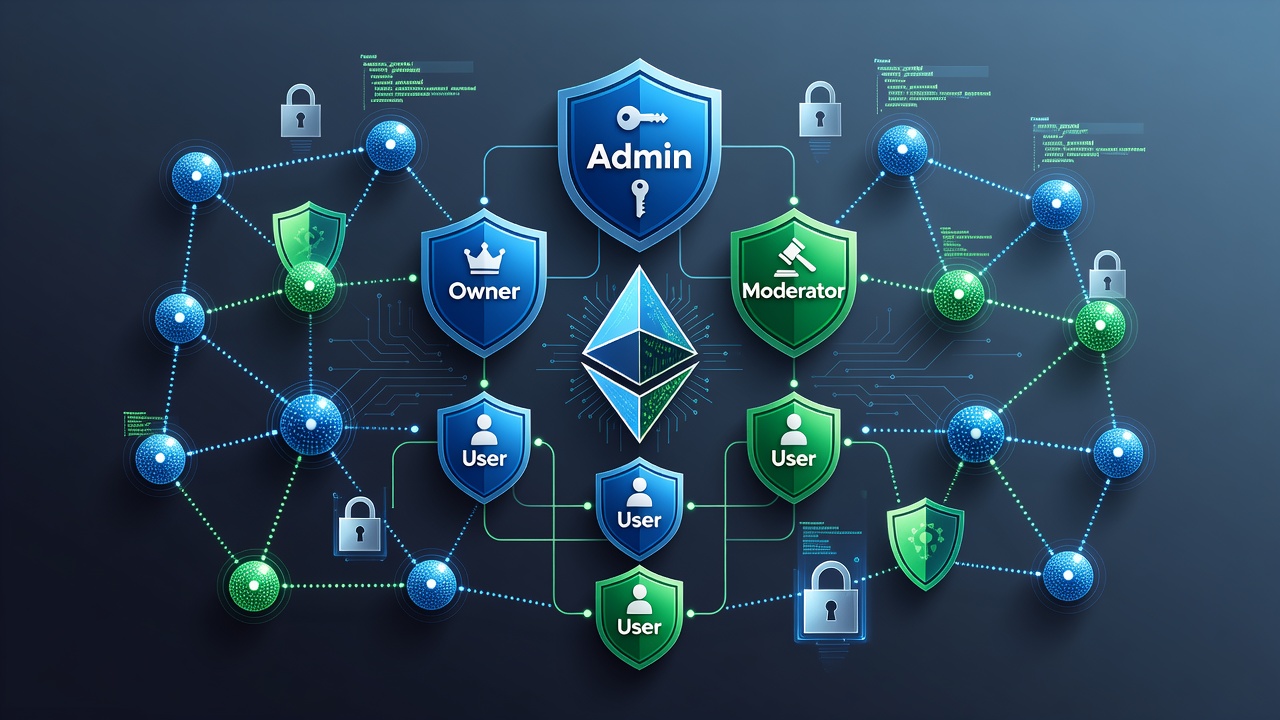
Role-Based Access Control (RBAC) serves as a critical security layer in Solidity smart contracts, allowing developers to assign specific permissions to different user addresses or contracts. In 2026, with the increasing sophistication of decentralized applications on Ethereum and layer-2 networks, basic ownership models often fall short. Developers search for practical patterns that go beyond simple modifiers or default OpenZeppelin implementations to prevent unauthorized actions such as fund withdrawals, token minting, or parameter changes. This comprehensive guide examines RBAC in depth, providing step-by-step examples, gas optimization strategies, and real-world deployment considerations.
Ownable vs Roles Libraries: A Detailed Comparison
The Ownable pattern, widely used from OpenZeppelin Contracts, designates a single owner address that can execute privileged functions. It is lightweight and easy to implement but creates a single point of failure. If the owner key is compromised, the entire contract is at risk. The Roles library, part of OpenZeppelin's AccessControl, enables multiple roles such as DEFAULT_ADMIN_ROLE, MINTER_ROLE, and PAUSER_ROLE. Each role can be granted or revoked independently, supporting separation of duties. For enterprise-grade contracts handling significant value, Roles provides superior scalability because roles can be assigned to multisignature wallets or other contracts.
| Aspect | Ownable | Roles (AccessControl) |
|---|---|---|
| Permission Granularity | Single owner with full control | Multiple granular roles with admin hierarchies |
| Gas Overhead | Very low for ownership checks | Moderate due to role mapping storage |
| Scalability for Teams | Limited, requires ownership transfer | High, supports concurrent role holders |
| Upgrade Safety | Needs careful migration logic | Built-in support for role revocation during upgrades |
| Best Use Case | Simple token or NFT contracts | Complex DeFi protocols and DAOs |
Many developers start with Ownable for rapid prototyping and migrate to Roles when the contract requires distinct operational roles.
Step-by-Step Implementation of Custom Role Hierarchies
Begin by inheriting from AccessControl and defining role constants as bytes32 values derived from keccak256 hashes. In the constructor or initializer, grant the admin role to the deployer and set role admins to establish hierarchy. For example, an ADMIN_ROLE can manage MINTER_ROLE assignments without needing full contract ownership.
pragma solidity ^0.8.20;
import "@openzeppelin/contracts/access/AccessControl.sol";
contract SecureRBAC is AccessControl {
    bytes32 public constant ADMIN_ROLE = keccak256("ADMIN_ROLE");
    bytes32 public constant MINTER_ROLE = keccak256("MINTER_ROLE");
    bytes32 public constant PAUSER_ROLE = keccak256("PAUSER_ROLE");
    constructor() {
        _grantRole(ADMIN_ROLE, msg.sender);
        _setRoleAdmin(MINTER_ROLE, ADMIN_ROLE);
        _setRoleAdmin(PAUSER_ROLE, ADMIN_ROLE);
    }
    function mint(address to, uint256 amount) external onlyRole(MINTER_ROLE) {
        // minting logic here
    }
}
To extend the hierarchy, implement a function that allows senior roles to create junior roles dynamically while enforcing checks that prevent circular role assignments.
Gas Considerations and Optimization Techniques
RBAC introduces storage costs because each role assignment writes to a mapping. Developers should use events extensively for off-chain indexing instead of on-chain queries. Caching role checks inside modifiers for repeated calls within the same transaction can reduce gas consumption. In practice, as of 2026-08-01, well-optimized RBAC contracts on Ethereum mainnet achieve measurable savings by minimizing redundant storage reads during batch operations. Consider using immutable role identifiers and avoiding unnecessary role checks in view functions.

Common Pitfalls and How to Avoid Them
Several recurring issues appear in RBAC implementations. First, role escalation occurs when a junior role can grant itself higher privileges; always configure _setRoleAdmin correctly and revoke the default admin after initial setup. Second, storage collisions in upgradeable contracts can overwrite role data; use OpenZeppelin's Initializable and explicit storage gaps. Third, front-running of role grant transactions can be mitigated with commit-reveal schemes or timelocks. Fourth, failing to revoke roles from compromised addresses leaves contracts vulnerable. Fifth, over-assigning roles to externally owned accounts instead of multisigs increases centralization risk. Always conduct thorough audits and simulate role changes on testnets before mainnet deployment.
Integration with Proxy Upgradability
When deploying upgradeable contracts using UUPS or Transparent Proxy patterns, initialize roles inside the initializer function rather than the constructor. This ensures roles survive logic contract upgrades. Use the same storage layout across versions and test role persistence with Hardhat or Foundry upgrade plugins. A recommended pattern is to grant an upgrader role separately from the admin role to enforce least-privilege principles during upgrades.
Best Practices for Secure RBAC Deployment
- Assign roles to multisignature wallets or governance contracts instead of single EOAs.
- Implement role revocation functions that emit detailed events for monitoring dashboards.
- Combine RBAC with time-based restrictions using OpenZeppelin's TimelockController for sensitive operations.
- Regularly audit role assignments through on-chain queries and off-chain analytics tools.
- Document all role permissions in the contract's NatSpec comments for transparency.
Real-World Deployment Scenarios and FAQ
Q: How should I handle role revocation in a live production contract? A: Call revokeRole through a timelocked governance process and monitor events with tools like Tenderly or custom indexers.
Q: Can RBAC be combined with ERC-20 or ERC-721 token standards? A: Yes, inherit AccessControl alongside the token standard and protect mint, burn, and pause functions with role modifiers.
Q: What is the recommended approach for multi-chain deployments? A: Deploy identical role structures on each chain and use cross-chain messaging protocols to synchronize admin actions.
Q: How do I migrate from Ownable to Roles without downtime? A: Deploy a new contract with Roles, transfer assets, and set the old owner as the initial admin before deprecating the legacy contract.
Q: Are there gas-efficient alternatives for contracts with fewer than five roles? A: Simple bitmask-based access control can be used when role count is very low, though it sacrifices flexibility.
Conclusion
Mastering RBAC patterns significantly improves the security posture of Solidity smart contracts. By understanding the trade-offs between Ownable and Roles, implementing proper hierarchies, optimizing for gas, and integrating safely with proxies, developers can build resilient systems. For additional reference material, consult the OpenZeppelin documentation, the Solidity language documentation, and Ethereum developer resources.


No comments yet. Be the first!