 CryptoChain Blog

Introduction to Secure Supply Chain Smart Contracts
Supply chain management benefits greatly from blockchain technology because it enables transparent, tamper-resistant tracking of goods across multiple parties. In 2026, developers are increasingly turning to Solidity to build these systems on Ethereum and compatible networks. This tutorial provides a comprehensive, security-first guide to creating supply chain contracts that resist common attacks while remaining cost-efficient. Real-world use cases include tracking pharmaceuticals from factory to pharmacy, monitoring perishable food products for temperature compliance, and verifying the provenance of luxury goods to combat counterfeiting. By combining role-based permissions, immutable event logs, and secure oracle feeds, you can create contracts that multiple stakeholders trust without relying on a central authority.
The search intent behind this topic focuses on practical implementation rather than theory. Developers want code examples they can adapt, clear explanations of security mechanisms, and guidance on avoiding costly mistakes during deployment. This article delivers exactly that through detailed sections on architecture, coding patterns, testing, and maintenance.
Why Security Matters in Supply Chain Contracts
Supply chain workflows involve manufacturers, distributors, retailers, and regulators who each need different levels of access. A single vulnerability can lead to falsified records, unauthorized transfers of ownership, or manipulation of critical data such as shipment status. Key threats include reentrancy attacks during payment settlements, unauthorized role escalation by malicious actors, and manipulation of off-chain data through compromised oracles. Following established patterns from Ethereum security resources helps mitigate these risks and builds confidence among all participants. In addition, regulatory compliance in industries like healthcare and food safety demands auditable records that cannot be altered retroactively.
Setting Up Your Development Environment
Begin with the latest stable tools available in 2026. Install Node.js version 20 or higher, Hardhat for compilation and testing, and the OpenZeppelin contracts library for battle-tested access control and security utilities. Initialize a new Hardhat project with npx hardhat init, then run npm install @openzeppelin/contracts. Configure your hardhat.config.js to support multiple networks including Sepolia for testing and Polygon for lower-cost deployments. Add plugins for gas reporting and contract verification to streamline the workflow. This foundation reduces the chance of introducing custom vulnerabilities and ensures compatibility with current EVM standards.
Designing the Core Contract with Access Control
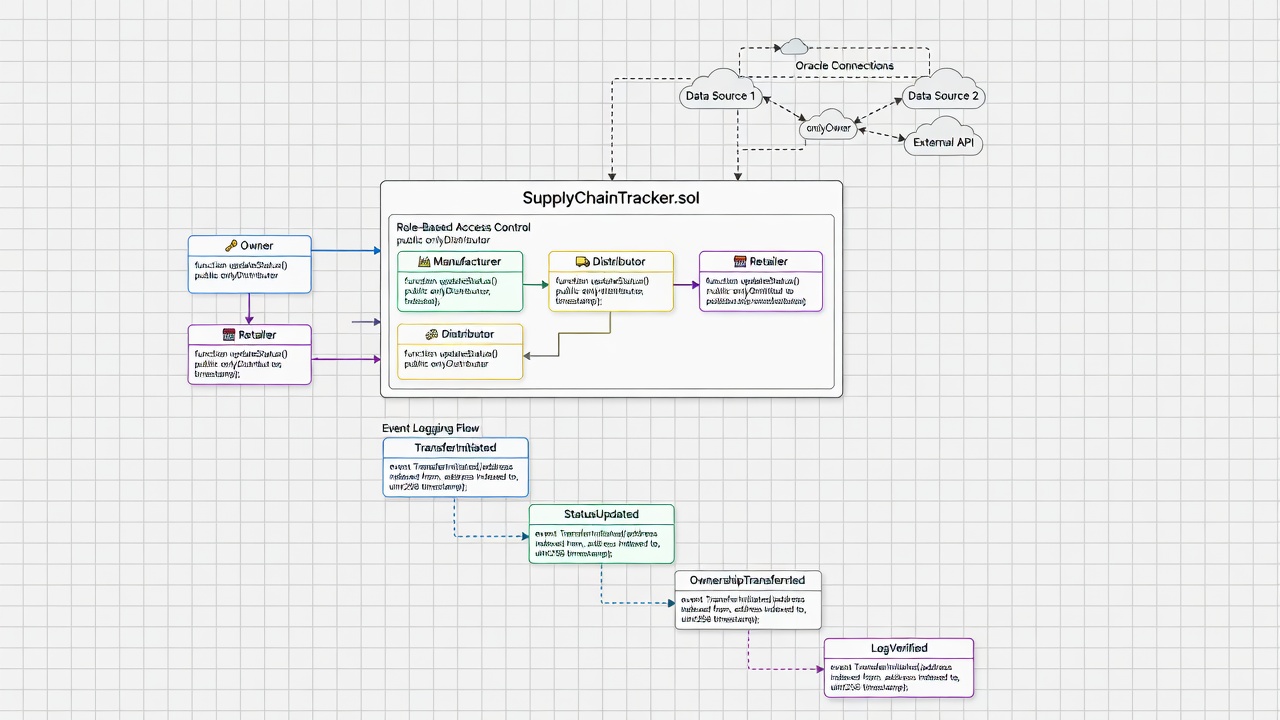
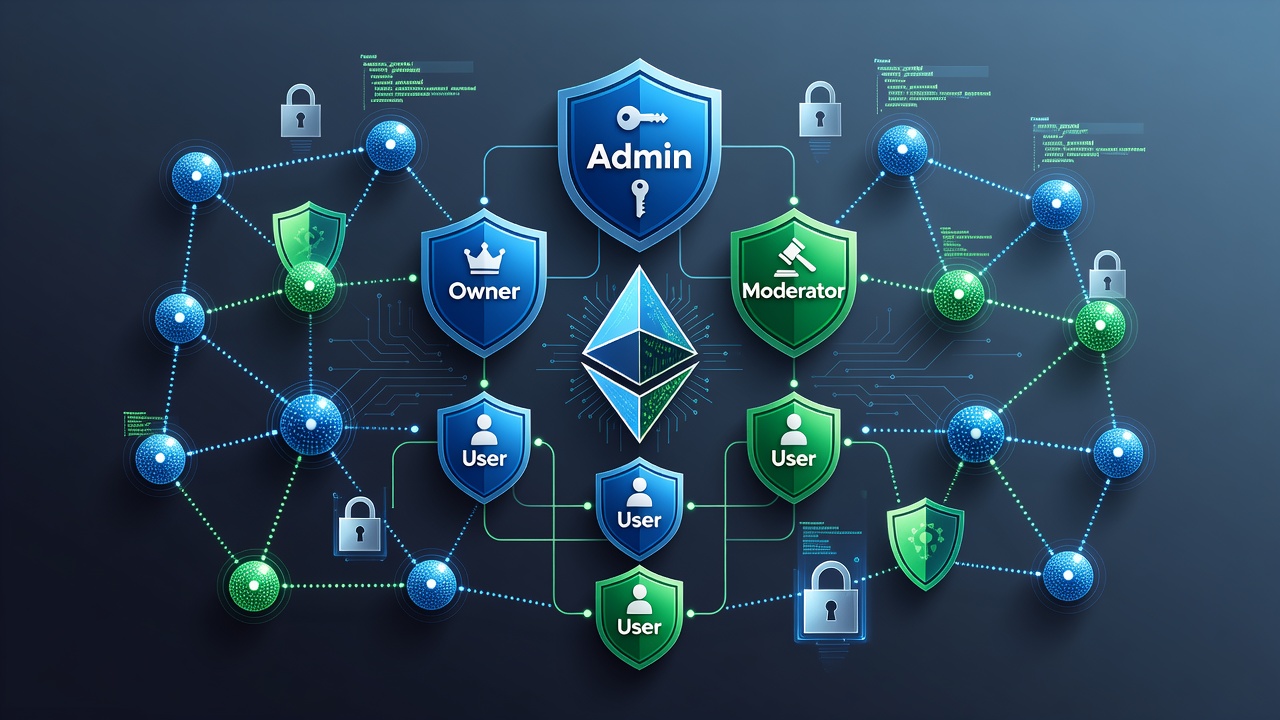
Use OpenZeppelin's AccessControl for granular role-based permissions. Define roles such as Manufacturer, Distributor, Retailer, Auditor, and Admin. Each role receives specific functions; for example only manufacturers can create new product batches while distributors can update shipment locations. Here is an expanded contract skeleton demonstrating proper role setup:
pragma solidity ^0.8.20;
import "@openzeppelin/contracts/access/AccessControl.sol";
import "@openzeppelin/contracts/security/Pausable.sol";
contract SupplyChain is AccessControl, Pausable {
    bytes32 public constant MANUFACTURER_ROLE = keccak256("MANUFACTURER_ROLE");
    bytes32 public constant DISTRIBUTOR_ROLE = keccak256("DISTRIBUTOR_ROLE");
    bytes32 public constant AUDITOR_ROLE = keccak256("AUDITOR_ROLE");
    constructor() {
        _grantRole(DEFAULT_ADMIN_ROLE, msg.sender);
    }
    // Role management and product tracking functions follow
}
Always grant roles through the admin account and implement a revocation mechanism for when parties leave the network.
Implementing Immutable Event Logging
Every state change must emit detailed events that serve as the permanent audit trail. Include product ID, timestamp, location coordinates, temperature readings if applicable, and the actor address. Because events are immutable on-chain, they provide verifiable proof of custody that can be queried by any participant or regulator. Design events to be indexed for efficient off-chain filtering and consider emitting both high-level and granular events for different use cases.
Integrating Oracles for Off-Chain Data
Many supply chain events rely on real-world data such as temperature readings from IoT sensors, customs clearance status, or delivery confirmations. Use decentralized oracles to feed this information securely rather than trusting a single data provider. Chainlink's decentralized oracle networks remain the standard choice in 2026 because they aggregate multiple sources and use cryptographic proofs. Implement request-response patterns with proper timeout handling and fallback mechanisms if an oracle feed becomes unavailable.
Optimizing Storage to Reduce Gas Costs
Storage operations dominate gas usage in supply chain contracts that track thousands of products. Pack variables into fewer slots using structs, prefer mappings over arrays for participant lists, and emit events rather than storing redundant historical data on-chain. For example, store only the current owner and latest status while logging previous states exclusively through events. These techniques keep transactions affordable even during periods of high network congestion. Test gas consumption with Hardhat's gas reporter before mainnet deployment to identify expensive functions that need refactoring.
Preventing Common Tampering Attacks
Validate all inputs with require statements and custom errors. Follow the checks-effects-interactions pattern to avoid reentrancy. Protect against front-running with commit-reveal schemes when bidding on logistics contracts. For multi-party workflows, implement time-locked functions that allow a review period before critical actions such as ownership transfer are finalized. Consider adding circuit breakers via the Pausable pattern so the contract can be paused during emergencies.
Step-by-Step Deployment Guide
- Write and compile contracts locally using Hardhat.
- Write comprehensive unit tests covering happy paths, edge cases, and attack scenarios with at least 80 percent coverage.
- Deploy to a testnet such as Sepolia and verify contract source code on Etherscan.
- Grant initial roles through the admin account and test role-restricted functions.
- Integrate a frontend application using ethers.js or viem for real-time event listening.
- Conduct an external security audit and address all findings before mainnet launch.
- Monitor the contract post-deployment using tools like Tenderly for transaction simulation and anomaly detection.
Security Checklist
- Implement role-based access control using OpenZeppelin libraries.
- Use only audited oracle providers with multiple data sources.
- Emit comprehensive events for every state change and ownership transfer.
- Optimize storage layout and test gas usage before mainnet deployment.
- Conduct external audits and run static analysis tools such as Slither and Mythril.
- Include emergency pause functionality and clear upgrade paths if using proxies.
- Document all roles and permissions in a public whitepaper or README.
Common Pitfalls Versus Best Practices
Pitfall: Hardcoding oracle addresses without upgrade paths. Best practice: Use proxy patterns or a registry contract for flexibility. Pitfall: Overusing arrays for participant lists leading to high gas costs. Best practice: Favor mappings combined with events for better scalability. Pitfall: Ignoring gas limits during multi-party batch updates. Best practice: Split operations across multiple transactions with clear checkpoints. Pitfall: Failing to handle oracle failures gracefully. Best practice: Implement timeouts and fallback data sources. Pitfall: Allowing role changes without multi-signature approval. Best practice: Require at least two admin signatures for sensitive role grants or revocations.
Frequently Asked Questions
How do I handle disputes between parties?
Include an arbitration role and time-bound challenge periods that allow evidence submission via events. The arbitrator can review the immutable event log and issue a final on-chain ruling.
Can I integrate IoT devices directly?
IoT devices should push data through oracle networks rather than calling contracts directly to maintain security and prevent device-level exploits from affecting the blockchain layer.
What networks are recommended in 2026?
Ethereum mainnet, Polygon, and Base remain popular choices for supply chain deployments due to mature tooling, strong security track records, and sufficient liquidity for gas payments.
How should I version the contract over time?
Use the proxy pattern with OpenZeppelin's upgradeable contracts so new features can be added without migrating existing product data.
Conclusion
Building secure supply chain contracts in Solidity requires deliberate attention to access control, data integrity, and gas efficiency. By following the patterns in this tutorial and consulting authoritative resources such as the Solidity documentation and OWASP smart contract guidance, developers can deliver production-ready solutions that multiple parties can trust. Start with a minimal viable contract on testnet, iterate based on security reviews, and scale only after thorough validation.

No comments yet. Be the first!