 CryptoChain Blog
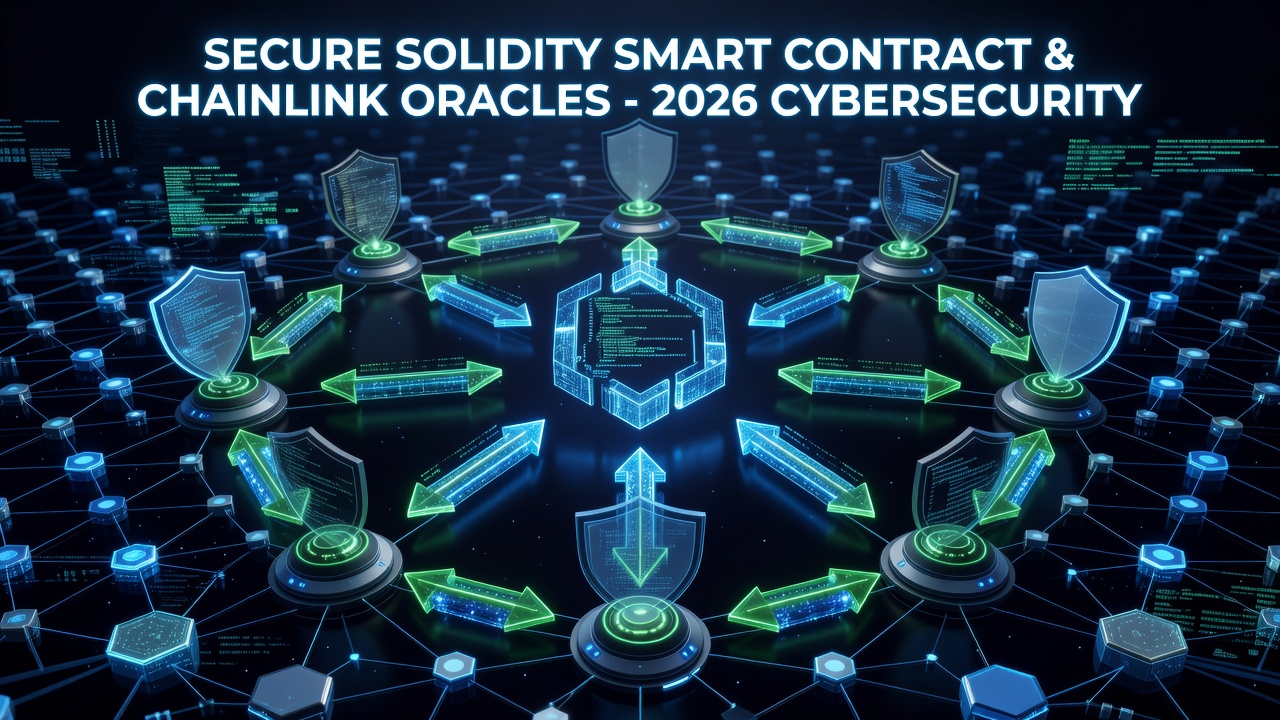
Introduction to Secure Chainlink Oracle Integration
Integrating Chainlink oracles into Solidity smart contracts enables reliable access to off-chain data such as asset prices, weather conditions, or sports results. As of 2026, developers must prioritize security to prevent common vulnerabilities like data manipulation or stale feeds. This tutorial covers validated approaches aligned with current standards. Chainlink provides decentralized oracle networks that aggregate data from multiple sources, reducing single points of failure. Proper implementation protects DeFi protocols, prediction markets, and other blockchain applications from exploits that have historically targeted weak oracle connections.
Off-chain data is essential because blockchains cannot natively access external information. Without secure oracles, smart contracts remain isolated from real-world events. Chainlink solves this by using a network of independent node operators who fetch, validate, and deliver data on-chain. In 2026, security standards emphasize multi-layer validation, including cryptographic proofs and economic incentives that penalize malicious behavior.
Understanding Chainlink Oracle Types and Use Cases
Chainlink supports several oracle patterns. Price feeds deliver real-time asset prices suitable for DeFi lending and derivatives. The request-response pattern allows custom data fetches with on-chain callbacks. Data feeds differ from VRF for randomness and CCIP for cross-chain messaging. Price feeds are the most widely adopted because they provide continuous, high-frequency updates with built-in deviation and heartbeat mechanisms that trigger refreshes when prices move beyond thresholds or after fixed time intervals.
Compare price feeds against request-response: feeds offer lower latency and gas costs for frequent queries, while request-response provides flexibility for specialized data such as API responses from weather services or sports scores. In 2026, most DeFi contracts favor price feeds for their proven security track record. Developers should evaluate latency requirements, data freshness needs, and cost implications when choosing between patterns. For example, a perpetual futures exchange benefits from sub-second price updates via feeds, whereas an insurance contract might use request-response for one-time event verification.
Setting Up Your Development Environment
Begin with the latest Solidity compiler version 0.8.26 or higher. Install Hardhat or Foundry for testing. Import Chainlink contracts via npm package @chainlink/contracts. Verify all dependencies against official repositories before deployment. Configure your project with TypeScript for better type safety and use environment variables to store oracle addresses and job IDs securely. Always pin exact package versions in package.json to prevent supply-chain attacks from unexpected updates.
Next, set up a local blockchain environment using Hardhat Network or Anvil. Install the Chainlink Hardhat plugin to simulate oracle responses during testing. This allows developers to mock price updates without incurring real LINK token costs on testnets.
Implementing Price Feed Validation
Always validate price feed data before use. Check the latest round ID, timestamp, and answeredInRound values. Reject data if the timestamp exceeds acceptable staleness thresholds, typically 1 hour for volatile assets. Additional checks should include verifying that the price is within expected bounds and that the round has been fully answered by the oracle network.
function getLatestPrice() public view returns (int256) {
    (uint80 roundId, int256 price, , uint256 updatedAt, uint80 answeredInRound) = priceFeed.latestRoundData();
    require(answeredInRound >= roundId, "Stale round");
    require(updatedAt >= block.timestamp - 1 hours, "Stale price data");
    require(price > 0, "Invalid price");
    return price;
}
This pattern prevents reliance on outdated or zero-value responses. For production contracts, consider storing the last known good price and implementing circuit breakers that pause operations if multiple consecutive rounds fail validation.
Access Controls for Oracle Calls
Restrict oracle interactions using role-based permissions. Implement OpenZeppelin AccessControl to limit who can trigger requests or update configurations. Only contract owners or designated keepers should modify feed addresses. Consider integrating with governance systems so that oracle address changes require token-holder approval.
- Use onlyOwner modifiers on administrative functions.
- Employ multi-signature wallets for production deployments.
- Monitor events for unauthorized access attempts.
- Implement time-locks on sensitive parameter updates to allow community review.
Handling Data Staleness and Manipulation Risks
Data staleness occurs when oracle updates lag behind market movements. Set dynamic thresholds based on asset volatility. To mitigate manipulation, aggregate multiple feeds or use Chainlink's deviation thresholds. Manipulation risks include flash-loan attacks that temporarily distort reported prices on a single feed. Mitigation strategies involve using volume-weighted average prices across several Chainlink aggregators and adding on-chain sanity checks that compare the oracle price against a secondary source such as a centralized exchange API accessed via another oracle.
Common pitfalls include missing round validation and ignoring answeredInRound. Always cross-reference with historical rounds when critical decisions depend on the data. Developers should also monitor Chainlink's own status pages and set up alerts for prolonged heartbeat failures on specific feeds.

Request-Response Pattern for Custom Data
When price feeds are insufficient, implement the request-response pattern. This involves creating a ChainlinkClient contract, defining a job ID, and handling the fulfill callback. The pattern requires paying LINK tokens for each request and properly encoding parameters. Always validate the callback sender to prevent unauthorized fulfillment.
function requestData() public returns (bytes32 requestId) {
    Chainlink.Request memory req = buildChainlinkRequest(jobId, address(this), this.fulfill.selector);
    req.add("get", "https://api.example.com/data");
    return sendChainlinkRequestTo(oracle, req, fee);
}
Gas Optimization Techniques
Minimize gas consumption by caching price data when possible and batching multiple oracle reads. Use view functions for price queries to avoid unnecessary state changes. Consider Chainlink's latest aggregator interfaces that support efficient data packing. Additional optimizations include using immutable variables for oracle addresses and reducing storage writes by updating prices only when they deviate beyond a configured threshold.
Practical Case Study: DeFi Price-Dependent Contract
Consider a simple lending protocol that liquidates positions when collateral value drops below a threshold. The contract integrates ETH/USD price feed, validates freshness, applies access controls, and emits events for off-chain monitoring. Full implementation includes unit tests with mocked oracle responses to simulate edge cases like network delays. The liquidation function reads the validated price, calculates health factors, and executes transfers only after all checks pass. Developers should also include emergency pause functionality controlled by a multisig and comprehensive event logging that records every oracle interaction for forensic analysis.
Common Pitfalls and How to Avoid Them
Many developers forget to handle the case where the oracle contract is upgraded, leading to broken integrations. Always use proxy patterns or store oracle addresses in upgradeable storage slots. Another frequent mistake is hardcoding job IDs instead of making them configurable through governance. Finally, insufficient testing of callback functions can leave contracts vulnerable to reentrancy when external calls occur inside fulfill methods.
Testing Strategies and Security Audits
Comprehensive testing covers happy paths, stale data rejection, and access denial scenarios. Use Foundry fuzzing to explore unexpected inputs. Engage professional auditors familiar with oracle integrations before mainnet launch. Resources such as Chainlink documentation and Solidity language reference provide additional guidance. Conduct both unit and integration tests on testnets like Sepolia, simulating various oracle failure modes including delayed responses and incorrect data.
Conclusion
Secure Chainlink integration requires rigorous validation, access controls, and ongoing monitoring. Following these 2026-aligned practices helps developers build resilient smart contracts that safely leverage off-chain data while minimizing attack surfaces.


No comments yet. Be the first!