 CryptoChain Blog

Introduction to Token Vesting in Solidity
Token vesting contracts serve as critical tools in blockchain ecosystems for distributing tokens gradually, ensuring alignment between project teams, investors, and users. As of 2026, the emphasis on security in these contracts has intensified following multiple high-profile exploits targeting vesting logic. This in-depth tutorial guides developers through constructing robust vesting mechanisms using Solidity, focusing on preventing vulnerabilities such as front-running attacks and unauthorized privilege escalations. The content covers time-based release schedules, mandatory cliff periods, flexible revocation options, and tight integration with ERC-20 token standards. Step-by-step code walkthroughs demonstrate practical implementations while highlighting gas-efficient patterns and comprehensive testing approaches. By the end, you will possess the knowledge to deploy production-ready contracts that withstand audits and real-world usage.
Projects increasingly rely on vesting to prevent immediate token dumps that destabilize markets. Whether managing advisor allocations or investor tranches, a well-designed contract enforces discipline and builds trust. This guide addresses the search intent for actionable smart contract tutorials by providing deployment checklists, common mistake avoidance strategies, and side-by-side comparisons of vesting models.
Understanding Linear vs. Cliff Vesting Approaches
Linear vesting releases tokens in a continuous, proportional manner once the start timestamp is reached. This model suits ongoing contributor rewards because it provides predictable unlocking without abrupt events. Cliff vesting, conversely, enforces an initial waiting period during which no tokens become available, after which releases may occur linearly or in batches. Cliffs are particularly effective for investor agreements where early departures must be discouraged.
Key decision factors include project timeline and stakeholder behavior. Linear approaches reduce administrative overhead but may not deter short-term speculation. Cliff structures offer stronger retention incentives yet risk mass unlocks that pressure token prices. Hybrid models combining both can be implemented by layering multiple vesting schedules within a single contract. When evaluating options, consider the following comparison points:
- Linear: Continuous release after start; lower risk of sudden sell pressure; simpler to calculate remaining balances.
- Cliff: Zero release until cliff date passes; higher security against premature exits; requires careful timestamp management.
- Hybrid: Combines initial cliff with subsequent linear unlocks; offers maximum flexibility for complex tokenomics.
Selecting the appropriate model early prevents costly contract upgrades later.
Core Components of a Vesting Contract
Every secure vesting contract must manage beneficiary data, enforce time constraints, and interact safely with ERC-20 tokens. Core elements include a start timestamp, total vesting duration, cliff duration, and an admin-controlled revocation flag. Data structures typically use a struct to encapsulate each beneficiary’s schedule and a mapping to associate addresses with their respective records. The contract should inherit from established libraries to reduce attack surface area.
ERC-20 integration occurs via the standard interface, allowing the vesting contract to call transfer functions only after validating release eligibility. Always confirm sufficient token balances and allowances before scheduling to avoid failed transactions. Additional components such as event emissions for transparency and pause functionality for emergency situations enhance operational resilience.
Step-by-Step Implementation with Security Best Practices
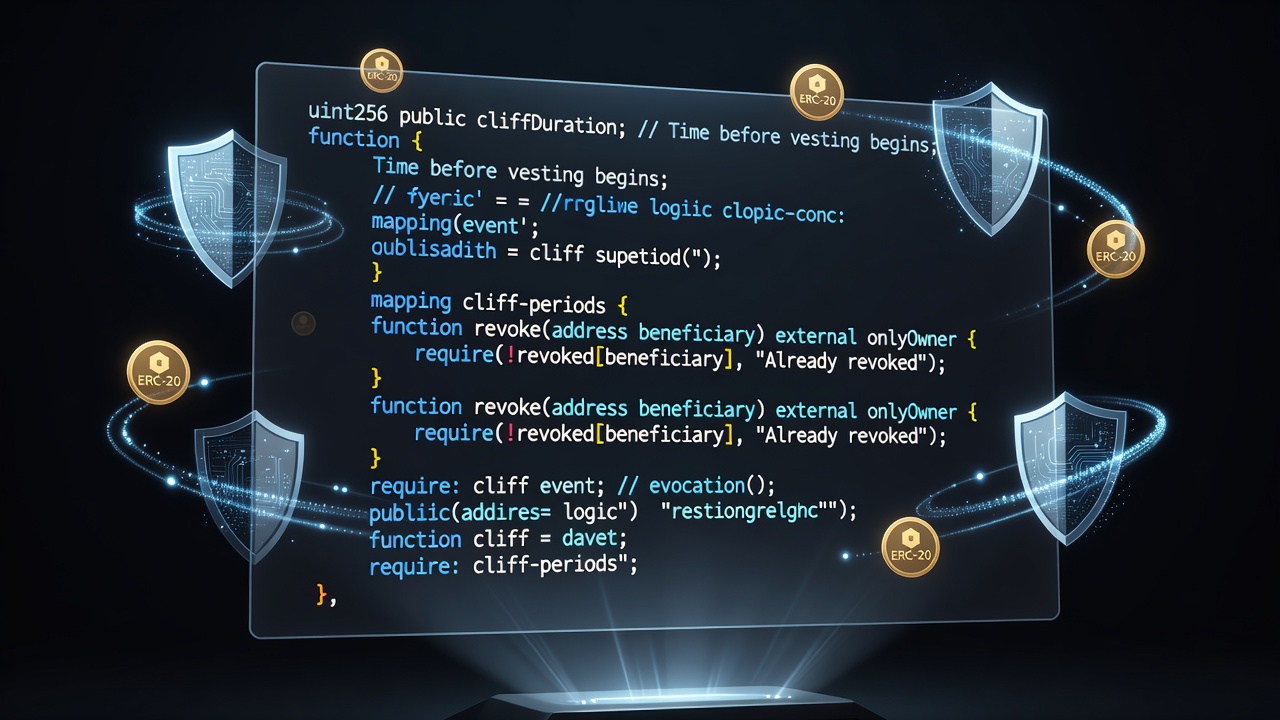
Start by declaring the contract with Solidity version 0.8.20 or later to benefit from built-in overflow checks and custom error support. Define a VestingSchedule struct containing beneficiary address, total allocation, start time, duration, cliff duration, and amount already released. Store schedules in a mapping keyed by beneficiary. Implement an onlyAdmin modifier using OpenZeppelin’s AccessControl for granular permission management.
Time-based logic relies on block.timestamp, but developers must guard against miner manipulation by combining it with require statements that validate realistic time windows. To mitigate front-running, release functions should incorporate commit-reveal patterns or strict caller restrictions. Revocation logic allows the admin to reclaim unvested tokens, implemented through a revocable flag and a dedicated revoke function that updates the schedule and transfers remaining tokens back to the treasury.
Code should include comprehensive input validation: ensure durations exceed cliffs, start times are in the future, and allocations do not exceed contract token holdings. Events such as TokensReleased and ScheduleRevoked provide on-chain audit trails. Gas optimization is achieved by minimizing storage writes and using memory variables for calculations before updating state.
Mitigating Key Risks in Vesting Contracts
Front-running remains a persistent threat where malicious actors observe pending transactions and front-run release calls. Countermeasures include requiring specific nonces or using private mempools for sensitive operations. Unauthorized access is prevented through role-based access control and multi-signature admin wallets. Reentrancy risks are eliminated by following the checks-effects-interactions pattern and using ReentrancyGuard from OpenZeppelin. Finally, timestamp dependency issues are addressed by documenting assumptions and optionally integrating Chainlink oracles for external time verification when absolute precision is required.
Gas Optimization and Practical Code Examples
Batch processing of multiple beneficiary releases in a single transaction reduces cumulative gas costs. Avoid loops over unbounded arrays by implementing pagination for large beneficiary sets. Use uint128 or smaller types where possible for amounts to pack storage slots efficiently. Example release function pseudocode demonstrates calculating releasable tokens as (time elapsed minus cliff) divided by duration multiplied by total allocation, capped at the remaining balance.
Deployment Checklist and Testing Strategies
Prior to mainnet deployment, conduct internal audits, engage third-party reviewers, and deploy to testnets such as Sepolia. Verify contract source code on Etherscan and simulate real-world scenarios including zero-value releases, cliff boundary conditions, and revocation after partial unlocks. Testing frameworks like Foundry enable vm.warp for time manipulation and fuzz testing for random schedule parameters. Maintain comprehensive test coverage exceeding 95 percent, including edge cases such as contract self-destruction attempts and token balance mismatches.
Comparison of Vesting Methods and Common Pitfalls
Linear vesting provides smooth distribution but may fail to retain talent long-term. Cliff vesting strengthens commitment yet creates psychological pressure at unlock dates. Common pitfalls include incorrect handling of block.timestamp leading to premature releases, omission of access control modifiers allowing anyone to revoke schedules, and failure to test revocation after partial claims resulting in double-spending vulnerabilities. Always consult authoritative resources such as Solidity documentation, Ethereum developer resources, OpenZeppelin contracts, and Consensys best practices during development.
FAQ on Secure Vesting Contracts
How do I support multiple beneficiaries efficiently? Utilize mappings combined with an array for iteration and implement pagination to avoid gas limit issues during enumeration.
What happens if the underlying ERC-20 token is upgraded? Design the vesting contract to be upgradeable using proxy patterns while maintaining immutable vesting parameters.
Can revocation be made time-locked for added safety? Yes, introduce a timelock delay on revocation transactions to allow community review.
How should teams handle token price volatility during vesting? Focus on token quantity rather than fiat value; consider adding oracle-based adjustments only when explicitly required by governance.
Additional best practices emphasize continuous monitoring post-deployment and maintaining an emergency pause switch controlled by a multisig.
Conclusion
Implementing secure token vesting contracts in Solidity demands careful attention to timing logic, access controls, and integration patterns. By following the detailed steps, security mitigations, and testing regimens outlined above, developers can create reliable systems that protect stakeholder interests throughout 2026 and future years. Thorough preparation and adherence to established standards will result in contracts that earn community confidence and withstand evolving threat landscapes.


No comments yet. Be the first!