 CryptoChain Blog

Introduction to AI-Driven Tokenomics in 2026
Tokenomics, the study of token economics within blockchain ecosystems, has evolved dramatically with the integration of artificial intelligence. In 2026, onchain analytics powered by AI provides deeper insights into token supply, demand, utility, and market behavior. This case study explores how AI shapes modern token economics through advanced blockchain analytics, focusing on utility models, predictive metrics, and real-world applications. Analysts and builders now rely on AI to process vast onchain datasets, identifying patterns that traditional methods miss. This shift enables more accurate forecasting of token performance and protocol sustainability. As blockchain networks grow in complexity, AI tools help decode the intricate relationships between token holders, liquidity pools, and decentralized applications. The result is a more dynamic economic framework where tokens respond intelligently to usage data and external signals.
Over the past year, the convergence of machine learning algorithms with onchain data streams has accelerated, allowing protocols to adjust token emissions automatically based on real-time network health indicators. This evolution addresses longstanding challenges in token design, such as inflation control and incentive alignment, by introducing adaptive mechanisms that evolve with user behavior.
Understanding AI Token Utility Models
AI token utility models define how tokens derive value through artificial intelligence applications. Common models include governance tokens that enable AI-driven decision-making, staking mechanisms tied to AI model training rewards, and payment tokens for accessing decentralized AI services. These models emphasize dynamic utility, where token value adjusts based on real-time AI performance metrics derived from onchain data. For instance, tokens may incentivize data contribution to AI models or reward accurate predictions in decentralized forecasting systems. In practice, utility often manifests through layered incentive structures where token holders participate in both governance votes and algorithmic model optimization tasks.
Another prominent model involves revenue-sharing mechanisms where a portion of fees generated from AI inference services flows back to token stakers. This creates a direct link between protocol usage and token holder returns, fostering long-term commitment rather than short-term speculation. Builders designing these models must carefully calibrate reward curves to prevent gaming or centralization of AI compute resources.
Predictive Onchain Metrics for AI Projects
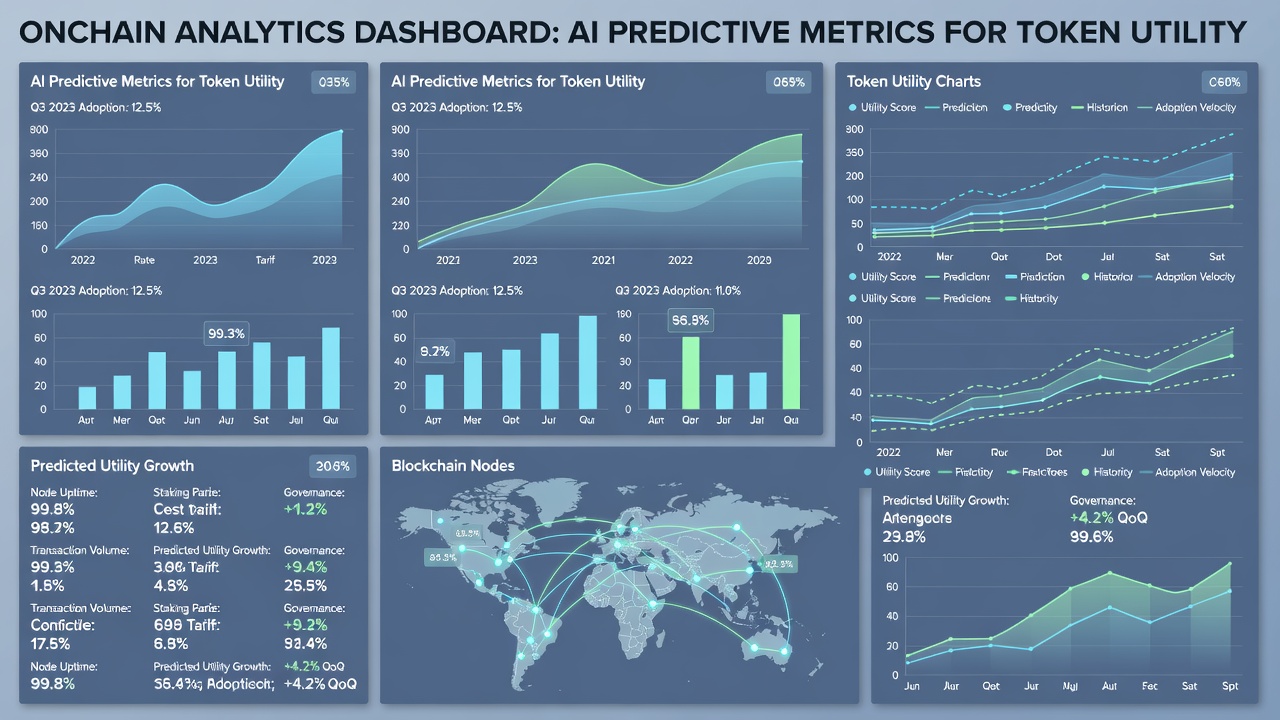
Predictive onchain metrics leverage machine learning to analyze transaction volumes, wallet behaviors, and smart contract interactions. Key metrics in 2026 include AI-influenced velocity of tokens, concentration of holdings in AI protocol treasuries, and cross-chain flows related to AI compute resources. Tools such as those from Chainalysis integrate AI to detect anomalies and predict liquidity shifts. Builders can use these to optimize token distribution and mitigate risks associated with speculative trading. Additional metrics gaining traction involve sentiment-weighted transaction clustering and predictive modeling of smart contract call frequencies tied to AI model updates.
By applying supervised learning techniques to historical onchain datasets, analysts can forecast periods of heightened token demand driven by AI feature releases or model accuracy improvements. This level of granularity helps protocols anticipate and manage treasury allocations more effectively than static models allow.
Real-World Protocol Examples
Several protocols exemplify AI-driven tokenomics. Projects like decentralized AI marketplaces utilize tokens for compute sharing, with onchain analytics tracking model accuracy and usage fees. Another example involves prediction markets enhanced by AI, where token incentives align with improved forecasting outcomes. These cases demonstrate how onchain data combined with AI creates self-reinforcing economic loops, boosting protocol adoption and token demand. A third example appears in decentralized data marketplaces where tokens reward contributors based on the quality of datasets validated through AI scoring systems, leading to higher-quality training data and more valuable tokens over time.
One leading protocol has implemented an AI-orchestrated liquidity provisioning system that reallocates token incentives across pools according to predicted usage patterns, resulting in more stable price action during market volatility. Such implementations highlight the practical benefits of embedding predictive analytics directly into token distribution logic.
Comparisons with Traditional Tokenomics
Traditional tokenomics often relies on static models like fixed supplies and simple staking. In contrast, AI-driven approaches incorporate adaptive algorithms that respond to live onchain signals, leading to more resilient ecosystems. Key differences include enhanced transparency through AI-audited distributions and reduced centralization risks via predictive governance. However, traditional models may offer simpler predictability for early-stage projects. AI-enhanced systems also tend to reduce the frequency of governance attacks by dynamically adjusting voting power based on contribution history rather than mere token holdings.
While traditional approaches excel in environments requiring regulatory clarity and straightforward audits, AI-driven tokenomics introduces complexity that demands sophisticated monitoring infrastructure. Teams transitioning from legacy models must invest in both data pipelines and explainable AI frameworks to maintain stakeholder trust.
Practical Steps for Evaluating AI-Integrated Tokens
To evaluate AI-integrated tokens effectively, follow these steps:
- Analyze onchain transaction data for AI-specific utility indicators using platforms like Dune. This involves querying for patterns in smart contract interactions that correlate with AI model performance metrics.
- Assess predictive metrics such as model adoption rates and token velocity tied to AI outputs, comparing them against baseline projections derived from similar historical protocols.
- Review smart contract audits focused on AI integration points to ensure that oracle feeds and model update mechanisms are secure and tamper-resistant.
- Compare token distribution against historical onchain benchmarks from similar projects, paying special attention to treasury wallet movements and large-holder concentration.
- Monitor community governance proposals influenced by AI recommendations, evaluating how these suggestions impact long-term token economics and user retention.
These steps help identify sustainable opportunities while avoiding overhyped assets. Applying them consistently across multiple timeframes provides a robust framework for distinguishing genuine innovation from marketing-driven narratives.
2026 Trends and Actionable Insights for Analysts and Builders
In 2026, trends point toward deeper integration of zero-knowledge proofs with AI analytics, enabling private yet verifiable onchain model evaluations. Analysts should prioritize tools that combine multi-chain data aggregation with natural language interfaces for rapid insight generation. Builders are advised to embed feedback loops that allow tokens to self-adjust emission schedules based on usage forecasts, reducing the need for frequent governance interventions.
Actionable insights include conducting quarterly onchain health audits that incorporate AI anomaly detection and stress-testing token models against simulated black-swan events. This proactive approach helps maintain ecosystem stability amid rapid technological change.
FAQ: Risks and Opportunities in AI-Driven Tokenomics
What are the main risks?
Risks include over-reliance on AI models that may produce inaccurate predictions, leading to token volatility. Regulatory uncertainties around AI and blockchain also pose challenges. Additional concerns involve data privacy when training models on sensitive onchain activity and potential concentration of AI compute power among a few large token holders.
What opportunities exist for builders?
Builders can leverage AI for innovative utility features, attracting users through superior onchain analytics and creating competitive advantages in token economics. Opportunities also arise in creating new asset classes such as tokenized AI model ownership rights that generate ongoing revenue streams.
How do 2026 trends impact analysts?
Trends emphasize real-time predictive tools, enabling analysts to provide more precise investment guidance based on evolving onchain patterns. Analysts who master these tools gain an edge in identifying undervalued protocols before broader market recognition occurs.
Conclusion
AI-driven tokenomics represents a pivotal advancement in blockchain economics by 2026. Through sophisticated onchain analysis, stakeholders gain actionable insights that enhance decision-making. By applying the outlined evaluation steps and understanding key models, analysts and builders can navigate this landscape successfully. Continued innovation in this space promises more efficient and transparent token economies that better align incentives across participants and support sustainable growth for decentralized AI initiatives.


No comments yet. Be the first!