 CryptoChain Blog

Introduction to Blockchain Gaming Guild Tokenomics in 2026
Blockchain gaming guilds have evolved into sophisticated onchain organizations that manage play-to-earn economies through carefully designed token models. In 2026, onchain analytics provide unprecedented visibility into how these guilds distribute value, sustain incentives, and manage liquidity. This analysis targets players, investors, and developers seeking practical tools to evaluate guild token health beyond surface-level metrics. Guilds act as intermediaries between individual players and complex game economies, often controlling large treasuries that influence token prices and player rewards. Onchain data from public ledgers allows anyone to track real-time movements, revealing whether a guild's tokenomics support long-term growth or encourage short-term speculation. Understanding these dynamics helps identify sustainable models versus those prone to rapid token velocity and value erosion, especially as more games integrate cross-chain features and decentralized governance.
Many guilds now operate across multiple blockchains, requiring analysts to aggregate data from various explorers. This creates opportunities for deeper insights but also increases the complexity of spotting manipulation. By focusing on metrics like token velocity, holder distribution, and treasury activity, stakeholders can make informed decisions about joining or investing in specific guilds.
Token Utility Within Play-to-Earn Mechanics
Effective guild tokens serve multiple roles: governance over treasury decisions, staking for revenue shares, and access to exclusive in-game assets. In play-to-earn setups, tokens often act as intermediaries between player earnings and guild-level rewards. For example, members stake tokens to claim portions of scholarship revenue or participate in guild-funded NFT rentals that generate daily yields. Utility extends to liquidity provision, where guilds lock tokens in decentralized exchanges to support trading pairs. This creates a feedback loop where token demand supports treasury growth. However, poorly designed utilities lead to high sell pressure when rewards concentrate among early members. Additional utilities include discounted access to guild-managed game accounts and priority allocation in new NFT drops. These features encourage holding rather than immediate selling, stabilizing the ecosystem. In practice, guilds that tie utility to ongoing gameplay metrics, such as hours played or achievements unlocked, tend to see lower velocity and stronger community retention over time.
Onchain Distribution Patterns Among Guild Members
Distribution patterns expose inequality or healthy participation. Leading guilds show balanced token holdings across core members and scholars, with vesting schedules visible onchain. Analytics platforms track wallet clusters to detect concentration risks, such as top wallets controlling over 40% of circulating supply. Common patterns include linear vesting for founders and performance-based airdrops to active players. Tools like blockchain explorers allow filtering transactions by guild multisig addresses to map reward flows in real time. Analysts often examine the ratio of active stakers to total holders, which indicates genuine engagement versus speculative accumulation. Patterns of gradual distribution through scholarship programs help maintain broad participation and reduce whale dominance. Conversely, sudden large transfers to a small number of addresses frequently signal upcoming sell pressure or internal reallocations that warrant further investigation.
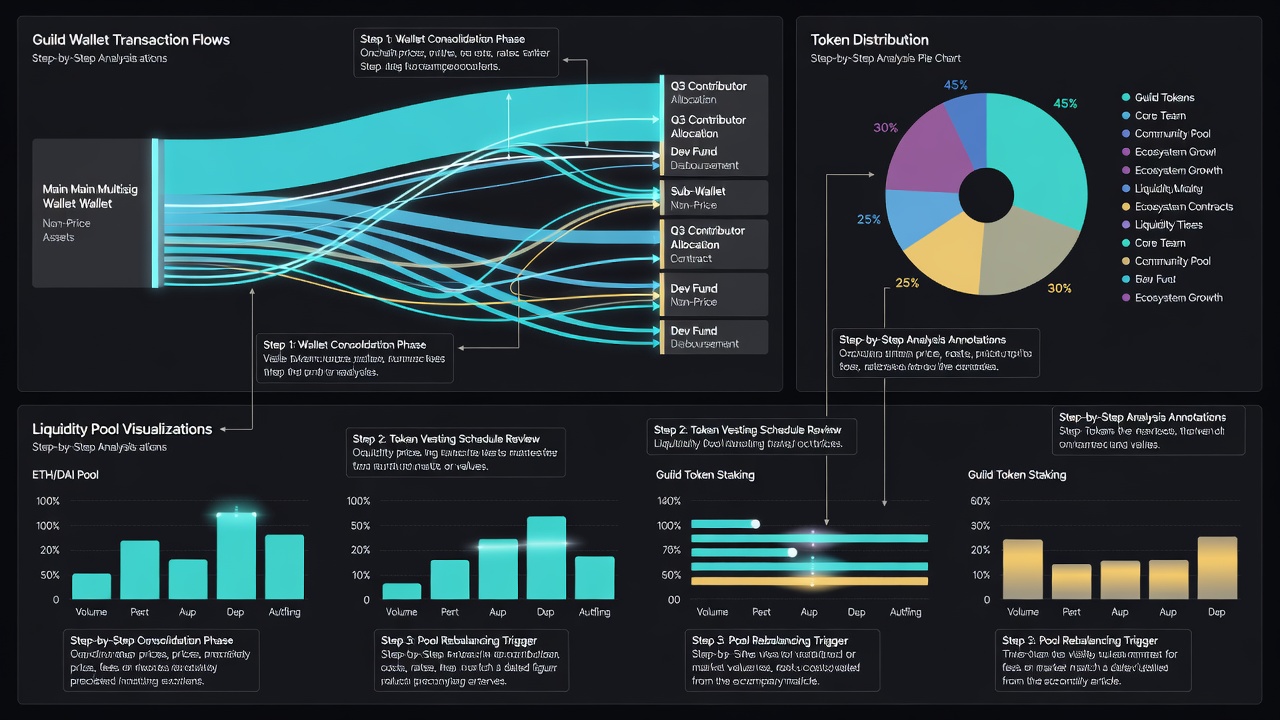
Step-by-Step Guide to Analyzing Guild Wallet Activity
Follow these steps using free onchain tools to evaluate any guild:
- Identify the guild's primary treasury address from official documentation or community channels and verify it through multiple sources to avoid fake wallets.
- Use a blockchain explorer to review incoming and outgoing transactions over the past 90 days, categorizing them by type such as rewards, liquidity adds, or exchange deposits.
- Filter for large transfers to exchanges to spot potential liquidity dumps and cross-check timestamps against known market events.
- Cross-reference staking contracts to calculate member participation rates and identify dormant wallets that may represent inactive scholars.
- Analyze token velocity by dividing total transfers by average holdings to flag unsustainable models and compare against industry benchmarks from similar projects.
This process highlights red flags like frequent treasury-to-exchange movements exceeding 15% of monthly volume. Advanced users can export data into spreadsheets for trend analysis or integrate APIs for automated alerts on unusual activity.
Comparisons of Popular Guild Token Structures
Three dominant structures emerge in 2026: revenue-share tokens, governance-first tokens, and hybrid models. Revenue-share tokens prioritize direct payouts from game earnings, appealing to scholars but exposing holders to game volatility. Governance tokens emphasize voting power over treasuries, fostering long-term alignment yet risking low engagement if proposals lack transparency. Hybrid approaches combine both, often with tiered staking that unlocks higher yields for longer locks. Onchain comparisons show hybrids maintaining steadier liquidity during market dips compared to pure revenue models. Additional variations include deflationary mechanisms where transaction fees burn tokens or redirect them to buyback programs. When evaluating structures, consider how each handles emissions schedules and whether they include built-in incentives for long-term holding versus quick exits.
Real-World Case Studies from Leading Projects
One prominent guild demonstrated resilience by locking 60% of treasury tokens in liquidity pools for 12 months, visible through onchain LP positions. This reduced velocity and supported stable scholar payouts even during broader market corrections. Another project faced scrutiny when onchain data revealed repeated transfers from the guild wallet to a single exchange address, prompting community governance votes for transparency reforms and the implementation of time-locked withdrawals. A third example involved a guild that diversified its treasury across multiple games, using onchain bridges to move assets efficiently and mitigate single-game risks. These cases illustrate how transparent multisig usage and periodic onchain audits shared publicly can build trust and attract more participants over time.
Liquidity Flows from Guild Treasuries
Treasury liquidity management determines long-term viability. Guilds that allocate portions to yield-generating protocols while maintaining emergency reserves show lower token volatility. Onchain monitoring of DEX pools reveals when treasuries provide or remove liquidity, often preceding major price movements. Red flags include sudden removal of liquidity coinciding with high token velocity, signaling potential exits by insiders. Monitoring also helps track how guilds respond to external shocks, such as game updates or regulatory news, by adjusting their positions in real time.
Search Intent: Sustainable Incentives and Velocity Risks
Users searching this topic prioritize identifying guilds with incentive structures that reward ongoing participation rather than short-term farming. Sustainable models feature decay mechanisms for unclaimed rewards and onchain penalties for inactivity. High token velocity often correlates with reward designs that encourage immediate selling over holding. Practical optimization includes monitoring governance proposals that adjust emission rates based on onchain participation metrics and implementing reward multipliers for consistent contributors.
Tools and Platforms for Effective Onchain Analysis
Several established platforms support guild token research. Blockchain explorers provide raw transaction data, while specialized dashboards aggregate metrics like holder distribution and treasury balances. Combining these with community forums allows cross-verification of onchain findings with off-chain developments. Analysts should start with basic explorers before advancing to API-driven tools for custom queries. Regular monitoring helps detect shifts in distribution patterns early.
Potential Red Flags and Mitigation Strategies
Common red flags include overly concentrated holdings, unexplained treasury outflows, and reward structures that ignore player retention. Mitigation involves setting personal thresholds for acceptable velocity and requiring public treasury reports. Guilds that publish regular onchain summaries tend to maintain higher trust levels among members and external observers.
Frequently Asked Questions
What are the main risks in guild token models?
Primary risks include concentrated holdings, high velocity from reward selling, and opaque treasury management. Onchain analysis helps surface these before investment decisions are finalized.
How can guilds optimize token incentives?
Optimization involves implementing vesting cliffs, performance-tied distributions, and diversified treasury allocations across stable assets and productive DeFi positions.
Are onchain tools sufficient for full due diligence?
They provide critical transparency but should combine with off-chain community reviews and game performance data for complete evaluation of any guild opportunity.
What role does token velocity play in guild sustainability?
High velocity often indicates weak holding incentives and can lead to rapid price declines, making it a key metric for assessing long-term viability.
How frequently should investors review guild wallets?
Weekly reviews are recommended during volatile periods, with monthly deep dives for stable projects to catch emerging trends early.
Conclusion
Onchain analytics empower deeper understanding of blockchain gaming guild tokenomics in 2026. By examining utilities, distributions, and flows, stakeholders can distinguish resilient models from fragile ones. Continuous monitoring of wallet activity and liquidity remains essential for navigating this evolving space. For foundational blockchain concepts, refer to Ethereum resources and explore further at Solana documentation. Additional reference material is available at Bitcoin resources.

No comments yet. Be the first!