 CryptoChain Blog
Introduction to NFT Tokenomics and Royalty Mechanics in 2026
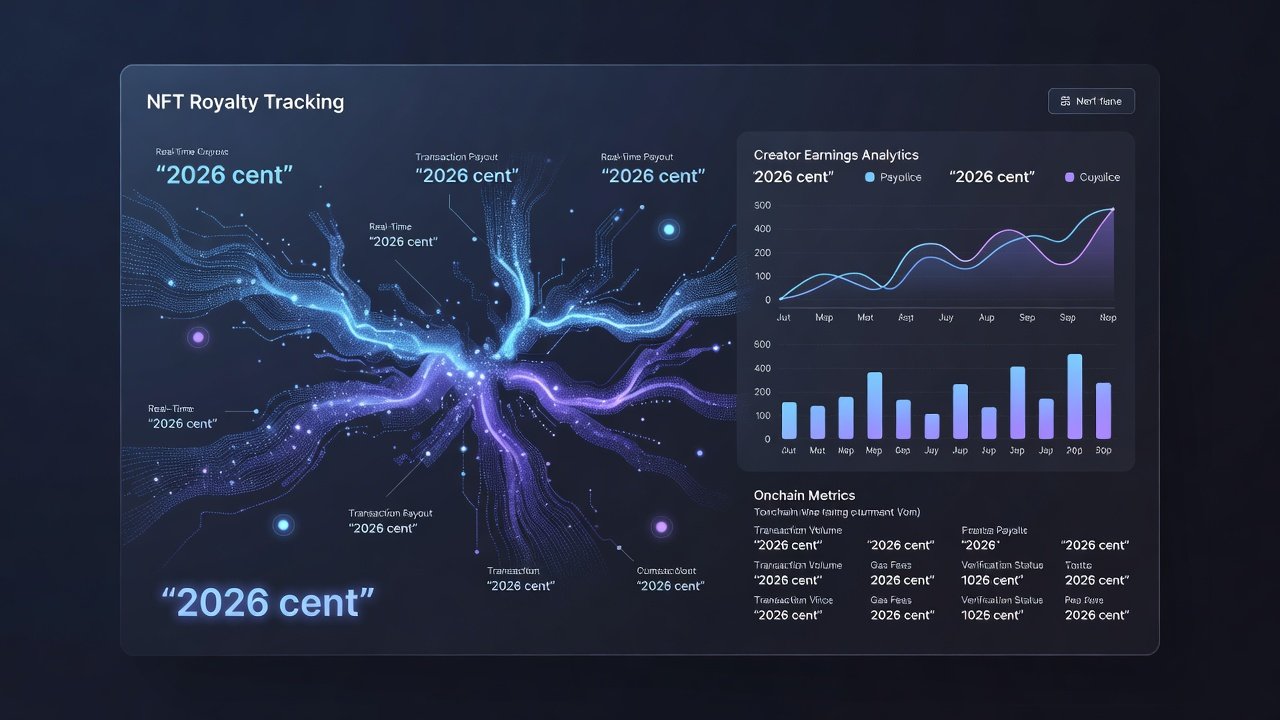
NFT tokenomics in 2026 centers on sustainable creator incentives delivered through transparent onchain royalties. Marketplaces have matured, yet the core challenge remains ensuring that secondary sales continue to reward original creators without relying on off-chain promises. Onchain royalty tracking gives participants direct visibility into fee distribution, holder commitment, and overall economic health. By examining smart contract events, wallet flows, and transfer histories, anyone can evaluate whether a collection’s economics support long-term value rather than short-term speculation.
Traders seeking alpha and creators protecting income both benefit from mastering these techniques. Royalty enforcement directly influences retention rates, floor price stability, and community trust. Projects that maintain high capture rates tend to attract more serious collectors who view the asset as an investment with recurring yield. This guide provides concrete workflows, metric definitions, platform comparisons, and real-world examples that readers can apply immediately.
Step-by-Step Methods to Track Royalty Flows Onchain
Effective tracking begins with identifying the correct contract addresses and royalty standards. Start by locating the collection’s primary smart contract through a marketplace listing or official documentation. For Ethereum and EVM-compatible chains, check whether the contract implements ERC-2981, the widely adopted royalty standard. Query recent transfer events to isolate royalty payments sent to the designated recipient address.
- Record the NFT contract address and note any associated royalty recipient wallets listed in the contract metadata.
- Use a block explorer or indexing service to filter Transfer and RoyaltyPaid events over the past 90 days.
- Calculate the royalty capture rate by dividing total royalty amounts received by the theoretical maximum based on platform fees and sales volume.
- Segment data by holder cohorts to identify wallets that consistently trigger royalty payments versus those that route around them.
- Export results into a spreadsheet or dashboard for trend analysis across multiple collections.
Repeat the process on additional chains such as Base, Polygon, or Solana, adjusting for each chain’s native royalty mechanisms. Set automated alerts for sudden drops in capture rate that may signal marketplace policy changes or contract upgrades.
Key Metrics: Royalty Capture Rates and Holder Retention Signals
Royalty capture rate remains the primary health indicator. Collections achieving consistent rates above 75 percent demonstrate robust enforcement and creator alignment. Lower rates often reveal optional royalty systems or widespread use of royalty-free marketplaces. Holder retention signals complement this view. Average holding duration, repeat purchase frequency, and wallet clustering patterns reveal whether buyers treat the asset as a long-term position or a quick flip.
- Track concentration among top holders to assess risks of coordinated selling that could depress prices.
- Monitor staking or vesting contracts that lock tokens and extend average holding periods.
- Analyze cross-collection activity to see whether royalty-paying holders migrate to other projects with similar economics.
Combining these metrics creates a composite score useful for comparing opportunities across the market.
Comparing Major NFT Platforms and Their Royalty Approaches
Platform policies shape royalty outcomes more than most collectors realize. Some marketplaces hardcode royalty requirements into every transaction, while others allow buyers to opt out. OpenSea offers flexible royalty settings that creators can adjust per collection. In contrast, certain aggregator platforms prioritize liquidity and may route sales through routes that bypass royalties entirely. Ethereum-based platforms generally provide the richest onchain event data, making royalty verification straightforward. Ethereum.org documentation on standards such as ERC-2981 helps developers and analysts understand implementation details. Solana collections require different tooling because royalty logic often lives inside the token metadata program rather than a universal standard. Solana explorers therefore demand custom indexing to surface complete payment flows.
Traders should weigh liquidity advantages against creator sustainability when choosing where to buy and sell. Projects that enforce royalties across multiple venues tend to maintain healthier long-term economics.
Real Project Examples of Sustainable Tokenomics
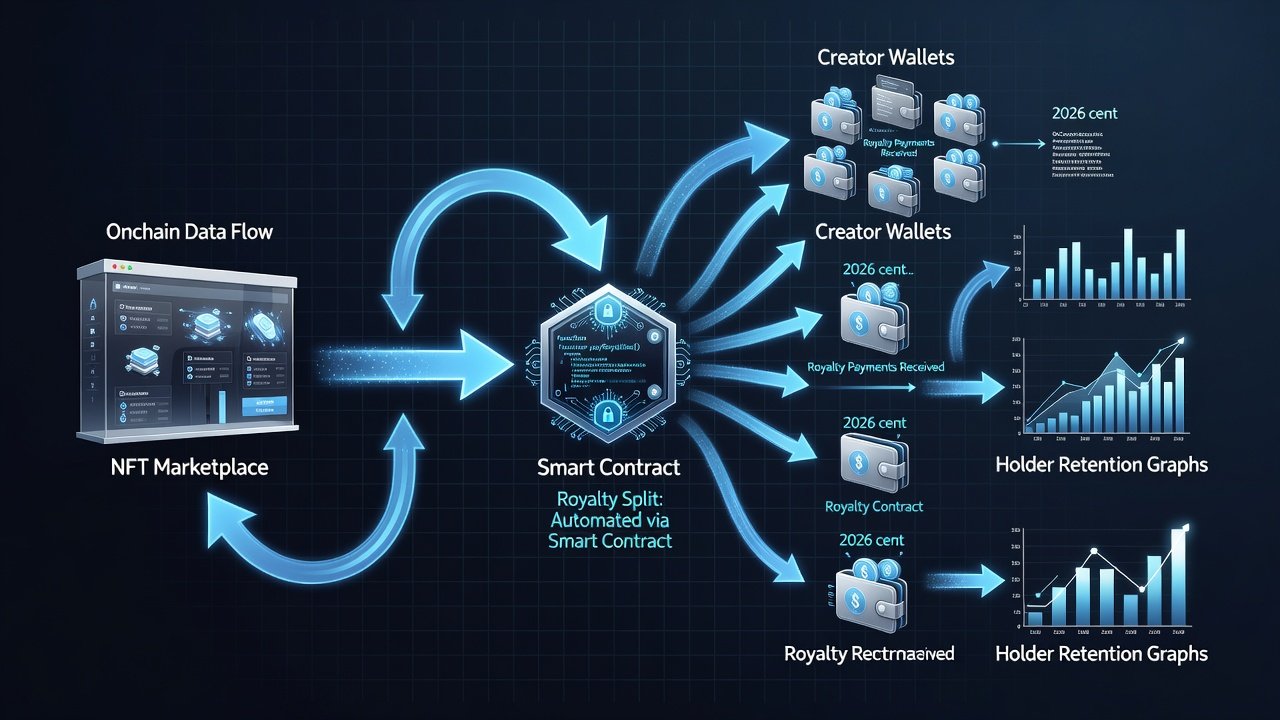
Collections that publish public royalty dashboards provide transparent benchmarks. One established project routes 80 percent of secondary royalties to the artist wallet and 20 percent to a community treasury that funds ongoing development. Onchain records show consistent monthly inflows even during low-volume periods, indicating genuine holder engagement. Another example involves a generative art collection that implemented time-locked royalty splits, preventing immediate dumping of received funds. Analysts reviewing the recipient wallet activity observed gradual distribution aligned with roadmap milestones. These cases illustrate how thoughtful tokenomics design, verified through onchain data, correlates with stronger floor price resilience and higher repeat buyer rates.
Tools and Platforms for Onchain Analysis
Several established platforms streamline royalty tracking without requiring custom code. Block explorers with NFT filters allow quick event queries, while specialized analytics dashboards aggregate capture rates across thousands of collections. Advanced users combine onchain indexing APIs with spreadsheet formulas to build custom alerts. When selecting tools, prioritize those that cover multiple chains and surface both royalty events and holder movement data in a single interface.
Common Pitfalls When Analyzing Royalty Data
Many analysts rely exclusively on marketplace-reported volume figures that do not distinguish between royalty-paying and royalty-free trades. This leads to overestimation of creator income. Another frequent mistake is ignoring multi-chain activity; a collection may show strong Ethereum royalties while the majority of volume occurs on a royalty-optional chain. Always verify recipient wallet inflows directly from contract events rather than trusting aggregated summaries. Finally, failing to account for royalty recipient changes after governance votes can produce misleading historical comparisons.
Dashboard Setup Tips for Immediate Workflows
Begin by connecting a read-only wallet or API key to your chosen analytics platform. Create separate views for royalty capture trends, holder cohort retention, and cross-platform volume splits. Configure weekly email summaries that highlight any collection whose capture rate falls below a personal threshold. Include a section that flags large royalty payments to help spot sudden creator liquidity events. Test the dashboard on three known collections before applying it to new opportunities.
FAQ: Trader and Creator Questions on NFT Royalties
How do I verify if royalties are actually paid?
Query the royalty recipient address directly in a block explorer and confirm that incoming transfers match the timing and size of recent sale events recorded on the same chain.
What signals indicate poor tokenomics?
Persistently low capture rates below 50 percent combined with short average holding periods and high top-holder concentration suggest unsustainable economics.
Can traders avoid royalties legally?
Some platforms permit optional royalty payments, but onchain tracking quickly reveals collections where enforcement mechanisms remain effective across venues.
How often should creators review their royalty data?
Weekly reviews suffice for most projects, with deeper monthly audits that incorporate holder retention metrics and cross-chain comparisons.
Conclusion
Mastering onchain royalty tracking provides a decisive edge when evaluating NFT tokenomics in 2026. The workflows, metrics, and examples outlined above enable both creators and traders to identify projects with durable incentive structures. Apply these methods consistently to separate sustainable collections from those reliant on temporary hype.

No comments yet. Be the first!