 CryptoChain Blog
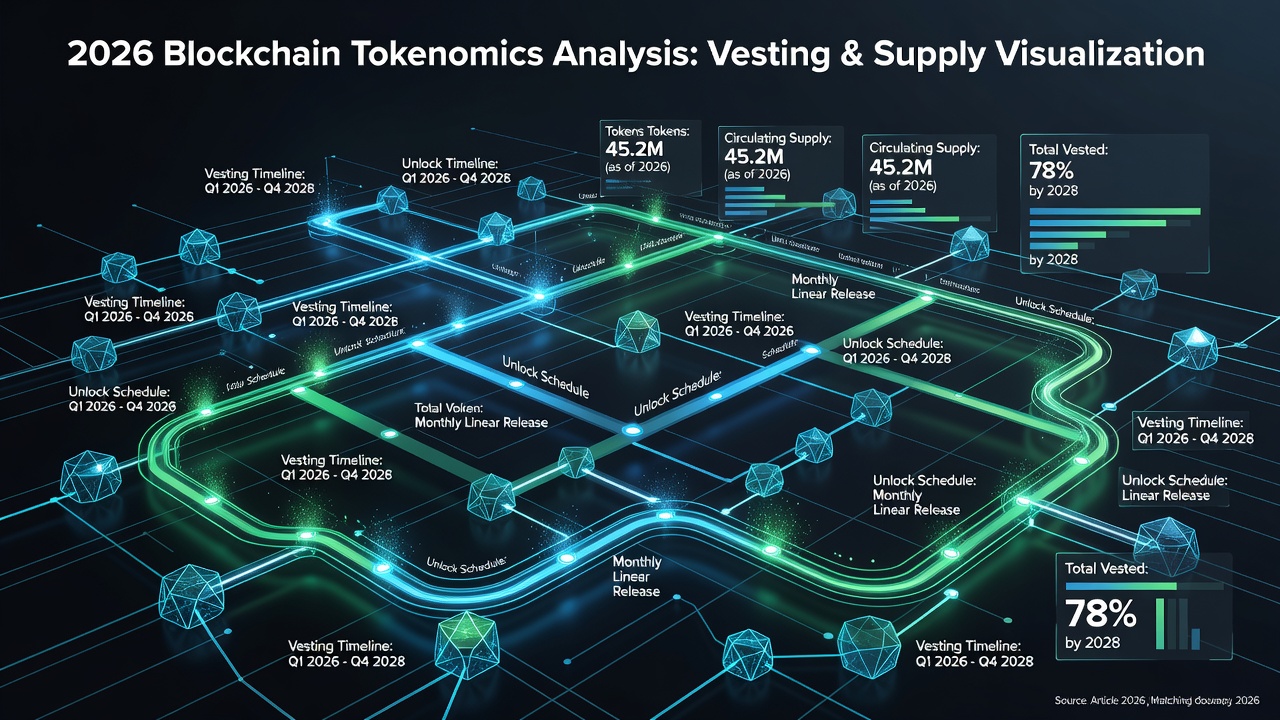
Introduction to Onchain Vesting Analysis
In 2026, sustainable tokenomics increasingly depend on transparent vesting mechanisms that align team, investor, and community incentives. Onchain vesting analysis allows participants to verify unlock schedules directly from blockchain data rather than relying solely on project documentation. This approach reveals whether a token’s distribution supports long-term health or risks sudden supply shocks that could destabilize markets. By examining smart contract logic and historical transactions, analysts can quantify circulating supply changes and identify potential red flags before they affect market dynamics. The growing maturity of blockchain ecosystems has made these tools essential for both retail participants and institutional analysts seeking to evaluate projects with forward-looking strategies that prioritize accountability and predictable supply mechanics.
Projects that embed vesting directly into immutable contracts demonstrate stronger commitment to long-term value creation. This transparency reduces information asymmetry and helps prevent the types of sudden dumps that plagued earlier token launches. As regulatory scrutiny around token distributions intensifies, onchain verification serves as a proactive measure that projects can highlight in their governance proposals and community updates.
Understanding Token Vesting on Blockchain
Token vesting refers to the scheduled release of allocated tokens over time. Onchain implementations typically use time-locked smart contracts that enforce these schedules programmatically. Unlike off-chain spreadsheets or private agreements, these contracts provide immutable proof of unlock dates and amounts, making them ideal for public scrutiny. In practice, vesting contracts often integrate with broader token ecosystems, including staking rewards, governance voting power, and liquidity provisioning mechanisms that further influence how released tokens circulate.
Core Components of Vesting Contracts
- Cliff periods before any tokens become available, often ranging from six to twelve months
- Linear or milestone-based release curves that determine the pace of unlocks
- Multi-signature controls for administrative functions to prevent unilateral changes
- Integration with governance or staking modules that may temporarily lock released tokens again
- Revocable or non-revocable clauses that define team flexibility in exceptional circumstances
These elements collectively determine how quickly tokens enter circulation and whether the design encourages sustained participation or opportunistic exits.
Identifying Vesting Smart Contracts
Begin by locating the relevant contract addresses through project documentation or explorers. Tools such as Etherscan allow users to verify source code and read contract state variables that store beneficiary addresses and vesting parameters. Analysts often start with the project’s official GitHub repositories or token allocation disclosures published during launch. Common patterns include OpenZeppelin’s VestingWallet or custom implementations using ERC-20 approvals with time-based modifiers. Searching transaction history for deployment events often surfaces the exact contract governing team or investor allocations. Cross-referencing multiple data sources helps confirm that the deployed bytecode matches audited versions and that no hidden upgrade paths exist that could alter vesting terms.
Monitoring Unlock Events with Onchain Data
Unlock events occur when contract logic permits token transfers. Analysts track these by monitoring function calls such as “release” or state changes in released-amount mappings. Real-time dashboards aggregate this data across multiple chains to forecast upcoming supply increases. Advanced monitoring setups combine event logs with wallet labeling services to attribute unlocks to specific entities like foundations, advisors, or early investors. This granularity enables precise modeling of potential sell pressure and helps communities prepare educational content ahead of major release dates.
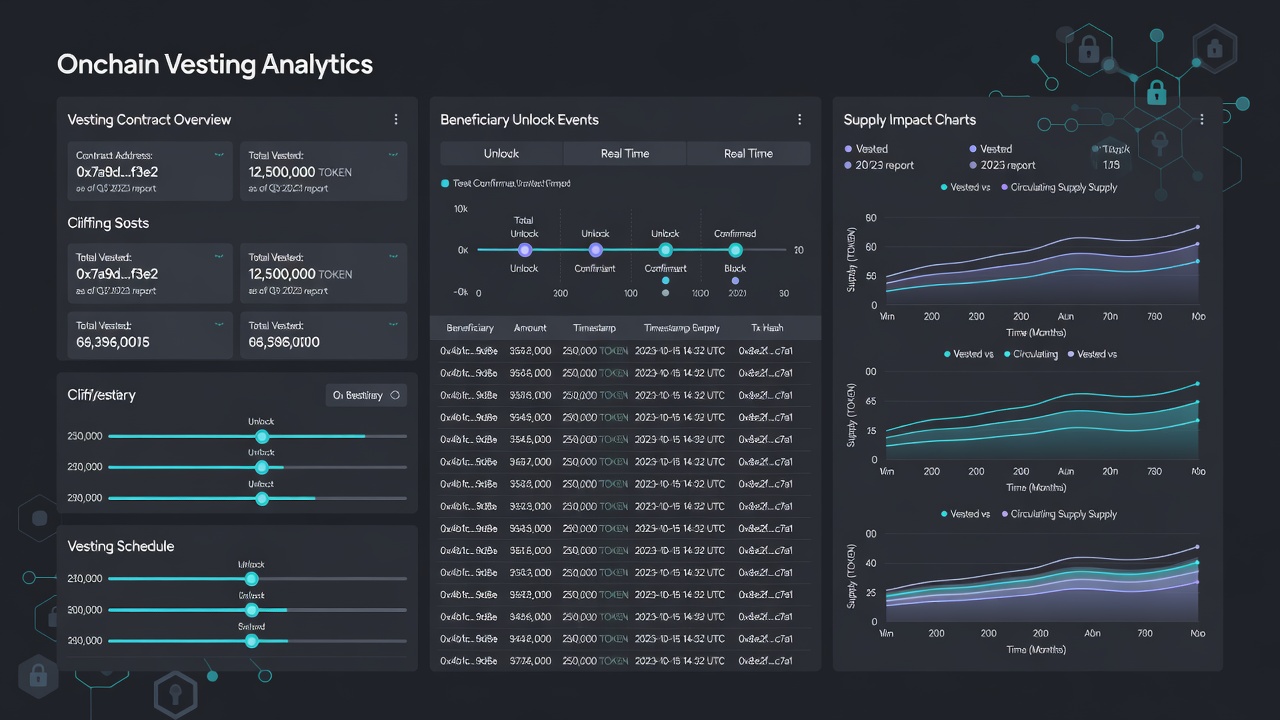
Evaluating Impacts on Circulating Supply
Each unlock directly influences circulating supply metrics reported by aggregators. Projects with poorly designed vesting may experience repeated sell pressure as large tranches become liquid. Forward-looking analysis in 2026 emphasizes stress-testing models that simulate various market conditions following major unlock dates. Analysts also examine correlations between unlock events and trading volume spikes, order book depth changes, and social sentiment shifts across platforms. These multi-dimensional evaluations provide a more complete picture than supply numbers alone.
Practical Steps for Querying Vesting Data
- Locate the vesting contract address via official channels or block explorers and verify its deployment transaction for authenticity.
- Use onchain query platforms to read beneficiary balances, unlock timestamps, and any associated cliff or vesting rate variables stored in contract storage.
- Export historical release events into analytical notebooks for trend visualization and statistical analysis of release patterns over time.
- Cross-reference onchain figures with total supply data from sources like DefiLlama to calculate true circulating percentages and identify discrepancies.
- Set alerts for upcoming cliffs using developer APIs or custom scripts that poll contract state at regular intervals.
- Document findings in public dashboards or reports that the broader community can review and build upon for collective oversight.
Case Examples from DeFi Protocols
Several leading DeFi projects have published their vesting contracts onchain. For instance, protocols built on Ethereum frequently employ audited templates that allow anyone to simulate future unlocks by reading public storage slots. Reviewing these live examples demonstrates how transparent vesting correlates with stronger community trust and reduced volatility around scheduled releases. Another common pattern appears in layer-two ecosystems where vesting contracts interact with bridge contracts, requiring analysts to trace token flows across networks. These case studies highlight best practices such as publishing simplified unlock calendars alongside raw contract data so non-technical stakeholders can participate in governance discussions about treasury management.
Warning Signs of Poor Distribution Design
Investors should watch for concentrated beneficiary lists, overly short cliffs, or missing source-code verification. Another red flag is the absence of onchain vesting entirely, forcing reliance on off-chain promises that cannot be independently validated. In 2026, robust token models increasingly incorporate onchain proofs and third-party audits published on platforms such as Ethereum.org developer resources. Additional warning indicators include frequent contract upgrades without community votes, vague beneficiary descriptions, and lack of integration with onchain analytics tools that would otherwise allow real-time monitoring.
Recommended Analytics Platforms for 2026
Popular choices include Dune Analytics for custom SQL queries on vesting events, Nansen for labeled wallet tracking, and Arkham for entity-level insights. These platforms integrate multi-chain data, enabling comprehensive views of token unlocks across ecosystems. Beginners benefit from pre-built dashboards that highlight upcoming unlocks without requiring advanced coding skills. More experienced users can combine these tools with custom scripts that pull data directly from node providers and visualize results in interactive notebooks. Staying current with platform updates ensures access to the latest chain coverage and improved labeling accuracy for emerging protocols.
FAQ on Common Pitfalls
How do I verify if a claimed vesting schedule is actually enforced onchain?
Compare the published contract address with onchain bytecode and storage variables. Discrepancies between documentation and deployed code indicate potential issues that warrant deeper investigation or community discussion before committing capital.
What happens if a team wallet unlocks tokens ahead of schedule?
Early unlocks can be detected by monitoring transfer events from the vesting contract. Such activity often precedes increased selling pressure and warrants closer monitoring of treasury movements as well as governance proposals that might address unexpected liquidity events.
Are cross-chain vesting schedules more difficult to analyze?
Yes, but aggregators that index multiple networks simplify the process. Always confirm bridge contracts do not bypass original vesting logic, and maintain separate monitoring workflows for each chain involved in the distribution.
Conclusion
Onchain vesting analysis provides an essential layer of transparency for evaluating tokenomics health in 2026. By mastering contract identification, unlock monitoring, and supply-impact assessment, participants can make informed decisions and favor projects with genuinely sustainable distribution designs that stand up to public scrutiny over multi-year horizons.

No comments yet. Be the first!