 CryptoChain Blog
Introduction to Restaking Protocol Tokenomics in 2026
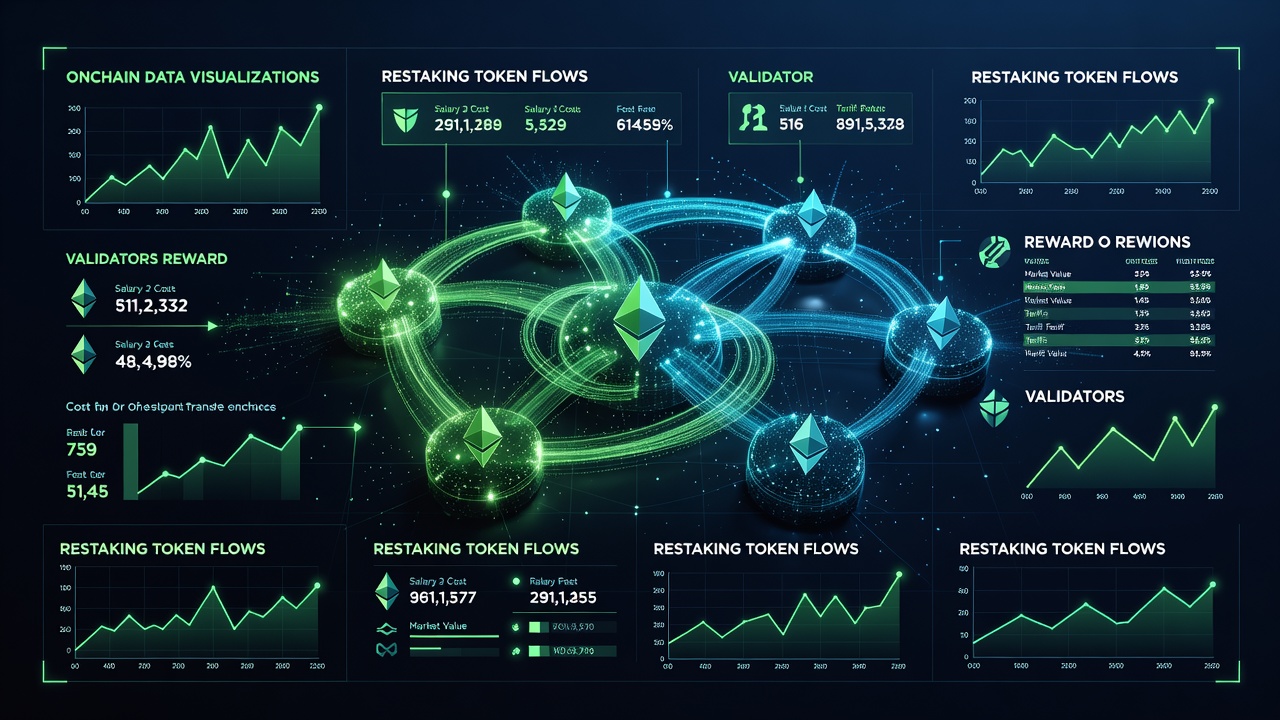
Restaking protocols have become central to Ethereum's evolving staking landscape, allowing users to leverage already-staked assets for additional yield opportunities. In 2026, onchain analytics provide unprecedented visibility into token economics, revealing how rewards are distributed, risks like slashing are managed, and validator incentives align across networks. This breakdown equips advanced practitioners with actionable insights drawn from blockchain data to optimize strategies. The integration of restaking has expanded the utility of staked ETH and liquid staking tokens, creating complex economic layers that require careful examination through transaction-level data rather than surface-level metrics.
Understanding these dynamics requires dissecting the core components of tokenomics: supply mechanisms, distribution flows, and penalty systems. Onchain tools enable precise tracking that offchain reports cannot match, offering transparency into smart contract states and validator performance at scale.
Key Elements of Restaking Token Economics
Reward Distribution Flows
Rewards in restaking protocols typically flow from base staking yields combined with additional incentives from restaked services. Onchain data shows these flows through transaction logs and smart contract interactions, highlighting how fees are split between stakers, operators, and protocol treasuries. Analysts monitor cumulative reward accrual to identify sustainable models versus those reliant on inflationary emissions. Detailed examination of event emissions reveals timing patterns, such as daily or epoch-based distributions, and how they correlate with total value locked across multiple restaking modules.
Slashing Risks and Mitigation
Slashing remains a primary concern, where validators lose portions of staked assets for misbehavior. Onchain analytics track historical slashing events by querying event logs, allowing users to assess risk exposure across protocols. Leading networks implement graduated penalties and insurance mechanisms to balance security with participation incentives. Practitioners can calculate expected loss probabilities by aggregating data on validator uptime, network conditions, and historical incident frequency, providing a quantitative basis for portfolio allocation decisions.
Validator Incentives and Alignment
Validators receive base rewards plus restaking premiums, creating layered incentive structures. Data reveals how these align interests by examining delegation patterns and performance metrics over time. Effective models tie rewards directly to uptime and security contributions, encouraging long-term participation rather than short-term yield chasing. Onchain dashboards often surface commission rate changes and delegation inflows, signaling shifts in validator competitiveness.
Step-by-Step Methods to Track Restaked Asset Movements
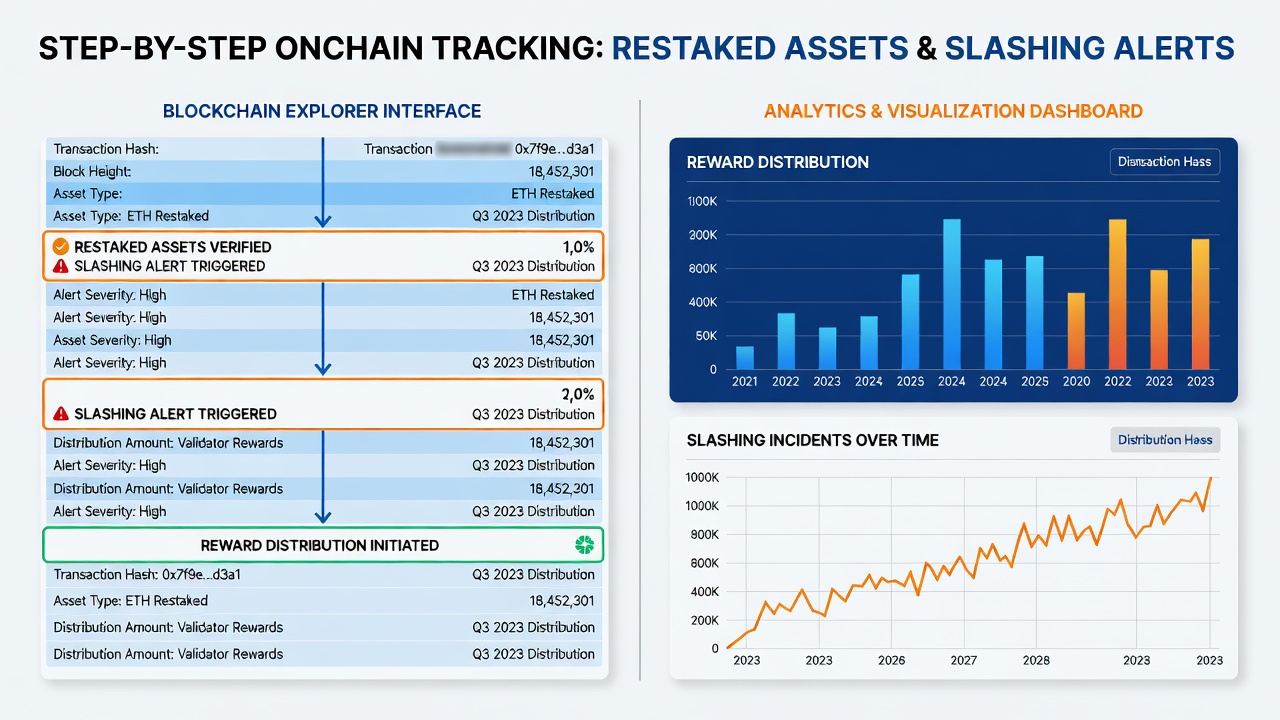
Practitioners can follow these practical steps using onchain data platforms to gain comprehensive visibility:
- Query staking contract addresses to identify restaked positions via balance changes and delegation events, cross-referencing with token transfer histories for full traceability.
- Analyze reward claim transactions to map distribution timelines and recipient wallets, identifying concentration risks among large holders or operators.
- Monitor slashing events through indexed logs to quantify impact on specific validators, including recovery timelines and insurance claims where applicable.
- Compare asset flows across protocols by exporting CSV data for visualization in analytics dashboards, highlighting relative TVL growth and yield differentials.
- Track validator performance metrics including commission rates and effective yields to refine allocation decisions based on risk-adjusted returns.
- Integrate multi-chain queries where protocols span ecosystems, ensuring consistent data normalization across differing block times and consensus rules.
These methods provide granular visibility into real-time economics and support iterative strategy refinement.
Comparisons of Major Protocol Models
Leading restaking implementations differ in their approaches to tokenomics. Some emphasize decentralized operator sets with shared security, while others focus on modular services with customizable reward parameters. Onchain comparisons highlight variations in fee structures and risk profiles, helping users select models that match their risk tolerance. For deeper protocol documentation, refer to ethereum.org. Models also vary in their handling of liquid restaking tokens, which introduce secondary market dynamics that can amplify or dampen underlying tokenomics effects.
Real-World Examples from Leading Networks
Networks like those built on EigenLayer demonstrate how restaking integrates with existing Ethereum validators to bootstrap new services. Onchain breakdowns show reward compounding effects and slashing incidents that inform broader market trends. Similar patterns appear in other ecosystems exploring restaking primitives, where data reveals how early adopters navigated incentive shifts during protocol upgrades. These examples underscore the importance of continuous monitoring rather than static assumptions about yield sustainability.
Data Sources and Tools for Onchain Analysis
Effective analysis relies on reputable data providers and explorers. Public blockchain indexers allow custom queries on restaking-specific events, while visualization platforms aggregate metrics across thousands of validators. Cross-referencing multiple sources reduces blind spots caused by indexing delays or incomplete event coverage. Analysts frequently combine raw RPC calls with curated APIs to build automated alerts for unusual flows or risk spikes.
Optimization Strategies for Advanced Practitioners
Advanced users apply onchain findings to diversify across protocols, adjust delegation based on real-time performance, and hedge against slashing through position sizing. Scenario modeling using historical datasets helps forecast outcomes under varying network conditions. Regular audits of smart contract interactions ensure strategies remain aligned with evolving tokenomics. Combining these tactics with offchain research creates robust frameworks that adapt to market changes.
Common Pitfalls and How to Avoid Them
Many analysts overlook latency in data feeds or fail to account for operator centralization risks visible only through delegation clustering. Over-reliance on headline APY figures without examining underlying fee splits leads to suboptimal choices. Mitigation involves building custom scripts for ongoing validation and participating in governance discussions informed by transparent onchain evidence. For additional context on decentralized infrastructure, consult web3.foundation.
FAQ: Common Analyst Questions on Restaking Analytics
How do onchain tools detect hidden reward leaks?
By parsing contract storage and event emissions, analysts identify discrepancies between expected and actual distributions, often uncovering inefficiencies in fee routing or unclaimed reward pools.
What data signals indicate unsustainable tokenomics?
Rising emission rates without corresponding TVL growth often point to long-term viability concerns, as do sudden spikes in withdrawal activity that outpace new deposits.
Can slashing risks be quantified precisely?
Yes, through aggregation of historical events and validator uptime statistics available on public explorers, enabling probabilistic modeling of potential losses.
How frequently should practitioners refresh their onchain datasets?
Daily or intra-day updates are recommended during volatile periods, while weekly reviews suffice for stable market conditions to capture meaningful shifts without excessive noise.
Conclusion
Onchain analytics transform how practitioners approach restaking protocol tokenomics in 2026. By focusing on reward flows, risks, and incentives, users can implement data-driven optimizations that enhance returns while managing exposure. Continued monitoring of these metrics will remain essential as the ecosystem matures, supported by resources such as docs.soliditylang.org for understanding underlying contract mechanics.

No comments yet. Be the first!