 CryptoChain Blog
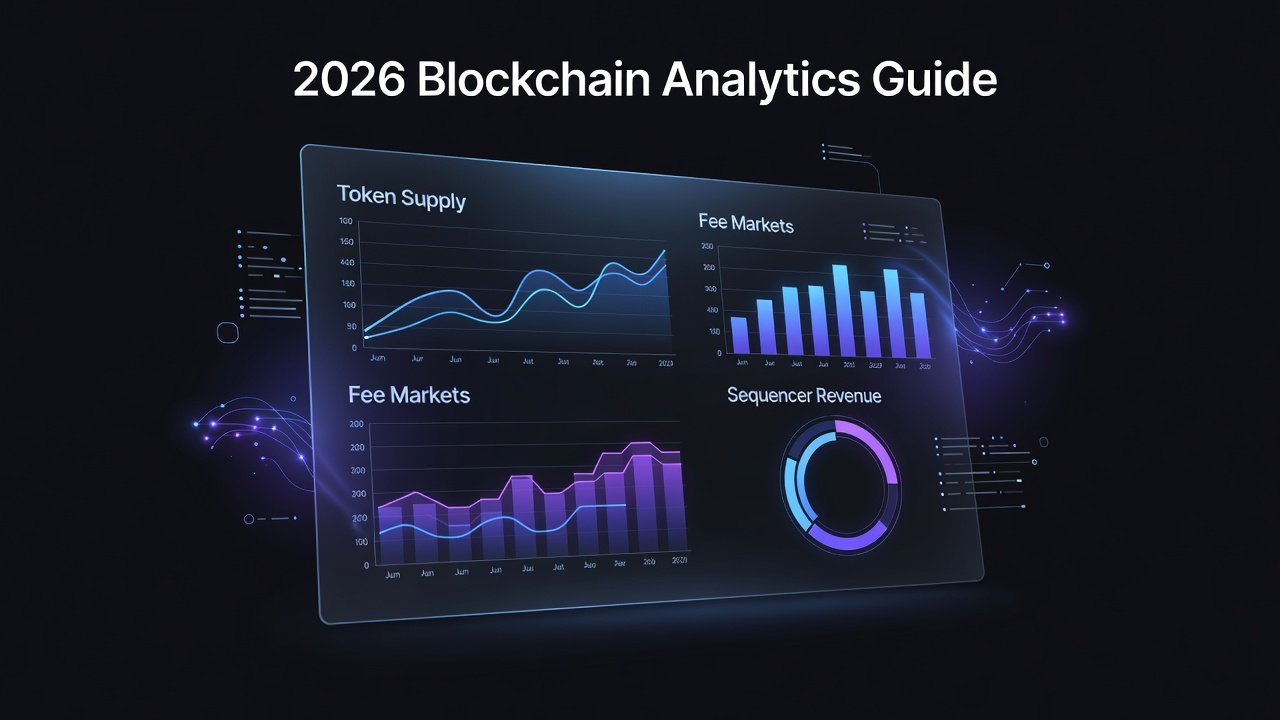
Introduction to Sovereign Rollup Tokenomics
In 2026, sovereign rollups represent a pivotal evolution in blockchain architecture, offering independent execution environments that prioritize sovereignty over shared sequencing. This guide dives deep into their token economics, leveraging onchain data to analyze supply dynamics, fee markets, and governance incentives. Blockchain developers and analysts will gain forward-looking insights that extend beyond conventional Layer 2 models. Sovereign rollups enable projects to maintain full control over consensus mechanisms, data availability, and execution layers, creating unique opportunities for customized token models that directly tie economic incentives to network health and user participation.
As adoption grows across decentralized applications, understanding these tokenomics becomes essential for evaluating project viability and incentive structures. Unlike standard L2 solutions that rely on shared infrastructure, sovereign designs foster innovation in how tokens capture value from fees, staking, and governance decisions. This article provides practical frameworks for onchain analysis, helping readers build robust evaluation processes.
Distinguishing Sovereign Rollups from Shared Sequencers
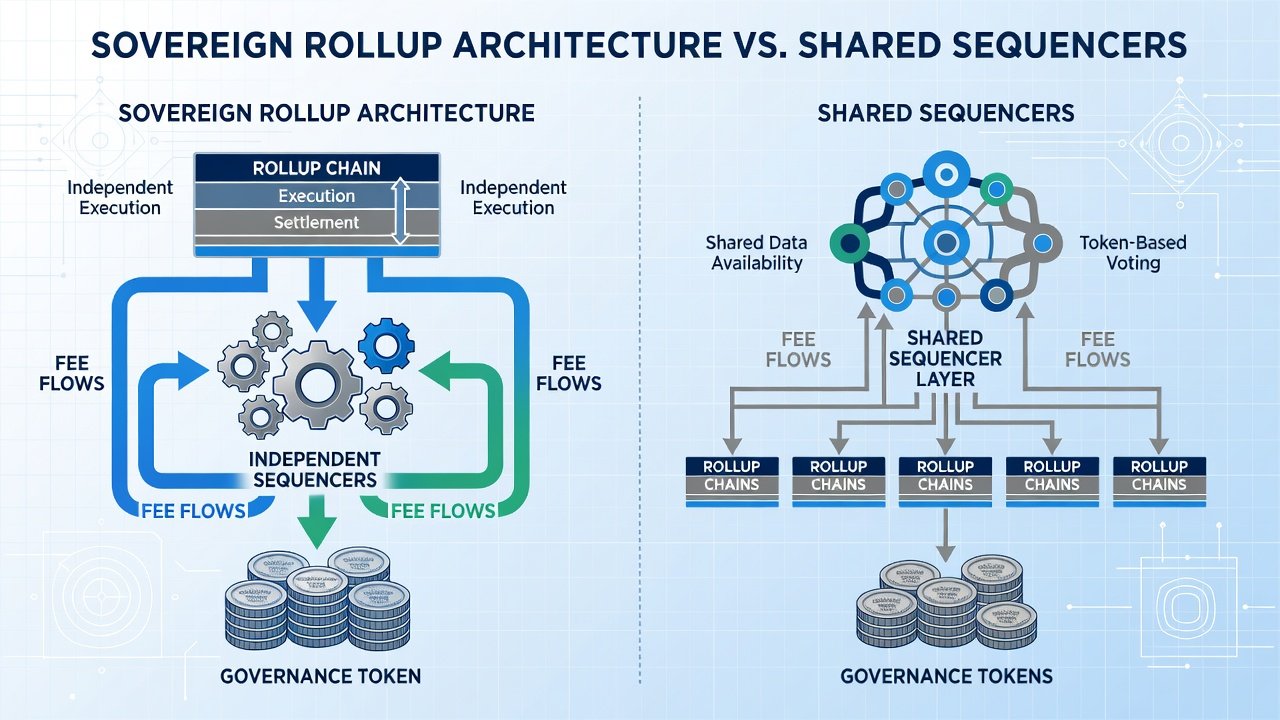
Shared sequencers centralize transaction ordering across multiple chains, introducing potential single points of failure and reducing customization options. Sovereign rollups, by contrast, operate with independent sequencers, enabling customized fee models and governance that align closely with the specific needs of each ecosystem. This distinction impacts token velocity and revenue distribution significantly, as independent sequencers can implement tailored MEV strategies and priority mechanisms without external dependencies.
Key differences include autonomy in MEV capture and resistance to external sequencing attacks. Analysts tracking 2026 metrics often compare sequencer revenue streams to assess these architectural choices, revealing how sovereignty leads to more predictable economic outcomes. For instance, projects adopting sovereign models report higher retention of fee revenue, which directly supports token utility through burns or treasury funding.
Supply Dynamics in Sovereign Rollup Ecosystems
Token supply in sovereign rollups is governed by emission schedules tailored to network security and participation. Onchain analytics reveal inflationary pressures from staking rewards versus deflationary burns from fee mechanisms. Developers should monitor circulating supply ratios through tools like blockchain explorers to forecast dilution risks and adjust investment or development strategies accordingly.
Real-world examples from emerging projects demonstrate how dynamic supply adjustments respond to usage spikes, maintaining equilibrium in token value. These adjustments often involve governance votes that modify emission rates based on real-time onchain data, such as transaction volume or active validator counts. Understanding these dynamics helps prevent common miscalculations in long-term token valuation models.
Fee Markets and Revenue Generation
Fee markets in sovereign rollups allow for bespoke pricing that reflects local demand and network conditions. Unlike shared sequencer models, these systems capture fees directly, boosting sequencer revenue and enabling reinvestment into ecosystem growth. Onchain data from 2026 shows varied fee structures, with some rollups implementing priority auctions for enhanced predictability and reduced volatility during peak usage periods.
Tracking these metrics involves querying transaction logs for gas usage patterns and fee distribution. Ethereum.org provides foundational resources on scaling that inform sovereign rollup designs, while L2Beat offers comparative dashboards for deeper analysis of rollup performance metrics.
Governance Incentives and Token Utility
Governance tokens in sovereign rollups incentivize participation through voting rights and treasury allocations. Effective designs align long-term holder interests with protocol upgrades, creating sustainable ecosystems where token holders actively shape fee policies and roadmap priorities. Pitfalls include low voter turnout, which onchain analytics can flag via participation rates and proposal success metrics.
Examples from projects highlight successful incentive alignments that drive sustainable growth, such as reward mechanisms tied to proposal quality rather than mere participation volume. These approaches reduce governance attacks and promote thoughtful decision-making processes.
Tracking Key Metrics via Blockchain Analytics Tools
Essential metrics include sequencer revenue, token velocity, and active address growth. Tools such as Dune Analytics or custom indexers enable real-time monitoring. Token velocity, calculated as transaction volume divided by supply, indicates economic activity levels and helps identify whether tokens are being used for utility or speculation.
Additional metrics worth tracking encompass total value locked trends, validator distribution, and cross-rollup bridge activity. By combining these data points, analysts can build comprehensive dashboards that predict potential bottlenecks in fee markets or governance participation.
Step-by-Step Guide to Building Custom Queries
Building custom queries allows developers to extract precise insights tailored to sovereign rollup tokenomics. Follow these expanded steps for reliable results:
- Identify relevant smart contracts for sequencer and token interactions by reviewing project documentation and onchain verification tools.
- Use SQL-based platforms to aggregate fee events and supply changes, incorporating filters for specific time ranges and event types.
- Filter for time-series data covering 2026 periods to detect trends, including comparisons against baseline periods from prior years.
- Visualize results with dashboards for governance incentive analysis, adding layers for sequencer revenue breakdowns and velocity calculations.
- Validate queries against public blockchain nodes for accuracy, then iterate by incorporating additional onchain signals like staking events.
- Export data for external modeling tools to simulate future supply scenarios under different governance proposals.
This process empowers analysts to create tailored dashboards beyond standard L2 reporting, providing a competitive edge in evaluating emerging projects.
Comparisons to Modular Chains
Modular chains separate execution, settlement, and data availability, offering flexibility but potential coordination overhead. Sovereign rollups consolidate these for simplicity and sovereignty, often resulting in faster decision cycles for token parameter changes. Onchain comparisons in 2026 reveal higher fee retention in sovereign models, though modular setups may excel in interoperability across diverse ecosystems.
Developers evaluating options should weigh these trade-offs using empirical data from both architectures. For example, sovereign rollups typically show stronger correlations between usage growth and token burns, while modular designs distribute value across multiple layers.
Real-World Examples from Emerging Projects
Several 2026 projects illustrate sovereign rollup tokenomics in action, with unique approaches to supply caps and governance. One case shows revenue sharing models that boost token utility through ecosystem grants, leading to increased developer activity and higher onchain engagement rates.
Another demonstrates velocity optimization via fee rebates, fostering user retention and reducing speculative holding patterns. A third example involves dynamic governance where token holders vote on fee market adjustments in real time, directly influencing sequencer revenue allocation and long-term sustainability.
Common Pitfalls in Onchain Evaluation and FAQ
Analysts frequently overlook offchain influences on token velocity or misattribute sequencer revenue sources. Always cross-reference multiple data providers and account for potential data lags in real-time indexing services.
FAQ
How do sovereign rollups handle MEV differently? They enable protocol-level capture without shared sequencer interference, allowing custom extraction and redistribution rules that better align with community goals.
What tools are best for 2026 analytics? Focus on customizable indexers and visualization platforms that support sovereign-specific event types for precise metric tracking and trend forecasting.
Are governance incentives sustainable long-term? Data suggests alignment with usage metrics is key to longevity, as misaligned rewards often lead to declining participation over multiple quarters.
How do fee markets evolve with adoption? Dynamic adjustments based on onchain demand patterns prove effective, with many projects implementing automated mechanisms that respond to volume thresholds.
What are the risks of ignoring supply emission schedules? Overlooking these can result in unexpected dilution, particularly when staking rewards outpace fee burns during low-activity periods.
Conclusion
Mastering sovereign rollup tokenomics through onchain analytics equips developers with actionable insights for 2026 and beyond. By focusing on supply, fees, and governance with rigorous query-building practices, projects can build resilient ecosystems that outperform traditional models while adapting to evolving market conditions.

No comments yet. Be the first!