 CryptoChain Blog
Introduction to Stablecoin Peg Stability in 2026
Stablecoins remain the backbone of decentralized finance, facilitating trillions in trading volume while maintaining tight pegs to fiat currencies. In 2026, onchain tokenomics analysis has become essential for DeFi analysts seeking to evaluate peg defense mechanisms proactively. This playbook delivers practical steps for monitoring reserve composition, arbitrage flows, whale activity, and liquidity depth using publicly available blockchain data. Analysts who master these techniques gain an edge in identifying sustainable issuers and avoiding those prone to depegging events that can cascade through lending protocols and trading strategies.
Understanding these signals helps identify sustainable issuers versus those vulnerable to depegging events. Major players like USDC and USDT continue to dominate, but emerging competitors require rigorous scrutiny. The evolution of onchain tools now allows granular tracking that was impossible just a few years earlier, turning what was once reactive monitoring into a predictive discipline.
Tracking Reserve Composition for Peg Defense
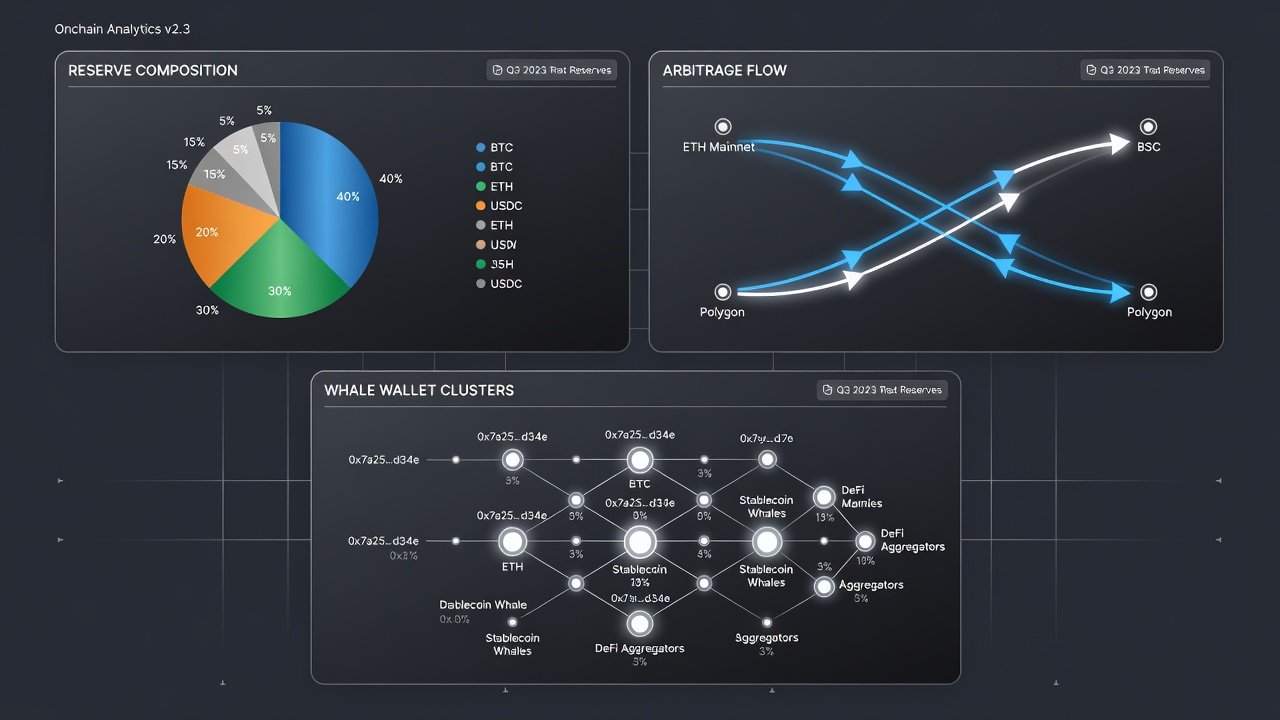
Reserve quality directly influences a stablecoin's ability to maintain its peg. Analysts should examine attestation reports and onchain treasury wallets regularly. Focus on the mix of cash equivalents, Treasuries, and other assets backing the supply. Begin by locating the issuer's official reserve addresses on explorers such as Etherscan, then compare reported holdings against actual balances over multiple time periods.
For example, issuers publishing monthly attestations from reputable firms provide transparency. Cross-reference these with onchain movements from reserve addresses to detect any sudden shifts in asset allocation. A mismatch between reported reserves and actual onchain holdings often signals potential issues. Practical steps include setting calendar alerts for attestation release dates and scripting simple queries to track net inflows and outflows from known treasury multisigs. Pay special attention to the percentage of reserves held in short-term government securities versus overnight repo agreements, as liquidity mismatches can create stress during rapid redemption waves.
Monitoring Arbitrage Flow Dynamics
Arbitrage bots and market makers play a critical role in restoring pegs after deviations. Track cross-exchange flows and onchain mint/burn events to gauge arbitrage efficiency. Effective monitoring involves watching both centralized exchange order books and decentralized liquidity pools simultaneously to see how quickly price discrepancies are closed.
Tools that aggregate DEX and CEX data reveal whether large redemptions are being absorbed quickly. Persistent one-sided flows without corresponding arbitrage activity can indicate weakening peg defense. For deeper insight, segment flows by size: small retail redemptions behave differently from institutional-sized movements. When arbitrage spreads widen beyond 20 basis points for more than 30 minutes, it often precedes larger depeg events. DefiLlama offers dashboards that visualize stablecoin supply changes alongside protocol TVL, helping analysts correlate flows with broader market conditions.
Whale Wallet Clustering and Behavioral Analysis
Whale movements often precede or exacerbate peg stress. Use clustering techniques to group wallets by common funding sources or interaction patterns. Sudden large transfers from issuer treasuries to exchanges warrant attention. Advanced analysts label wallets using known entity databases and then apply graph analysis to uncover hidden relationships between seemingly unrelated addresses.
Clustering reveals coordinated selling pressure or accumulation strategies. In 2026, advanced onchain analytics platforms allow labeling of known entities such as market makers and custodians for clearer visibility. Practical application includes building watchlists of the top 50 holders and setting alerts for any movement exceeding 1% of daily volume. This approach caught early warning signs during previous market events when large holders moved funds ahead of public announcements.
Liquidity Pool Depth and Market Signals
Deep liquidity pools on major DEXes provide a buffer against volatility. Monitor pool reserves, concentration ratios, and impermanent loss metrics for key stablecoin pairs. Depth should be evaluated not only in absolute terms but also relative to the stablecoin's total circulating supply to understand how resilient the peg would be under stress.
Shallow pools amplify small trades into significant price impacts, increasing depeg risk. Compare historical depth data to current levels to spot deterioration early. Additional signals include the ratio of onchain volume to offchain volume and the presence of concentrated liquidity positions that could be removed quickly. When depth on the primary trading pair falls below 0.5% of market cap for extended periods, analysts should increase monitoring frequency.
Actionable Checklists for DeFi Analysts
- Review latest reserve attestations and reconcile with onchain treasury balances weekly.
- Track mint/burn volumes against trading volume on both centralized and decentralized venues.
- Cluster top holders and monitor for unusual transfer patterns or exchange deposits.
- Assess liquidity depth across the top three DEX pools and note any concentration above 30% in single wallets.
- Flag velocity spikes exceeding 3x the 30-day average as potential manipulation indicators.
- Compare reserve asset duration profiles against redemption patterns observed in the prior quarter.
- Document any changes in attestation providers or auditor qualifications.
Recognizing Common Red Flags
Sudden velocity spikes often accompany speculative attacks or coordinated exits. Reserve mismatches between public reports and onchain data represent another critical warning. Rapid expansion of supply without corresponding asset inflows deserves immediate investigation. Additional red flags include sudden increases in the number of unique holders paired with declining average balance sizes, which can indicate retail panic selling.
Analysts should also watch for declining average transaction sizes paired with increasing frequency, which may indicate retail panic or automated unwinding. Cross-reference these patterns with social sentiment data to distinguish organic behavior from orchestrated campaigns. When multiple red flags appear together, the probability of a sustained depeg rises sharply.
Real-World Examples from Major Issuers
USDC demonstrated robust peg defense during past market stress through transparent reserves and rapid arbitrage response. Its issuer maintained clear communication channels and published detailed breakdowns of reserve composition even during high-volatility periods. In contrast, certain algorithmic or lesser-audited stablecoins have shown prolonged deviations when reserve opacity combined with concentrated whale holdings. One notable case involved an issuer whose treasury wallet activity diverged from its published attestations for several weeks before a significant depeg occurred.
Studying these cases highlights the value of combining multiple onchain signals rather than relying on any single metric. Analysts who maintained diversified monitoring across reserves, flows, and liquidity were able to exit positions early and avoid losses that affected less-prepared participants.
FAQ: Tools and Dashboards for Ongoing Monitoring
What dashboards provide real-time stablecoin data?
Platforms such as Dune Analytics and Nansen offer customizable queries for supply, flows, and holder distribution. Dune hosts community-built dashboards focused specifically on stablecoin tokenomics that can be forked and adapted for personal use.
How frequently should analysts check reserve reports?
Weekly reviews of issuer attestations combined with daily onchain monitoring strike an effective balance for most DeFi strategies. During periods of elevated market volatility, daily attestation checks become advisable.
Are there free tools suitable for beginners?
Etherscan and similar block explorers provide basic wallet tracking at no cost, while more advanced clustering requires paid analytics subscriptions. Free tiers on several platforms allow new analysts to build foundational skills before upgrading.
Conclusion
Mastering stablecoin peg defense analysis in 2026 requires integrating reserve tracking, flow monitoring, whale insights, and liquidity signals into a cohesive workflow. By following the checklists and remaining vigilant for red flags, DeFi analysts can make more informed decisions and better navigate the evolving onchain landscape. Consistent application of these methods turns raw blockchain data into actionable intelligence that protects portfolios and informs strategic positioning.
No comments yet. Be the first!