 CryptoChain Blog
Introduction to Sustainable Tokenomics in Blockchain
Blockchain projects focused on environmental impact must balance economic incentives with ecological goals. Sustainable tokenomics refers to token designs that promote long-term viability while supporting green initiatives like carbon reduction and renewable energy. In 2026, onchain analysis has become essential for investors and developers to verify these claims through transparent data rather than marketing promises. This approach uses public ledger information to examine supply schedules, staking mechanisms linked to carbon metrics, and liquidity flows. By studying these elements, stakeholders can distinguish projects with genuine sustainability from those that may falter due to misaligned incentives or opaque operations.
The growing interest in eco projects stems from increasing regulatory pressure and consumer demand for verifiable environmental benefits. Onchain tools allow anyone to audit token flows without trusting centralized entities. This transparency is particularly valuable in 2026 as more protocols integrate real-world environmental data through oracles and decentralized verification systems.
Core Onchain Metrics for Eco-Focused Token Evaluation
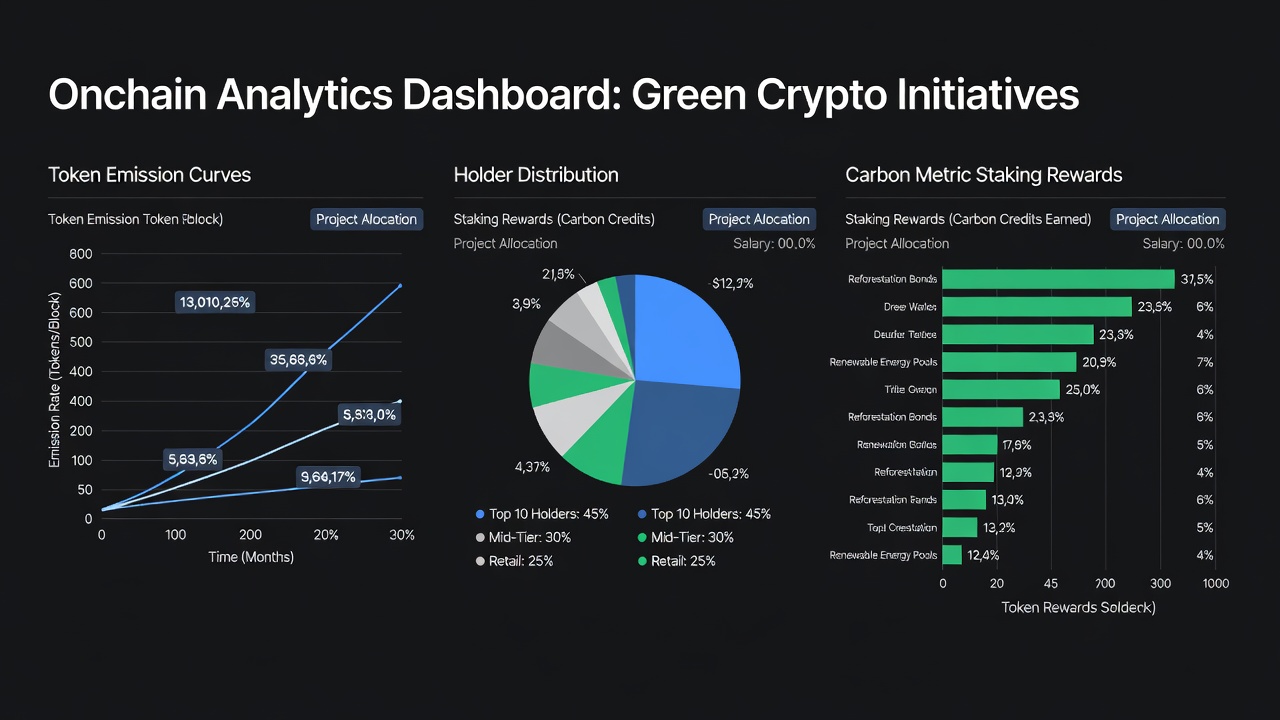
Effective analysis begins with several key data points available on public explorers. Emission schedules reveal how new tokens enter circulation and whether they align with environmental milestones. Holder behavior metrics, such as concentration ratios and transfer patterns, indicate community commitment versus speculative activity. Liquidity patterns show how tokens move between exchanges and decentralized pools, highlighting potential vulnerabilities during market stress.
When staking rewards connect directly to verified carbon offsets, analysts track redemption rates and proof-of-impact data onchain. Additional metrics include velocity of tokens in green-focused pools and correlation between token burns and reported carbon sequestration. These indicators help quantify whether economic activity truly supports ecological outcomes rather than just creating hype cycles.
Step-by-Step Methods for Using Analytics Tools
- Start by querying token contract addresses on platforms like Etherscan to review total supply and historical mint events, noting any scheduled releases tied to environmental reports.
- Examine holder distributions through tools that aggregate wallet data, flagging any single entity controlling over 20% of supply and analyzing dormant versus active addresses over time.
- Analyze staking contracts for reward structures tied to external carbon registries, verifying if claims match onchain transactions and checking for oracle reliability.
- Review liquidity pool compositions and volume trends across DEXes to assess resilience against large withdrawals or flash loan attacks.
- Cross-reference emission timelines with project roadmaps to confirm delivery of green milestones, using timestamped onchain events for validation.
- Monitor governance proposals related to token adjustments and their alignment with sustainability targets through onchain voting records.
These steps provide a repeatable framework for evaluating projects without relying solely on whitepapers. Advanced users can combine multiple data sources for deeper insights into long-term viability.
Real-World Examples from Green Protocols
Several initiatives demonstrate successful integration of onchain sustainability. One protocol ties staking yields to verified reforestation data uploaded via oracles, resulting in consistent holder retention and measurable carbon impact. Another uses dynamic emission halving based on real-time carbon credit burns tracked publicly, encouraging participants to support verified offset projects.
A third example involves a decentralized energy trading network where token rewards scale with renewable energy production data submitted onchain, leading to organic growth in user participation. In contrast, projects lacking transparent carbon linkages often show rapid sell-offs once initial hype fades, with holder concentration increasing as early investors exit.
Ethereum's ecosystem offers foundational tools for such tracking through its layer-2 scaling solutions that reduce energy use while supporting complex environmental data integrations.
Comparing Effective Versus Failing Approaches
Successful models feature gradual emissions, verifiable impact metrics, and diversified holder bases. They avoid sudden unlocks that flood markets and instead implement vesting schedules aligned with environmental deliverables. Failing approaches typically exhibit high concentration in founding wallets, rewards disconnected from measurable environmental outcomes, and liquidity concentrated in few pools prone to manipulation.
Comparisons reveal that projects incorporating onchain audits of carbon data maintain stronger community engagement over multi-year periods. Investors should prioritize those publishing regular onchain reports over vague sustainability claims. Effective projects also demonstrate adaptability, adjusting parameters based on real-world feedback while maintaining core ecological commitments.
Challenges and Best Practices in Onchain Sustainability Analysis
One major challenge is the quality of offchain data fed into oracles, as inaccurate carbon measurements can undermine token incentives. Analysts must cross-verify multiple sources and understand the limitations of current verification technologies. Another issue involves scalability, where high transaction fees on certain networks can deter participation in staking mechanisms tied to small-scale environmental actions.
Best practices include maintaining diversified data feeds, implementing multi-signature controls for critical parameters, and fostering transparent community discussions around metric adjustments. Regular third-party audits of both smart contracts and environmental claims further enhance credibility.
Practical FAQs on Red Flags and Optimization
What are common red flags in eco tokenomics?
Watch for undisclosed team wallets, emission rates exceeding project utility, and staking pools without carbon verification mechanisms. Sudden liquidity removals also signal instability, as do governance proposals that dilute environmental focus without clear justification.
How can teams optimize for long-term viability?
Implement transparent dashboards showing real-time metrics, link rewards to third-party audited carbon data, and maintain gradual vesting schedules. Regular community governance votes on emission adjustments further strengthen trust and adaptability.
Which tools best support this analysis?
Public explorers combined with data platforms enable comprehensive reviews. Always validate data across multiple sources for accuracy and consider emerging standards for environmental data onchain.
What optimization tips help avoid common pitfalls?
Focus on projects with clear emission caps tied to verifiable milestones, encourage broad token distribution through fair launch mechanisms, and prioritize protocols that publish detailed onchain impact reports quarterly.
Conclusion
Onchain analysis empowers better decisions in the growing field of sustainable blockchain projects. By focusing on verifiable metrics like supply dynamics and carbon-linked incentives, participants can support initiatives that deliver both economic and environmental value in 2026 and beyond. Applying these methods consistently helps build a more accountable ecosystem where tokenomics genuinely serve ecological progress.


No comments yet. Be the first!