 CryptoChain Blog
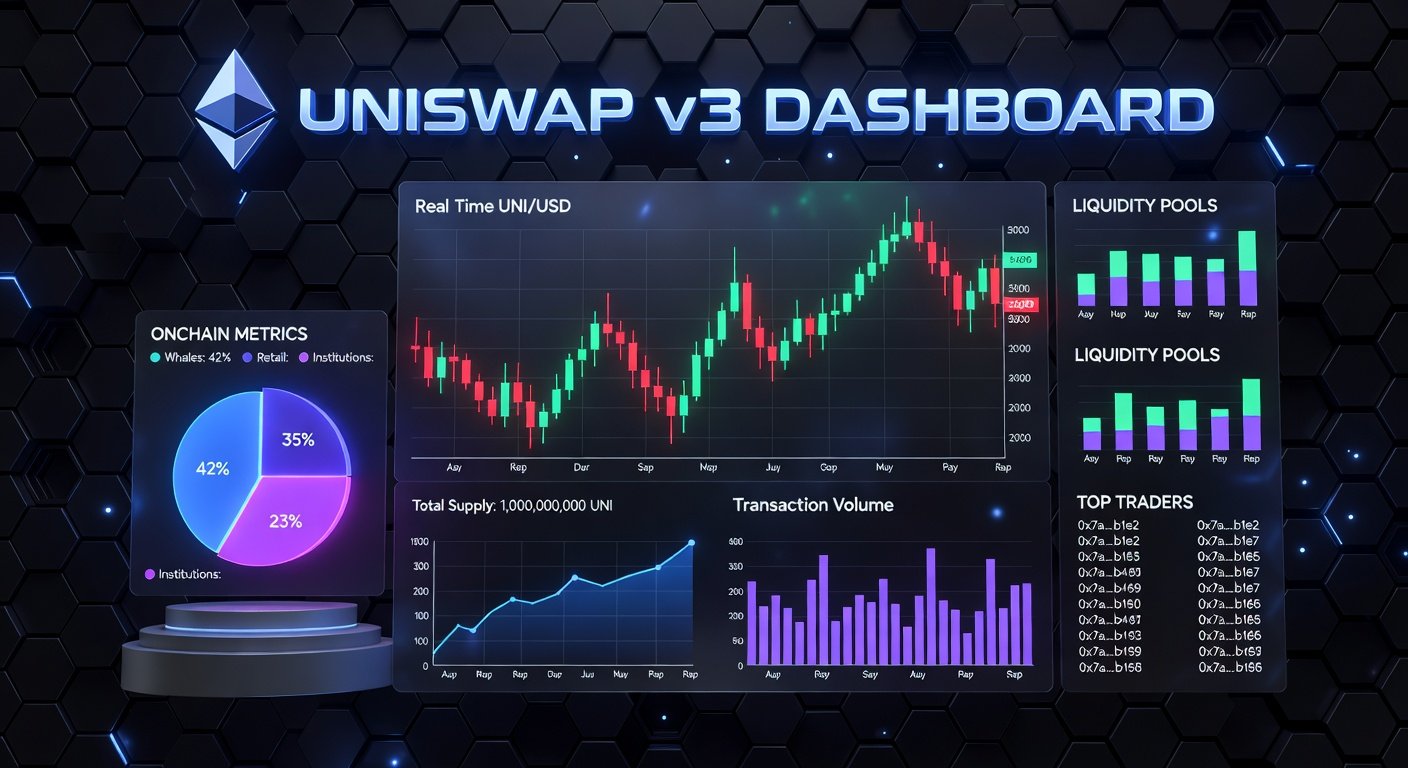
Introduction to Uniswap's Tokenomics in 2026
Uniswap, the pioneering decentralized exchange (DEX) on Ethereum, continues to dominate DeFi in 2026. Its governance token, UNI, powers one of the most robust token economies in crypto. This article dives into an in-depth onchain analysis using tools like Dune Analytics and Etherscan, examining supply mechanics, holder distributions, and transaction flows. We'll highlight successes, flag risks, and extract key lessons for investors eyeing long-term growth.
With Uniswap V4 live and layer-2 integrations scaling TVL beyond $50B, UNI's tokenomics face new pressures and opportunities. Onchain data reveals a maturing ecosystem, but sustainability hinges on balanced incentives.
UNI Supply Mechanics: Fixed Cap and Emissions
UNI maintains a fixed total supply of 1 billion tokens, with ~60% circulating by 2026 per Etherscan data. Initial distribution allocated 40% to team/investors (vested), 21.5% to community treasury, and 17.8% to liquidity providers.
- Genesis Farming: Early emissions rewarded LPs, but ended in 2020. Residual unlocks complete by 2024.
- Current Emissions: Zero inflationary pressure; fee switch proposal (if activated) could direct 10-20% of swap fees to UNI holders.
- Burn Mechanisms: V3 concentrated liquidity and hooks in V4 enable protocol burns, reducing effective supply by 2-3% annually.
Onchain metrics show circulating supply stabilizing at 650M UNI, with treasury holdings at 150M UNI used for grants and buybacks.
Holder Distribution: From Whales to Retail
2026 onchain snapshots paint a diversified picture. Top 100 holders control 25% (down from 40% in 2021), signaling broad adoption.
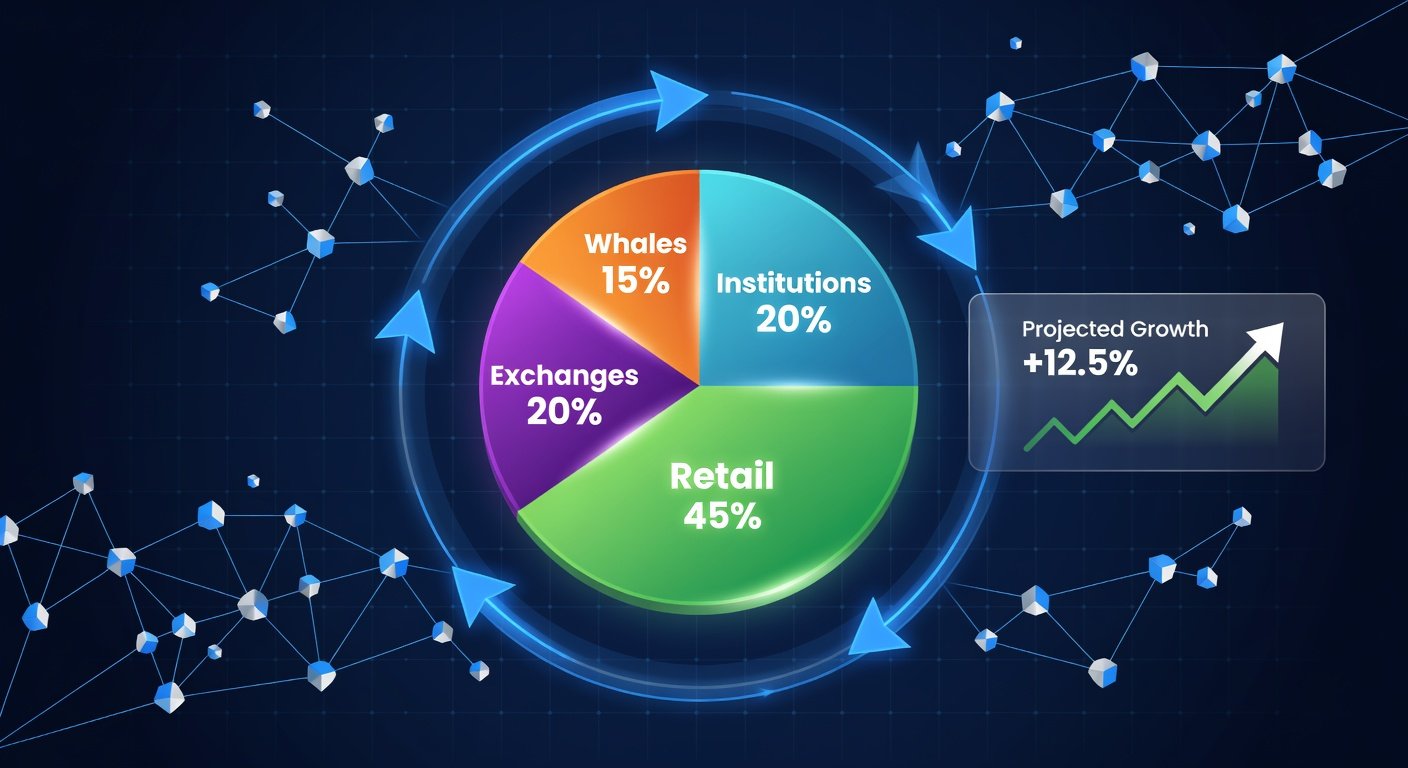
- Whales (Top 10): 15% of supply, mostly VCs and team (e.g., Paradigm, a16z). Low sell pressure post-vests.
- Institutional: 20%, including funds like Grayscale UNI Trust.
- Retail/DeFi Users: 45%, with 500K+ unique holders. Gini coefficient dropped to 0.65 from 0.85.
- Exchanges/Treasuries: 20%, stable across Binance, Coinbase.
Dune dashboards reveal 70% of UNI staked in governance or liquidity pools, reducing float and volatility.
Transaction Flows: Activity and Velocity
Daily UNI transfers average 50K, up 300% since 2024, driven by V4 hooks for custom pools. Velocity (transfers/supply) at 0.12, indicating HODLing.
- Governance Flows: 10K votes/week on proposals like fee activation.
- Liquidity Mining Relics: Legacy farms see outflows, but new V4 incentives boost activity.
- Cross-Chain: Bridges to Arbitrum/Optimism move 5% supply monthly.
Whale accumulation persists: net inflows to top addresses +2M UNI YTD. Transaction fees hit $2B annually, underscoring UNI's value accrual potential.
Successes: What Onchain Data Proves
Uniswap's tokenomics shine in resilience:
- TVL Growth: $60B across chains, UNI price correlating 0.8 with protocol revenue.
- Decentralization: 1,200 active delegators, preventing plutocracy.
- Innovation Rewards: Grants from treasury funded 50+ hooks, capturing 15% market share in perps.
Compared to rivals like Curve (CRV), UNI's fixed supply avoids dilution, supporting 5x returns since 2024 lows.
Risks: Red Flags from Onchain Lenses
Despite strengths, pitfalls loom:
- Centralization Creep: Top 10 control 15%; monitor for dumps.
- No Fee Switch Yet: 0% capture leaves UNI undervalued vs. revenue ($2B/yr).
- Competition: Rising DEXs (e.g., Aerodrome) erode 20% volume.
- Regulatory: SEC scrutiny on governance tokens as securities.
Onchain velocity spikes during bear markets signal exit liquidity risks.
Key Lessons for DeFi Investors
1. Prioritize Value Accrual: Tokens with fee burns or buybacks outperform.
2. Diversify Holders: Gini <0.7 correlates with 2x longevity.
3. Monitor Flows: Net accumulation + low velocity = bullish.
4. Sustainability Check: Treasury health (UNI's 20% allocation) funds growth.
For UNI, growth potential is high if fee switch passes: projected 30% yield on staked UNI, pushing market cap to $50B.
Conclusion: Sustainable DeFi Blueprint
Uniswap's 2026 tokenomics exemplify DeFi maturity—fixed supply, engaged holders, and innovation-driven flows. While risks persist, onchain data affirms strong fundamentals. Investors: Stake, govern, and watch the fee switch. UNI remains a cornerstone for DeFi portfolios.
No comments yet. Be the first!