 CryptoChain Blog

Introduction to DAO Philanthropy in 2026
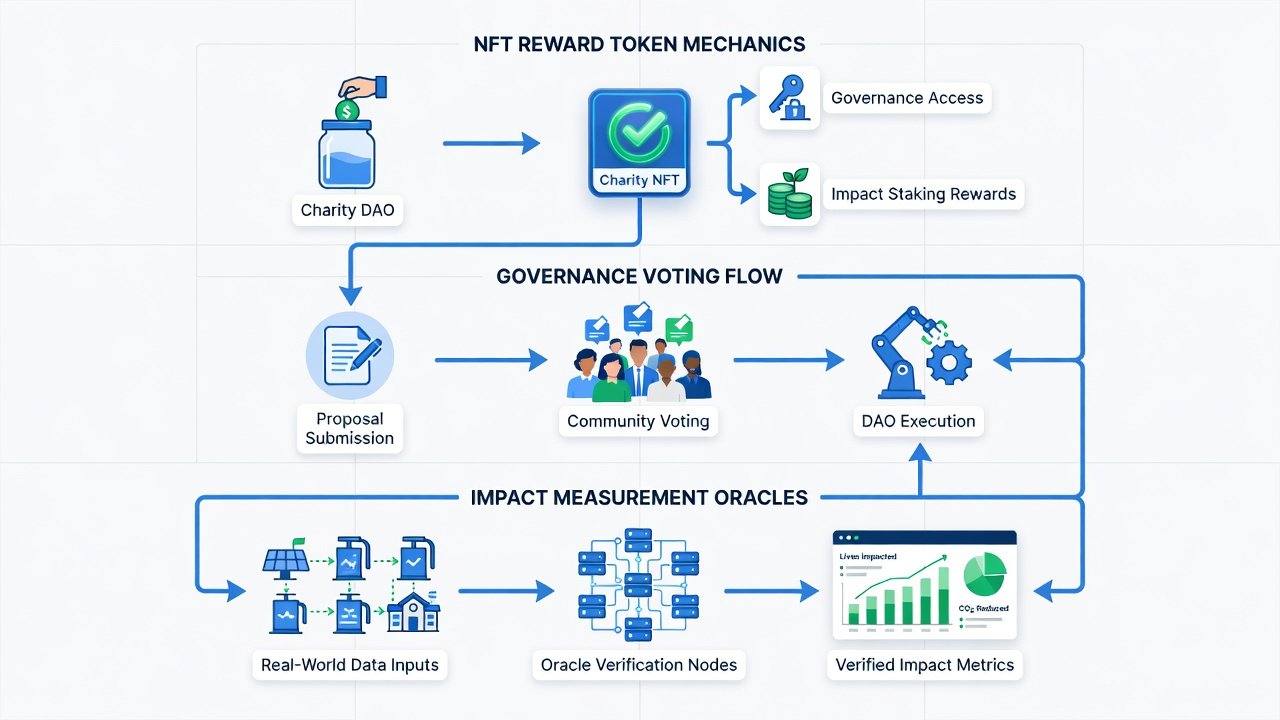
Decentralized Autonomous Organizations (DAOs) have transformed charitable giving by combining blockchain transparency with community-driven decision making. In 2026, NFT rewards have emerged as a powerful incentive mechanism, encouraging donations while fostering long-term engagement. This approach allows participants to receive unique digital assets that represent their contributions, often unlocking additional benefits like voting rights or exclusive access to project updates. As Web3 adoption grows, these models address traditional philanthropy challenges such as lack of transparency and donor fatigue by leveraging immutable ledgers and programmable incentives. Organizations can now demonstrate verifiable impact through on-chain records, building greater trust among global contributors. This article examines three real-world DAO-funded initiatives from 2026, detailing their token mechanics, voting processes, and impact measurement frameworks while providing actionable guidance for new organizations seeking to launch similar programs.
Case Study 1: ClimateGuard DAO and Reforestation NFTs
ClimateGuard DAO focuses on global reforestation projects across multiple continents. Donors receive limited-edition NFTs representing planted trees, each encoded with metadata about species, location, and projected carbon sequestration. These NFTs grant governance rights and quarterly carbon credit distributions through automated smart contracts. Token mechanics involve minting ERC-721 NFTs upon donation thresholds, with voting power scaled by NFT rarity and holding duration. Participants can trade or stake these assets on secondary markets, creating additional liquidity. The project has partnered with local NGOs in Brazil and Indonesia to verify planting activities via ground sensors and drone imagery, ensuring authenticity at every stage.
Voting Processes and Impact Measurement
Proposals pass through a quadratic voting system to prevent whale dominance, where the cost of additional votes increases exponentially. Impact is tracked via on-chain oracles linked to satellite data from verified forestry partners. Ethereum Foundation resources provide foundational smart contract templates used here, ensuring interoperability with broader DeFi ecosystems. Early results show over 500,000 trees planted in the first half of 2026, with transparent dashboards displaying real-time metrics that update daily.
Case Study 2: EduDAO and Scholarship NFT Badges
EduDAO funds educational access in underserved regions, distributing resources for schools and vocational training programs. Contributors earn soulbound NFT badges that unlock mentorship access and future proposal rights. Mechanics include staking governance tokens to mint badges, with redemption options for real-world scholarships verified through partner universities. Badges are non-transferable to emphasize personal achievement rather than speculation. The DAO has supported over 2,000 students in Africa and Southeast Asia, using milestone-based releases to maintain accountability and encourage ongoing involvement from badge holders.
Engagement and Governance Details
Voting occurs via token-weighted mechanisms where badge holders gain extra influence on education-focused proposals. This hybrid model encourages sustained involvement beyond initial donations. Integration with existing platforms allows seamless tracking of student progress on-chain, providing donors with verifiable proof of impact without compromising privacy through zero-knowledge proofs.
Case Study 3: HealthLink DAO and Wellness Reward NFTs
HealthLink DAO supports community health initiatives in partnership with global organizations. NFTs represent health milestone achievements and enable voting on fund allocation for clinics and vaccination drives. World Health Organization guidelines inform their impact frameworks, focusing on measurable outcomes like reduced disease incidence. Token mechanics feature dynamic NFTs that evolve based on community health data feeds, rewarding ongoing participation with upgraded visual traits and privileges. The initiative has funded mobile health units in rural areas, demonstrating clear scalability.
Token Mechanics Deep Dive
Across these initiatives, core mechanics rely on ERC-721 standards for uniqueness combined with ERC-20 utility tokens for governance. Minting events trigger automated treasury inflows, while staking mechanisms lock assets to boost voting weight. Royalties from secondary sales often flow back into project funds, creating self-sustaining cycles. Developers must account for gas optimization and cross-chain bridging to accommodate diverse donor bases from various regions.
Comparing Governance Models Across DAOs
- Quadratic voting (ClimateGuard): Balances influence by donation size and promotes broader participation from smaller contributors.
- Token-weighted voting (EduDAO): Rewards consistent participation through staking multipliers and loyalty bonuses.
- Hybrid reputation system (HealthLink): Combines NFTs with verified activity logs for nuanced decision rights and anti-sybil measures.
Each model offers trade-offs in inclusivity versus efficiency, with quadratic systems reducing plutocracy risks but requiring more complex calculations and user education.
Step-by-Step Setup Tutorial for New DAOs
Integrating NFT rewards starts with choosing a blockchain like Ethereum or Polygon for low fees and robust tooling. Deploy an ERC-721 contract using audited libraries such as OpenZeppelin. Configure metadata standards to include impact details and provenance tracking. Connect to existing tools such as Snapshot for off-chain voting and Gnosis Safe for treasury management. Implement staking contracts via Solidity or no-code platforms like Aragon. Test thoroughly with small donations before scaling, including wallet integrations like MetaMask and multi-sig approvals. Monitor with analytics dashboards and iterate based on community feedback. Finally, establish legal wrappers if needed for regulatory compliance in target jurisdictions. Consensys documentation offers additional guidance on secure deployment practices.
Common Pitfalls and How to Avoid Them
Many DAOs overlook gas fee optimization, leading to high costs during minting events and reduced participation. Others fail to implement proper KYC alternatives for global participants, risking compliance issues in multiple countries. Smart contract vulnerabilities from rushed audits can result in exploits that erode donor confidence. Poorly designed incentive structures may encourage short-term speculation over genuine engagement. Always prioritize community education, phased rollouts, and regular security reviews to build lasting trust and operational resilience.
Impact Measurement Frameworks
Effective frameworks combine on-chain data with off-chain verification from trusted sources. Oracles pull real-world metrics into smart contracts, triggering NFT evolutions or reward distributions automatically. Regular third-party audits and public dashboards ensure transparency, allowing donors to see direct correlations between contributions and outcomes across all three case studies.
Conclusion
DAO philanthropy powered by NFT rewards offers scalable, transparent alternatives to traditional charity. By studying these 2026 examples and following structured implementation steps, new organizations can drive meaningful impact while navigating governance complexities. Continued innovation in token design and cross-tool integrations will further accelerate decentralized web adoption for social good.
No comments yet. Be the first!