 CryptoChain Blog
Introduction to Decentralized Compute in 2026
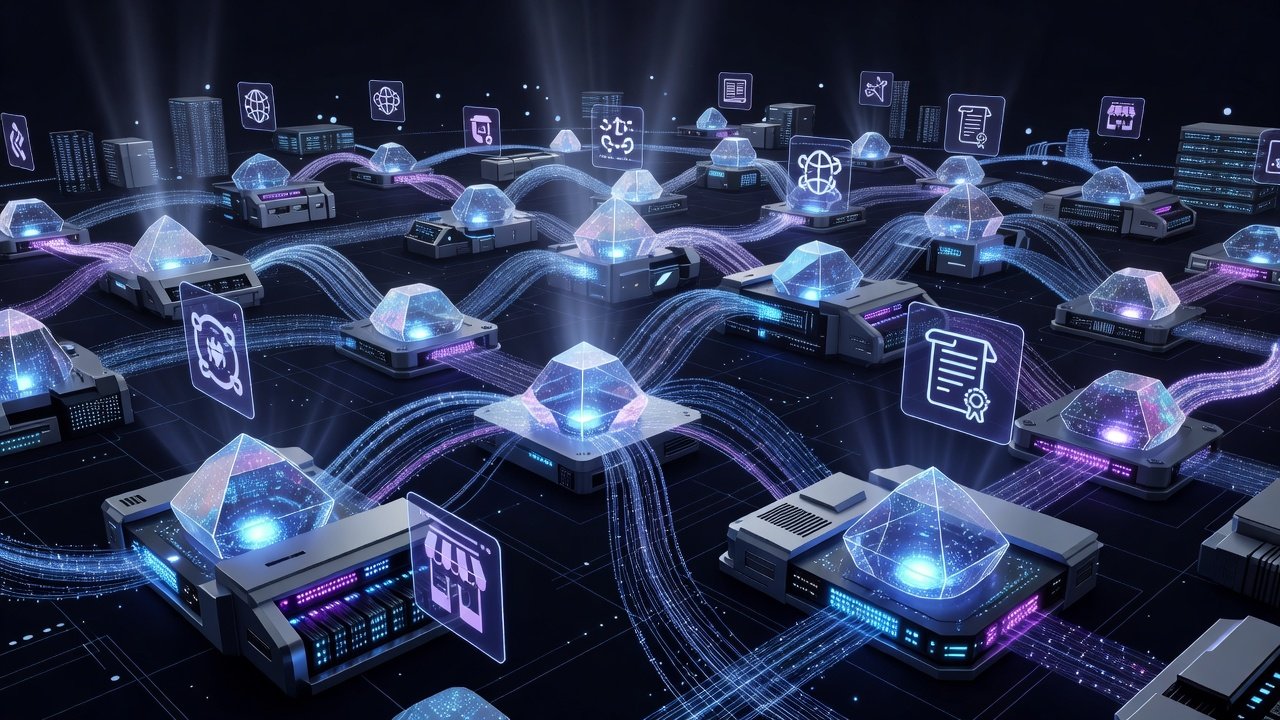
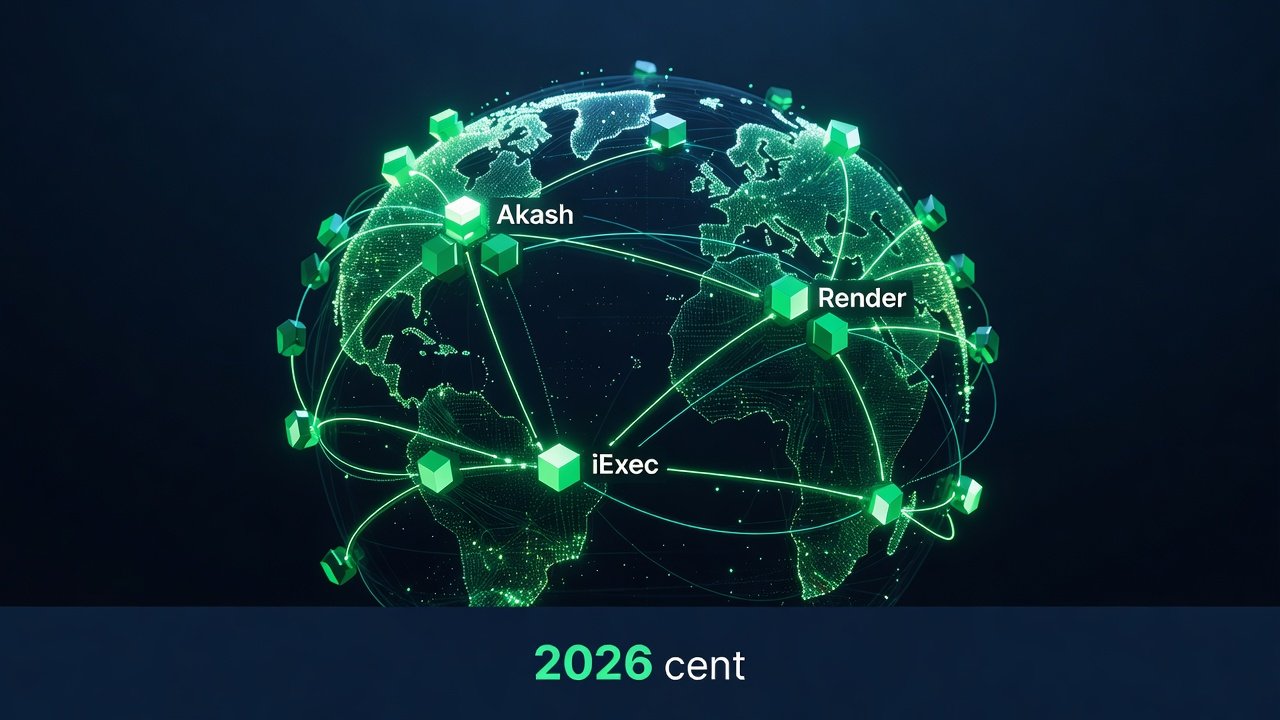
Decentralized compute networks have become essential infrastructure for Web3 applications seeking alternatives to centralized cloud providers. As of late 2026, projects like Akash, Render, and iExec continue to evolve, offering developers options for running workloads ranging from AI inference to general-purpose containers. This article examines the latest benchmarks, token models, and real-world deployments to help teams choose the right platform.
Developers building dApps often face trade-offs between cost efficiency, latency, and scalability. Akash focuses on general-purpose cloud compute, Render specializes in GPU-intensive rendering and AI tasks, while iExec emphasizes confidential computing and oracle integrations. Understanding these differences is critical for optimizing decentralized applications. The growing adoption of Web3 has pushed these networks to improve interoperability, allowing seamless handoffs between providers for complex workflows that span multiple compute types.
Performance Metrics Comparison
Recent 2026 benchmarks highlight distinct strengths. Akash demonstrates strong results in CPU-bound workloads with average job completion times 25% faster than traditional providers in multi-region tests. Render excels in GPU utilization, delivering up to 40% higher throughput for rendering pipelines. iExec shows advantages in privacy-preserving tasks, reducing execution overhead through trusted execution environments.
Latency reductions are particularly notable in practical deployments. One Ethereum-based DeFi aggregator reported cutting average response times from 180ms to 95ms after migrating compute tasks to Akash. Cost savings averaged 35-50% compared to centralized alternatives in similar setups. Render's network showed particular promise in batch processing scenarios, where parallel GPU tasks completed 30% quicker than competing solutions during peak loads. iExec's focus on verifiable computation added a layer of security that proved valuable for financial applications requiring audit trails without sacrificing speed.
Additional metrics from independent testing revealed Akash maintaining 99.2% uptime across global providers, while Render achieved consistent frame rates in rendering benchmarks exceeding 60 FPS for high-resolution assets. iExec excelled in data integrity checks, with zero reported breaches in confidential workloads over the past year.
Token Economics Overview
Token utility varies across networks. Akash uses AKT for staking and payments, with a deflationary mechanism tied to network usage. Render employs RNDR for GPU rentals and rewards, incorporating a burn-and-mint equilibrium model. iExec leverages RLC for task execution and oracle services, emphasizing secure data marketplace incentives.
These economics influence long-term sustainability. Higher staking participation on Akash correlates with improved provider availability, while Render's model rewards high-performance GPU operators more directly. iExec's token design encourages data providers to contribute high-quality datasets, fostering a robust ecosystem for oracle-dependent dApps. Developers should monitor token velocity as an indicator of network health, since increased usage often leads to more competitive pricing and better resource allocation over time.
dApp Integration Strategies
Integrating these networks into dApps requires careful architecture. Akash supports Kubernetes-compatible deployments, making it straightforward for teams already using container orchestration. Render offers SDKs optimized for 3D rendering and machine learning workloads. iExec provides APIs for verifiable off-chain computation with built-in confidentiality.
Practical examples include a decentralized social platform that integrated Render for on-demand image processing, achieving significant throughput improvements without compromising decentralization. Another case involved a supply chain dApp using iExec to run encrypted analytics on IoT data streams, ensuring compliance with privacy regulations. Akash proved ideal for a gaming backend that needed elastic scaling during tournaments, automatically provisioning additional instances based on real-time demand signals from the blockchain.
For advanced integrations, teams can combine networks by routing GPU tasks to Render while handling general APIs on Akash. This hybrid approach has been documented in several open-source repositories where middleware layers abstract provider differences, allowing developers to switch seamlessly based on workload profiles.
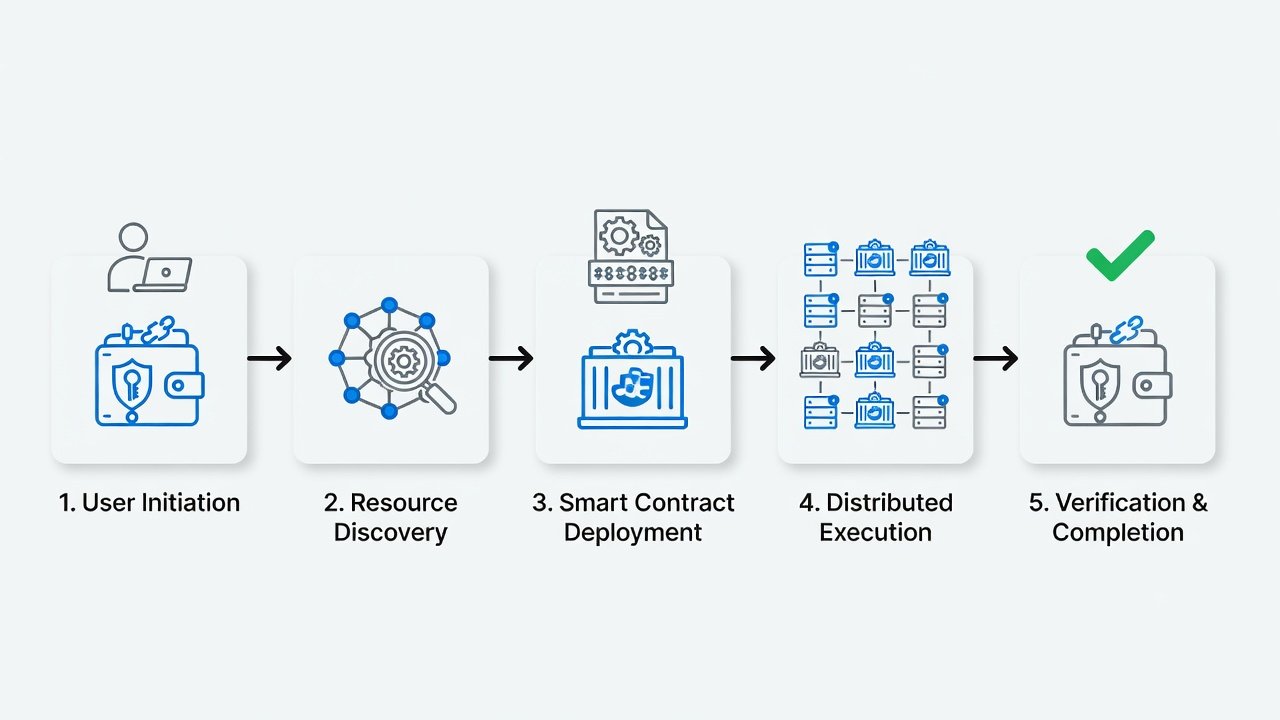
Step-by-Step Setup Guides
Akash Deployment:
- Install the Akash CLI and configure your wallet with sufficient AKT for bidding.
- Create a deployment manifest specifying CPU, memory, and storage requirements, including any persistent volumes for stateful applications.
- Submit the deployment and bid on available providers, reviewing provider reputation scores before acceptance.
- Monitor logs and scale replicas as needed, implementing health checks to restart failed containers automatically.
- Troubleshoot common issues like provider mismatches by adjusting resource requests or selecting alternative regions.
Render Network Setup:
- Connect a compatible wallet and fund with RNDR tokens for job submissions.
- Upload job specifications via the Render dashboard or API, defining parameters such as resolution and frame count for rendering tasks.
- Select GPU tier and monitor job progress in real time through built-in dashboards.
- Retrieve rendered outputs directly to your dApp storage, integrating with IPFS for decentralized file handling.
- Optimize by batching similar jobs to reduce overhead and leverage Render's priority queuing during high-demand periods.
iExec Integration:
- Set up the iExec SDK in your application code and initialize the worker pool configuration.
- Define confidential tasks with required datasets and specify attestation requirements for result verification.
- Deploy via the iExec marketplace and verify results on-chain using smart contract callbacks.
- Handle payments through the integrated token system while implementing fallback mechanisms for task retries.
- Extend functionality by connecting to external oracles for dynamic data inputs in complex workflows.
Scalability Case Studies
A gaming dApp scaled its backend compute across Akash, handling 10x traffic spikes during launch events while maintaining sub-100ms latency. Render powered a metaverse platform's asset generation pipeline, processing thousands of daily renders with consistent quality and enabling real-time updates for user-generated content. iExec supported a privacy-focused analytics tool that processed sensitive user data without exposing raw information, resulting in faster compliance audits and broader adoption among enterprise partners.
Further examples include a DeFi protocol that used Akash for oracle computations during market volatility, reducing downtime by 60%. Render helped an NFT marketplace generate customized previews at scale, cutting production times significantly. iExec facilitated secure multi-party computations in a collaborative research dApp, allowing institutions to share insights without revealing proprietary datasets.
Common Pitfalls for Developers
- Underestimating provider variability on Akash, leading to inconsistent performance; always test multiple providers and set minimum reputation thresholds in manifests.
- Overlooking Render's job queuing during peak GPU demand periods, which can delay time-sensitive tasks; implement scheduling buffers and monitor network load indicators.
- Ignoring iExec's data attestation requirements, which can add complexity to workflows; integrate verification steps early in the development cycle to avoid downstream errors.
- Failing to implement proper retry logic for transient network issues across all platforms, resulting in lost jobs; use exponential backoff strategies and log all failures for analysis.
- Neglecting token volatility management, which may impact budgeting for ongoing operations; consider stablecoin wrappers where available for payment stability.
Security and Compliance Considerations
Security remains paramount when deploying to decentralized networks. Akash benefits from provider audits and encrypted communications, but developers must encrypt sensitive data at the application layer. Render incorporates hardware-level protections for GPU tasks, yet requires careful management of output access controls. iExec stands out for its trusted execution environments, making it suitable for regulated industries handling personal data. Compliance with standards like GDPR often favors iExec due to its built-in data minimization features.
Choosing the Right Provider: FAQ
Which network suits AI inference workloads best?
Render typically leads for GPU-heavy AI tasks due to specialized hardware incentives, while Akash offers more flexibility for mixed CPU/GPU needs and iExec adds confidentiality layers for sensitive models.
How do these platforms compare for latency-sensitive dApps?
Akash often provides the lowest latency in distributed regions, but testing specific workloads remains essential as results vary by provider location; Render and iExec may introduce slight overhead for specialized processing.
What about cost predictability?
iExec's marketplace model offers transparent pricing for confidential tasks, whereas Akash and Render use dynamic bidding that can fluctuate with demand; hybrid strategies help mitigate variability.
Can multiple networks be combined?
Yes, many developers route different workload types across platforms—for example, using Render for graphics and Akash for general APIs—to optimize both performance and cost while leveraging each network's unique strengths.
What future developments should teams watch?
Interoperability upgrades and expanded oracle integrations across all three networks promise easier multi-provider orchestration in the coming quarters.
Conclusion
Selecting between Akash, Render, and iExec in 2026 depends on specific dApp requirements around compute type, privacy needs, and integration complexity. By following the benchmarks, setup processes, and case studies outlined above, developers can achieve meaningful latency improvements and operational savings in their decentralized applications. Continuous monitoring of network updates and community resources from Akash network, Render network, and iExec will ensure teams stay ahead of evolving capabilities.

No comments yet. Be the first!