 CryptoChain Blog
Introduction to Decentralized Compute in Web3
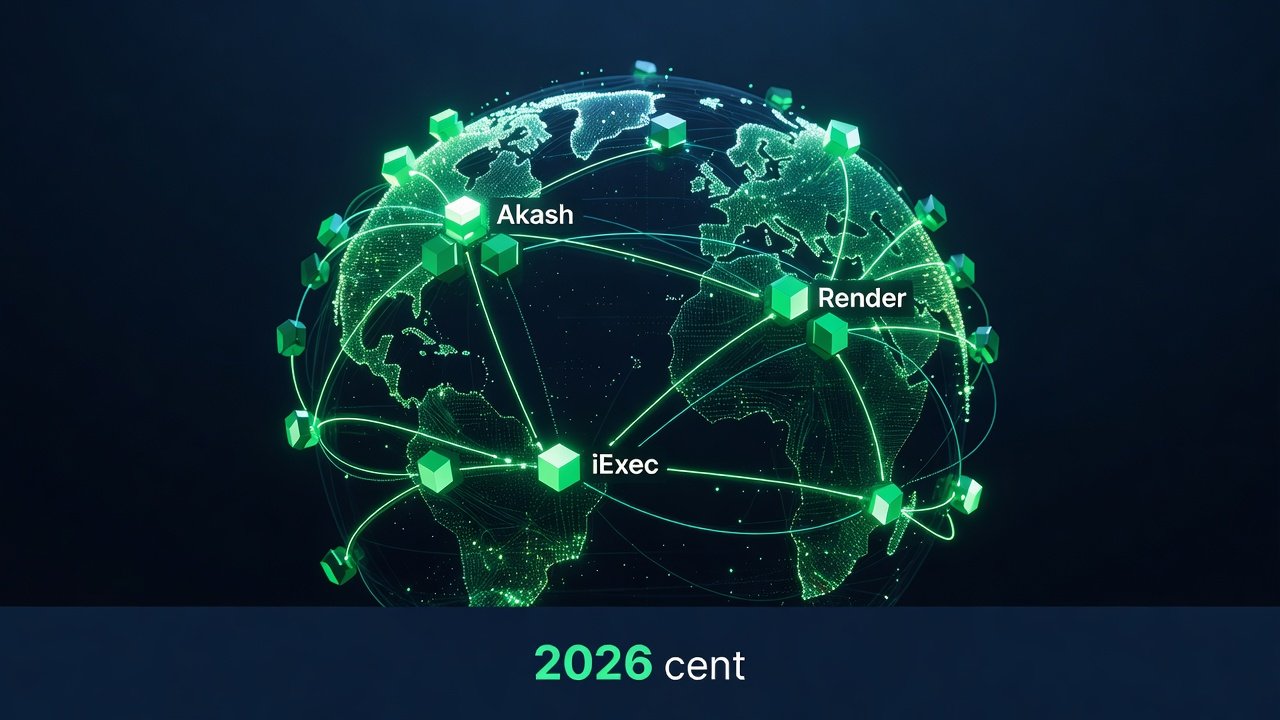
As Web3 applications scale in 2026, centralized cloud providers struggle with high costs, single points of failure, and censorship risks. Decentralized compute networks offer a compelling alternative by distributing workloads across global node operators. This article provides an in-depth comparison of leading platforms—Akash, Render, and iExec—focusing on performance metrics, token economics, dApp integration, real-world case studies, migration strategies, security, and innovations ahead. Developers building AI inference, rendering pipelines, and smart contract oracles need reliable, cost-effective compute that aligns with blockchain principles of transparency and resilience.
These networks leverage blockchain incentives to match supply and demand, enabling Web3 scalability without traditional intermediaries. Teams migrating from AWS or Google Cloud often cite reduced vendor lock-in and improved fault tolerance as primary motivators. Understanding the nuances of each platform helps avoid common pitfalls such as mismatched workload types or overlooked token volatility during budgeting.
Platform Overviews and Core Architectures
Akash operates as a decentralized marketplace for cloud resources, using Kubernetes for orchestration and supporting general-purpose workloads like containerized applications. It allows providers to list excess capacity and users to bid on resources through a reverse auction system. Render focuses on GPU-intensive tasks such as 3D rendering and AI model training through a peer-to-peer network optimized for creative and machine learning pipelines. iExec emphasizes confidential computing and oracle services, integrating with Ethereum for secure off-chain execution while maintaining verifiable results via trusted execution environments.
Each platform uses native tokens to facilitate payments and staking: AKT for Akash, RNDR for Render, and RLC for iExec. Akash’s architecture prioritizes broad compatibility with existing container tools, making it accessible for teams already familiar with Kubernetes. Render’s design centers on high-throughput graphics processing units distributed globally, which suits industries like animation and generative AI. iExec differentiates itself with built-in privacy features that appeal to finance and healthcare dApps handling sensitive data. Choosing the right architecture begins with mapping your project’s compute requirements to these specialized strengths.
Performance Metrics and Benchmarks
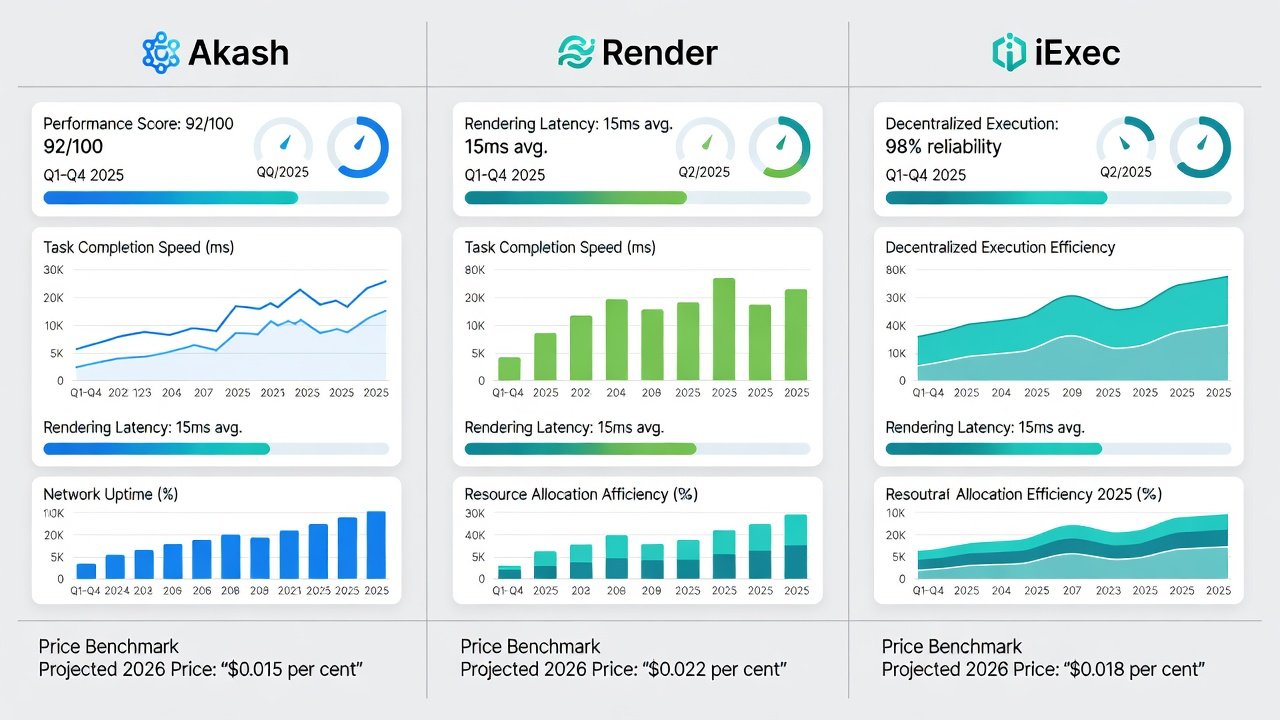
Benchmarks reveal distinct strengths across the networks. Akash demonstrates strong latency for general compute with average job completion times under 30 seconds for standard containers in recent tests, alongside high uptime rates exceeding 99.5 percent. Render excels in GPU throughput, delivering up to 40 percent faster rendering compared to traditional setups for complex scenes while maintaining energy-efficient node utilization. iExec shines in verifiable computation, with low overhead for trusted execution environments and strong performance in oracle-driven workloads.
Key metrics include throughput, geographic distribution of nodes, and energy efficiency scores. Teams should run pilot workloads to validate against their dApp requirements rather than relying solely on published numbers. Factors such as network congestion during peak hours and provider reputation scores also influence real-world outcomes. Diversifying across multiple providers can further enhance resilience for mission-critical applications.
Token Economics and Incentive Models
Token design drives network sustainability and user adoption. Akash uses a reverse auction model where providers bid on workloads, reducing costs for users while rewarding reliable operators through staking rewards. Render’s tokenomics tie value directly to usage in creative industries, with staking mechanisms securing the network and encouraging long-term holding. iExec incorporates collateral requirements for providers to ensure quality and confidentiality guarantees, creating economic penalties for poor performance.
These models promote long-term participation but introduce volatility considerations for budgeting Web3 projects. Developers should monitor token price trends and consider hedging strategies or stablecoin integrations where available. Understanding emission schedules and governance participation helps teams anticipate future changes in network incentives.
Integration Ease with dApps and Developer Tools
Integration varies significantly by ecosystem support and tooling maturity. Akash provides SDKs compatible with major blockchains and straightforward Kubernetes deployment scripts that reduce onboarding time. Render offers specialized APIs tailored for creative pipelines, including plugins for popular 3D software. iExec includes libraries for secure oracle integration with smart contracts, enabling seamless calls from Ethereum-based dApps.
Documentation quality and active community resources accelerate adoption. Developers report smoother onboarding with platforms offering comprehensive tutorials, testnets, and responsive Discord channels. Hybrid setups combining on-chain logic with off-chain compute require careful API design to maintain data consistency and error handling across environments.
Real-World Case Studies and Cost Savings
Developers migrating to these networks share positive outcomes that demonstrate tangible benefits. One DeFi protocol switched to Akash and achieved significant latency reductions alongside lower operational expenses through competitive bidding. An AI startup using Render reported faster iteration cycles and improved scalability for generative models, allowing them to handle increased demand without proportional infrastructure growth. iExec users in oracle-dependent applications noted enhanced security and verifiable results without compromising performance.
These examples highlight practical benefits in production environments across industries. Additional case studies from gaming studios and supply-chain platforms show similar patterns of cost optimization and improved uptime when workloads are distributed across decentralized nodes.
Step-by-Step Migration Guide
- Assess current infrastructure and identify compute bottlenecks through monitoring tools and load testing.
- Evaluate providers based on workload type, benchmark results, and community feedback from developer forums.
- Deploy test instances on the chosen network using available SDKs and run parallel workloads for comparison.
- Configure token wallets, set up payment mechanisms, and establish monitoring dashboards for job status.
- Monitor performance metrics closely and gradually shift production traffic while maintaining rollback capabilities.
- Implement fallback strategies for hybrid setups during transition and document lessons learned for future optimizations.
Security Considerations
Decentralized networks introduce unique risks including node trustworthiness and data privacy that require proactive mitigation. Akash addresses these via reputation systems and encrypted communications between users and providers. Render employs cryptographic verification for renders to prevent tampering. iExec leverages trusted execution environments to protect sensitive computations from exposure.
Best practices include auditing smart contracts, using encrypted workloads where possible, and diversifying across providers to reduce single-point risks. Review Ethereum security resources for complementary guidance on smart contract interactions and consider third-party audits before large-scale deployments.
Future Outlook on Decentralized Compute Innovations
By 2026 and beyond, expect advancements in cross-chain interoperability, improved AI optimizations, and enhanced privacy features that will further Web3 scalability. Integration with emerging standards around verifiable computation will open new use cases in regulated industries. Explore Web3 Foundation initiatives for broader ecosystem developments and stay informed about protocol upgrades through official governance channels.
FAQ: Common Integration Challenges and Best Practices
How do I handle token volatility during payments?
Use stablecoin wrappers or automated conversion tools provided by each platform to stabilize costs and avoid budget overruns.
What are common latency issues and fixes?
Optimize job specifications and select geographically distributed nodes; test multiple providers for best fit and implement caching strategies.
Can these networks support enterprise-grade compliance?
Platforms like iExec offer confidentiality options, but review regulatory requirements and implement additional controls such as access logging.
Best practices for selecting a provider?
Start with workload-specific benchmarks, review community feedback on uptime, and plan for multi-provider redundancy to ensure continuity.
How should teams manage data privacy on decentralized networks?
Encrypt sensitive inputs before submission and leverage platform features like trusted execution environments for end-to-end protection.

No comments yet. Be the first!