 CryptoChain Blog

Introduction to Soulbound Tokens in Web3
In 2026, the Web3 landscape is evolving beyond basic DeFi and gaming applications toward more sophisticated mechanisms for establishing trust and verifiable identity. Soulbound tokens (SBTs) stand out as non-transferable NFTs designed to represent credentials, reputation, and affiliations that cannot be sold or traded. This innovation addresses a core challenge in decentralized networks: how to prove authenticity and build reliable reputation without central authorities. As blockchain adoption grows, users and organizations seek ways to signal real-world achievements and memberships in a tamper-proof manner, and SBTs provide exactly that by binding digital proofs directly to an individual's wallet or decentralized identifier.
Soulbound tokens emerged from concepts popularized by Ethereum co-founder Vitalik Buterin and have gained traction for their potential to underpin decentralized identity (DID) systems. Unlike traditional NFTs that function as digital collectibles or assets, SBTs are permanently bound to a wallet or identity, creating immutable records of achievements, memberships, or qualifications. This shift supports advanced Web3 trends such as reputation-based governance and credential verification that go far beyond simple token trading or play-to-earn mechanics.
Technical Fundamentals of Non-Transferable NFTs
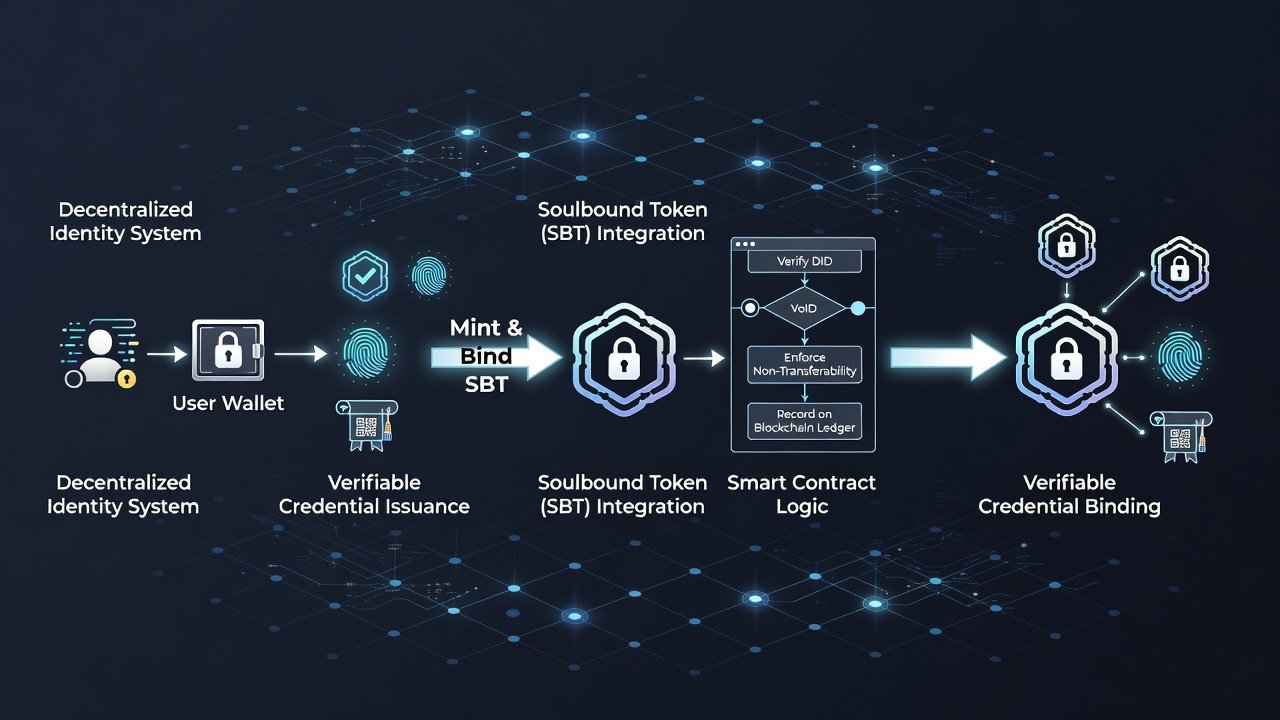
At their core, soulbound tokens leverage smart contract logic to enforce non-transferability. On blockchains like Ethereum, an SBT is minted to a specific address with code that prevents any transfer functions from executing. This is achieved through standards extensions beyond ERC-721, often incorporating soulbinding mechanisms that tie the token to the holder's private key or decentralized identifier. Developers typically implement these by overriding transfer methods in Solidity to revert any attempts at movement, ensuring the token remains attached to its original soul or wallet forever.
Integration with decentralized identity systems involves protocols that allow users to control their own data. SBTs can be issued by verified entities such as universities, employers, or DAOs, and verified on-chain without revealing unnecessary personal information. This privacy-preserving approach uses zero-knowledge proofs to confirm claims while maintaining user sovereignty. For example, a professional certification SBT might prove completion of a course without exposing the holder's full name or contact details until explicitly authorized. These technical foundations make SBTs compatible with existing Ethereum infrastructure while adding layers of immutability and verifiability that traditional assets lack.
Comparing Soulbound Tokens to Traditional NFTs
Traditional NFTs excel in ownership and liquidity for art, music, and virtual goods. In contrast, SBTs prioritize permanence and verifiability. Key differences include:
- Transferability: NFTs can be bought and sold freely; SBTs are locked to the original recipient, preventing speculation or resale.
- Use Case Focus: NFTs emphasize scarcity and speculation; SBTs focus on reputation and credentials, enabling trust signals in professional and social contexts.
- Security Model: SBTs reduce risks of fake credentials by making forgery detectable through on-chain history and binding rules.
- Market Dynamics: While NFTs thrive on marketplaces, SBTs operate outside liquidity pools, instead supporting verification APIs and reputation dashboards.
This distinction makes SBTs ideal for professional and governance contexts where trust matters more than tradability. Users exploring advanced Web3 trends will appreciate how SBTs complement rather than replace NFTs by filling gaps in identity and reputation layers.
Real-World Use Cases in 2026
Soulbound tokens are finding applications across professional networking, community governance, and education verification. In professional networking, platforms issue SBTs for certifications or work history, allowing seamless verification on decentralized job boards. For community governance, DAOs use SBTs to represent voting rights or participation scores that reflect genuine engagement rather than token holdings. Educational institutions are experimenting with SBTs to issue lifelong learning records that students can carry across platforms without fear of loss or alteration.
Leading projects include integrations with Ethereum-based identity solutions and emerging decentralized social protocols. These examples demonstrate how SBTs enhance trust without compromising decentralization. Ethereum's developer resources provide foundational tools for such implementations, while broader identity standards draw from established web protocols.
Practical Steps for Implementation
Developers can implement SBTs using popular protocols like Ethereum and tools from the Ethereum ecosystem. Here are actionable steps:
- Choose a base blockchain supporting smart contracts, such as Ethereum, and set up a development environment with tools like Hardhat or Foundry.
- Deploy a custom ERC-721 variant with disabled transfer functions via Solidity code, including modifiers that revert on any transfer attempt.
- Integrate with DID standards for issuance and verification, ensuring compatibility with wallets that support soulbound logic.
- Test for security using audits focused on access control and immutability, simulating key loss and unauthorized binding scenarios.
- Deploy via frameworks that support soulbinding logic for seamless wallet binding, then create front-end interfaces for users to claim and display their tokens.
- Monitor on-chain activity post-launch and iterate based on community feedback to refine reputation algorithms tied to the SBTs.
These steps enable projects to create robust reputation layers on top of existing infrastructure, with real-world testing recommended through testnets before mainnet deployment.
Challenges and Mitigation Strategies
Despite their promise, soulbound tokens encounter hurdles such as wallet recovery issues, where lost private keys could result in permanent loss of credentials. Mitigation includes social recovery mechanisms or multi-party computation setups that allow trusted parties to assist without full key exposure. Another challenge is issuer centralization, where a few large organizations dominate SBT issuance; solutions involve decentralized issuance protocols and community-vetted issuers to maintain Web3 ethos.
Future Outlook and Conclusion
Looking ahead, soulbound tokens are poised to become a cornerstone of Web3 trust infrastructure by fostering verifiable reputation at scale. As adoption increases, expect tighter integration with cross-chain solutions and enhanced privacy features. Organizations and individuals ready to experiment now will be well-positioned for the decentralized web of tomorrow, where credentials carry the same weight online as they do in traditional systems.
FAQs on Soulbound Tokens
What security risks do soulbound tokens present?
Primary risks include wallet compromise leading to permanent loss of credentials and smart contract vulnerabilities that could allow unauthorized binding. Mitigation involves multi-signature wallets and regular audits from reputable firms, alongside user education on secure key management practices.
What are the main adoption barriers for SBTs?
Barriers include lack of widespread wallet support, regulatory uncertainty around verifiable credentials, and the need for standardized issuance frameworks across projects. Overcoming these requires collaboration between developers, standards bodies, and end-user communities to build intuitive tools and clear guidelines.
What is the future outlook for soulbound tokens in decentralized networks?
By late 2026, SBTs are expected to become foundational for trust layers in Web3, enabling advanced applications in governance and identity while addressing current scalability and usability issues. Continued innovation will likely see them integrated into everyday decentralized applications, transforming how reputation is built and verified online.

No comments yet. Be the first!