 CryptoChain Blog
Introduction to Decentralized Domains in Web3
As the internet evolves toward greater user sovereignty, decentralized domains are emerging as a cornerstone of Web3 infrastructure. These systems replace traditional DNS with blockchain-based alternatives that offer true ownership, censorship resistance, and seamless integration with decentralized applications. In 2026, developers and site owners are increasingly turning to protocols like Ethereum Name Service (ENS), Handshake, and Unstoppable Domains to host websites and services outside centralized control points. This shift addresses growing concerns over domain seizures, single points of failure, and data privacy. By leveraging smart contracts and distributed ledgers, these innovations enable permanent, self-sovereign identities on the web. The demand stems from real-world events where centralized registrars have complied with takedown requests, leaving users without recourse. Decentralized solutions mitigate this by distributing control across nodes, making it far harder for any single entity to interfere. Furthermore, they align with the broader Web3 ethos of user-owned data and applications, allowing seamless interactions between domains and smart contracts.
Comparing Leading Decentralized Domain Protocols
Understanding the differences between major protocols is essential for choosing the right solution. ENS operates primarily on Ethereum, providing human-readable names that resolve to wallet addresses, IPFS content hashes, and other Web3 resources. ENS official site details its extensive developer ecosystem. Handshake uses a proof-of-work blockchain to decentralize the root zone of the DNS itself, allowing users to register top-level domains directly. Handshake official site explains its unique approach to root authority. Unstoppable Domains focuses on multi-chain support with extensions like .crypto and .nft, emphasizing ease of use for non-technical users. Unstoppable Domains official site highlights its wallet integrations. Key distinctions include governance models, resolution mechanisms, and ecosystem compatibility. ENS benefits from Ethereum's robust security and developer tools, while Handshake offers broader DNS-level interoperability. Unstoppable Domains prioritizes cross-platform wallet integrations. When evaluating, consider factors such as transaction speed, supported blockchains, and community governance participation. For instance, ENS allows name owners to set records for avatars and social links, enhancing profile functionality across dApps.
Step-by-Step Registration Processes
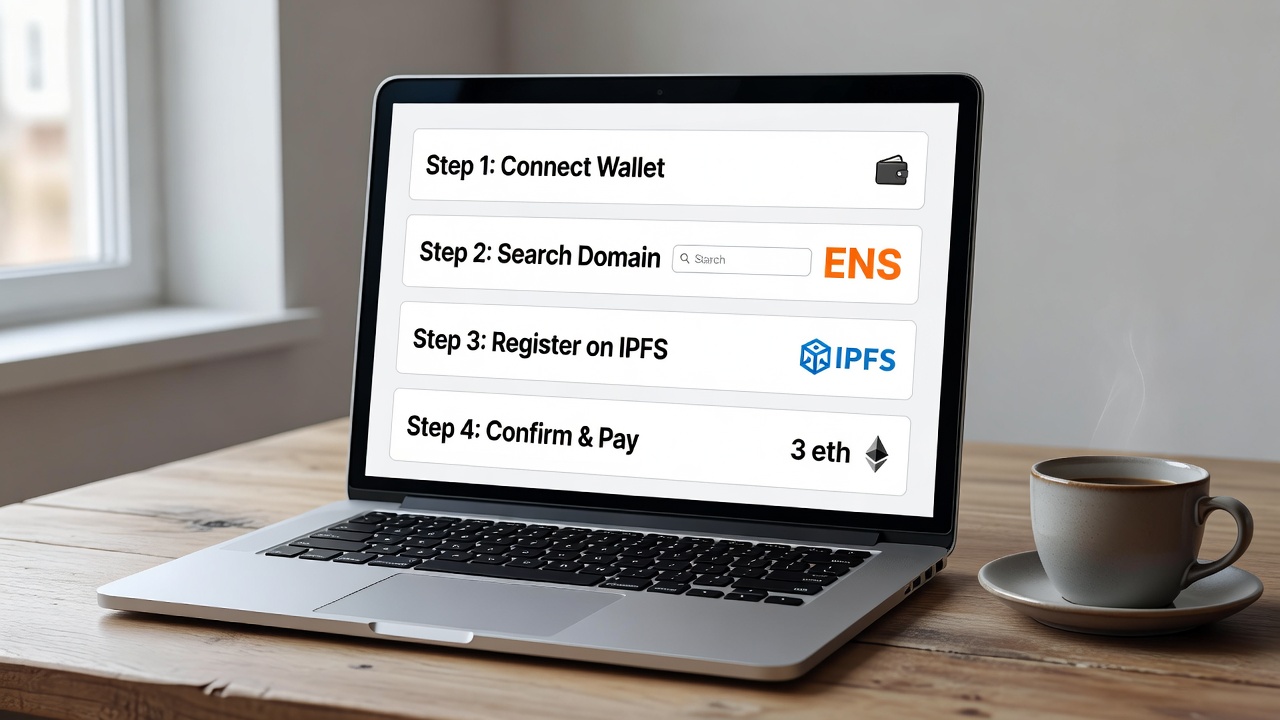
Registering a decentralized domain varies by protocol but follows similar patterns. For ENS, users connect a wallet to the official registrar, search for an available name, and complete the transaction via smart contract. This process typically involves selecting a registration duration and confirming gas fees on the Ethereum network. Handshake registration involves running a node or using a marketplace to bid on names through its blockchain auction system, which can take days or weeks depending on demand. Unstoppable Domains simplifies this with a web-based dashboard supporting cryptocurrency payments and instant claims for many names. Practical tips include verifying name availability early, understanding renewal requirements, and securing private keys immediately after purchase. Always test resolutions in a sandbox environment before full deployment. Developers should also review each protocol's documentation for edge cases, such as handling expired names or transferring ownership without downtime. Advanced users often script these steps using command-line tools or APIs for batch registrations in larger projects.
Integrating Decentralized Domains with dApps
Once registered, domains integrate directly with decentralized applications through resolution libraries. Developers can map ENS names to IPFS-hosted sites or link Handshake domains to peer-to-peer networks. This enables censorship-resistant frontends for DeFi platforms, NFT marketplaces, and social protocols. Examples from 2026 projects include decentralized social networks using Unstoppable Domains for user profiles and content delivery networks built on Handshake roots. Libraries like ethers.js for ENS and hnsd for Handshake streamline these connections. Integration often requires updating application configuration files to prioritize decentralized resolvers over traditional DNS. Testing across multiple browsers and wallet extensions ensures compatibility, as some older clients still rely on centralized gateways. Real deployments frequently combine domains with storage solutions like Arweave for permanent content archiving.
Security Benefits and Best Practices
Decentralized domains enhance security by eliminating registrar vulnerabilities and enabling cryptographic verification of ownership. Benefits include resistance to government takedowns, protection against phishing via immutable records, and built-in multi-signature controls. Best practices involve using hardware wallets for high-value domains, enabling two-factor authentication where supported, and regularly auditing smart contract permissions. Case studies from 2026 highlight successful migrations by independent media outlets that avoided content blocks through these systems. Additional measures include monitoring for suspicious resolution changes and participating in protocol governance to influence security updates. Risks such as smart contract bugs or key loss remain, so users should employ multisig setups and backup strategies. Overall, the cryptographic foundation provides stronger assurances than traditional WHOIS records, which can be altered by centralized authorities.
Cost Analyses Versus Centralized Options
While specific pricing fluctuates, decentralized domains generally involve one-time or blockchain-fee-based costs rather than recurring annual fees. Qualitative comparisons show long-term savings for high-traffic sites due to avoided renewal markups and added value from token ownership. Developers should monitor gas fees on Ethereum and factor in node operation expenses for Handshake. In many scenarios, the ownership token itself holds secondary market value, offsetting initial setup efforts. Centralized options may appear cheaper upfront but expose users to sudden price hikes or policy changes. Evaluating total cost of ownership requires factoring in maintenance, security tooling, and potential downtime costs from centralized failures.
Real-World Case Studies from 2026 Projects
Recent implementations demonstrate practical impact. A decentralized news platform migrated to ENS-integrated IPFS hosting, achieving uninterrupted access during regional restrictions. The project reported improved load times and user trust after full decentralization. Another project used Handshake for a community-driven TLD, fostering grassroots governance and allowing local groups to create custom extensions without approval from global authorities. A third example involves an NFT marketplace leveraging Unstoppable Domains for creator profiles, resulting in direct wallet-to-wallet interactions without intermediary redirects. These cases illustrate how early adopters gain competitive advantages in resilience and user engagement. Lessons learned emphasize thorough testing of resolution paths and community education to drive adoption.
Common Migration Challenges and FAQ
Migrating from traditional DNS involves technical and conceptual hurdles. Common issues include resolver configuration, legacy link updates, and educating users about new domain formats.
- How do I point my existing site to a decentralized domain? Use IPFS pinning services and update DNS records during transition.
- Are decentralized domains searchable on Google? Yes, with proper indexing via gateways and sitemaps.
- What happens if I lose my private keys? Recovery depends on protocol; ENS supports limited social recovery options.
- Can I sell my decentralized domain later? Most support secondary marketplaces for trading.
- How do browser extensions affect resolution? Specialized Web3 browsers or plugins like MetaMask enhance native support.
Additional questions often cover compatibility with browsers and wallet extensions. Start with test domains to build familiarity before full migration. Planning for hybrid setups during transition periods helps minimize disruption to existing traffic.
In conclusion, adopting decentralized hosting innovations positions projects for a more open and resilient web in 2026 and beyond. Developers should evaluate protocols against their specific needs for ownership, scalability, and integration to make informed decisions.
No comments yet. Be the first!