 CryptoChain Blog

Introduction to Web3 in Healthcare
The healthcare industry stands at the cusp of a major transformation driven by Web3 technologies. In 2026, decentralized systems are moving beyond theory to deliver practical improvements in data security, patient control, and funding models. This comprehensive exploration covers the leading trends, backed by real-world pilots and actionable guidance for providers seeking to modernize their operations. Web3 brings blockchain, smart contracts, and decentralized networks into medical ecosystems, addressing long-standing issues like data breaches, fragmented records, and limited patient agency. By distributing control away from single entities, these innovations foster trust and efficiency across global health networks.
Blockchain-Based Electronic Health Records
Traditional electronic health records suffer from siloed data and interoperability issues that hinder timely care. Blockchain solutions create immutable, patient-controlled ledgers that enhance security and sharing across providers. Key benefits include tamper-proof audit trails, granular consent management, and reduced duplication of tests. Providers can verify records instantly without relying on centralized databases prone to cyberattacks. In practice, this means a patient's history travels seamlessly from primary care to specialists while preserving privacy through encryption and zero-knowledge proofs.
Real-World 2026 Pilots
Several hospital networks launched blockchain EHR pilots in early 2026. One European consortium demonstrated seamless cross-border record access while maintaining full compliance with stringent privacy regulations. These initiatives reduced administrative overhead by streamlining verification processes and cutting reconciliation time by over half. Another pilot in Asia integrated wearable device data directly onto the ledger, allowing real-time updates visible only to authorized parties. The results highlighted improved diagnostic accuracy and faster emergency responses.
Tokenized Incentives for Data Sharing
Tokenization rewards patients for contributing anonymized health data to research pools. This patient-centric model accelerates medical discoveries while compensating individuals fairly. Platforms use smart contracts to automate payouts based on data utility and consent duration. Participants receive tokens redeemable for services or converted to other assets, creating a sustainable ecosystem that values personal information appropriately. Researchers gain access to diverse, high-quality datasets that were previously locked in institutional silos.
- Patients earn tokens for verified data contributions through secure apps
- Researchers access high-quality datasets with built-in privacy layers and audit trails
- Transparency ensures all parties see how data is used via public ledgers
- Smart contracts enforce expiration dates on consents to protect long-term privacy
Early adopters report higher engagement rates as individuals feel empowered rather than exploited by data requests.
Integration with DeFi for Medical Funding
Decentralized finance enables new pathways for medical research funding and insurance. Patients and providers can access liquidity pools or tokenized health bonds without traditional intermediaries. This reduces delays in clinical trials and expands coverage options in underserved regions. Smart contracts handle milestone-based disbursements, ensuring funds reach intended projects only upon verified progress. Integration also supports parametric insurance models that automatically trigger payouts based on predefined health events recorded on-chain.
For deeper insight into decentralized protocols, explore Ethereum's official resources on smart contract applications in health data.
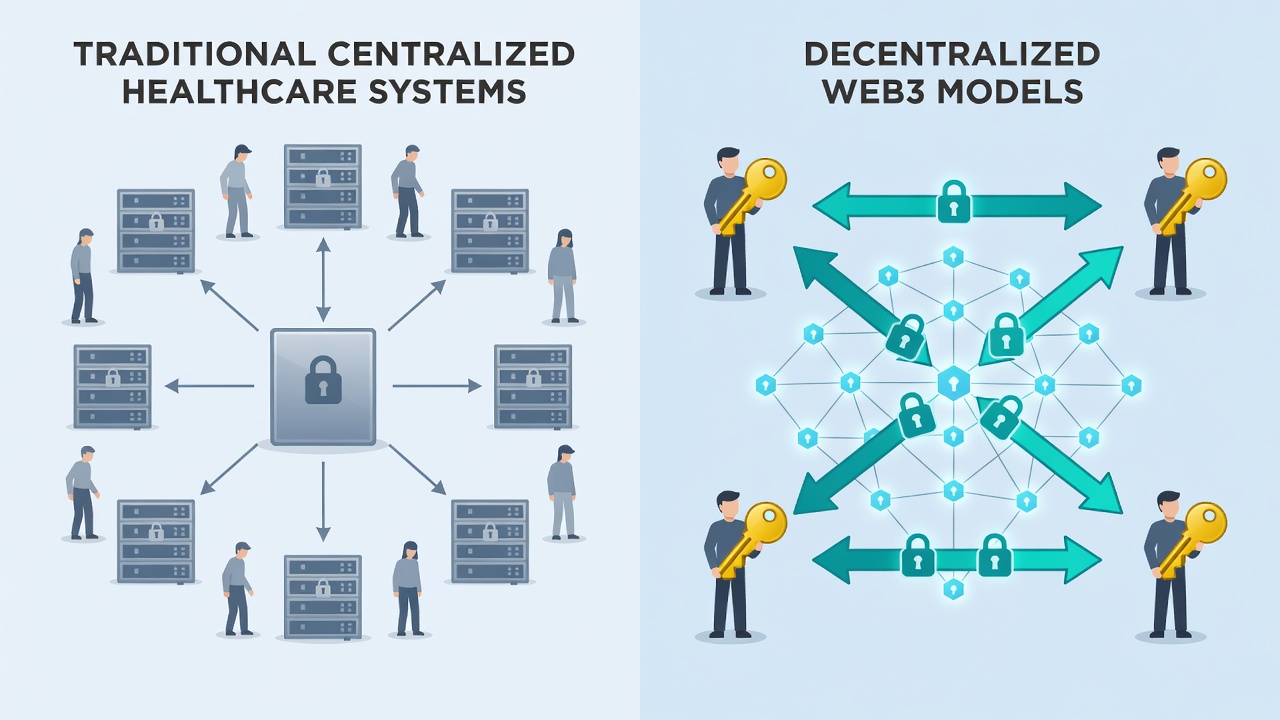
Traditional vs Decentralized Systems Comparison
Traditional systems centralize control with hospitals and insurers, leading to frequent breaches and limited patient access. Decentralized alternatives distribute authority, improving resilience and trust. Key differences appear in data ownership, speed of sharing, and cost structures. Centralized models often require multiple intermediaries for record transfers, increasing both time and error rates. Decentralized versions enable direct peer-to-peer verification with cryptographic security. Scalability challenges in early blockchain implementations have been addressed through layer-two solutions that maintain speed without sacrificing decentralization benefits.
Step-by-Step Guide for Providers Adopting Web3 Tools
- Assess current infrastructure for interoperability gaps by auditing existing EHR systems and identifying data silos that need bridging solutions.
- Partner with compliant blockchain platforms specializing in healthcare to ensure regulatory alignment from day one and access proven technical support.
- Pilot tokenized consent features with a small patient cohort, starting with elective procedures to gather feedback and refine user interfaces.
- Integrate DeFi modules for funding select research projects, beginning with low-risk initiatives to test smart contract reliability and payout mechanisms.
- Train staff on decentralized identity management through workshops that cover wallet security, consent workflows, and troubleshooting common issues.
- Monitor regulatory updates and scale successful pilots by expanding to additional departments while continuously evaluating performance metrics like adoption rates and error reduction.
Each step should include stakeholder input to minimize disruption and maximize buy-in across clinical and administrative teams.
Challenges, Solutions, and Future Outlook
Adopters must navigate evolving frameworks from bodies like the FDA and EMA regarding data sovereignty and cross-border transfers. Scalability improves through layer-2 solutions that handle high transaction volumes without compromising security. Education remains critical, as both patients and providers need clear guidance on managing private keys and understanding token economics. Looking ahead to late 2026 and beyond, convergence with AI analytics promises even more personalized care derived from decentralized datasets. Providers who invest early position themselves as leaders in a more equitable health landscape.
FAQ
How does Web3 ensure regulatory compliance in healthcare?
Smart contracts embed compliance rules directly into data workflows, with audit logs satisfying most global standards and allowing real-time reporting to oversight agencies.
Is decentralized healthcare scalable for large hospital systems?
Yes, 2026 pilots show layer-2 networks managing thousands of daily records efficiently across continents while preserving decentralization principles.
What are the main risks of adopting these innovations?
Primary concerns involve key management education and initial integration costs, both addressable through phased rollouts and vendor partnerships with established healthcare blockchain firms.
Learn more about global health data standards from the World Health Organization. Additional guidance on medical device regulations is available via the U.S. Food and Drug Administration.


No comments yet. Be the first!