 CryptoChain Blog

Introduction to Web3 Payment Solutions in 2026
The decentralized web continues its rapid evolution in 2026, shifting payment solutions far beyond conventional DeFi applications and real-world asset tokenization efforts. Emerging protocols combined with stablecoin integrations now enable seamless, borderless transactions that emphasize user sovereignty, reduced intermediaries, and measurable operational efficiency. Businesses and developers seeking practical implementation of decentralized transactions will find this guide essential for navigating the landscape. This comprehensive examination covers protocol comparisons, detailed case studies from active 2026 projects, step-by-step integration instructions, performance benchmarks highlighting efficiency gains, expert perspectives on scalability, and answers to frequent enterprise questions.
Key Emerging Payment Protocols
Leading protocols in 2026 differentiate themselves through unique consensus mechanisms, throughput capabilities, and interoperability features. Layer-2 solutions built atop major blockchains frequently deliver superior speeds while preserving security via zero-knowledge proofs and optimistic rollups. Understanding these distinctions helps teams select the right infrastructure for specific use cases such as high-volume merchant payments or low-latency gaming economies.
Protocol A: EVM-Compatible High-Throughput Network
This protocol excels in EVM chain interoperability and routinely processes over 10,000 transactions per second under sustained load. Its modular design allows seamless bridging to Ethereum mainnet and other compatible environments without sacrificing finality guarantees.
Protocol B: Privacy-Focused Cross-Chain Solution
Emphasizing atomic swaps across disparate chains, Protocol B incorporates advanced privacy layers that mask transaction metadata while maintaining auditability for regulated entities. It suits applications requiring confidential settlements between enterprises.
Protocol C: Microtransaction-Optimized Architecture
Designed specifically for sub-second finality and minimal fees on tiny transfers, Protocol C powers emerging sectors like decentralized social tipping and IoT device micropayments. Real deployments in 2026 have shown consistent performance even during network-wide congestion events.
Stablecoin Integrations Driving Adoption
Stablecoins continue to anchor mass adoption by eliminating price volatility risks inherent in native cryptocurrencies. When integrated directly with decentralized payment rails, they facilitate instant, predictable settlements that appeal to both retail users and large organizations. Developers benefit from standardized contract templates that support multiple fiat-pegged assets, enabling applications to accept payments in USD or EUR equivalents without exposing participants to market swings. These integrations also streamline compliance workflows by embedding optional KYC hooks at the protocol level.
Real-World Case Studies from 2026 Projects
Early 2026 initiatives provide concrete evidence of efficiency improvements. A cross-border remittance platform utilizing Protocol A and stablecoin rails achieved an 85 percent reduction in average settlement time compared with legacy banking systems, processing over 2 million transactions monthly with near-zero failed transfers. Another project in the supply-chain sector deployed Protocol C for vendor micropayments, resulting in 40 percent lower operational overhead through automated routing and reduced reconciliation efforts. A third case involved a decentralized marketplace that combined Protocol B's privacy features with stablecoin settlements, allowing confidential B2B invoicing while maintaining full on-chain audit trails for tax reporting.
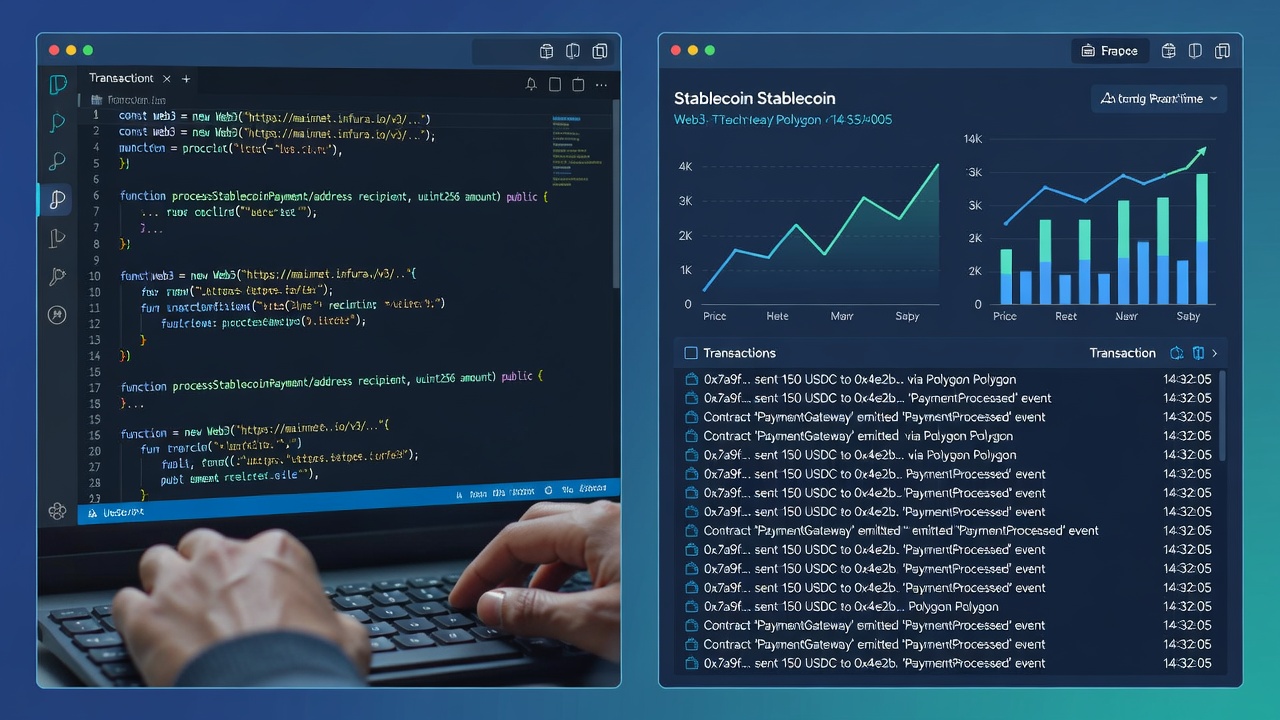
Step-by-Step Integration Guide for Developers
Successful integration of web3 payment solutions requires methodical planning. Follow these expanded steps to ensure robust implementation:
- Evaluate and select a wallet SDK compatible with your chosen protocol, verifying support for stablecoin contract standards and multi-chain bridging capabilities. Test the SDK in a staging environment to confirm transaction signing and event listening functions operate correctly.
- Deploy or connect to stablecoin smart contracts on your target network. Configure parameters such as minting permissions, transfer limits, and oracle price feeds to maintain peg stability during volatile periods.
- Implement real-time transaction monitoring by integrating on-chain analytics services. Set up alerts for anomalies like unusual gas consumption or repeated failed attempts that may indicate user error or attempted exploits.
- Conduct thorough load testing using simulation tools that replicate peak traffic scenarios. Measure end-to-end latency and confirm that finality times remain within acceptable thresholds for your application type.
- Optimize gas usage through batching techniques and efficient contract calls. Monitor post-deployment metrics continuously and apply iterative improvements based on observed network conditions.
- Document fallback procedures for network outages or protocol upgrades, including emergency withdrawal paths and user notification systems to maintain trust during disruptions.
Performance Benchmarks and Efficiency Gains
Independent benchmarks from live 2026 deployments demonstrate protocols achieving up to 50 times higher transaction throughput than earlier generations. Average confirmation times have dropped below 500 milliseconds for microtransactions, while cross-chain settlements now complete in under two minutes. These gains translate directly into lower infrastructure costs and improved user retention for payment-dependent platforms.
Expert Insights on Scalability Challenges
Leading architects emphasize that sustained mass adoption hinges on balancing decentralization with performance. Dynamic sharding and modular upgrade paths allow protocols to scale horizontally without requiring full network migrations. Experts also stress the importance of robust oracle networks for stablecoin price accuracy and the need for clearer regulatory frameworks that support compliant yet decentralized operations. Ongoing research into zero-knowledge scaling solutions promises further breakthroughs in the coming quarters.
Common Mistakes to Avoid
- Neglecting cross-chain compatibility during initial architecture design, which can lead to costly later refactoring when users demand multi-network support.
- Underestimating liquidity requirements for stablecoin trading pairs, resulting in slippage that erodes the very cost advantages decentralized payments promise.
- Implementing insufficient error handling and retry logic, causing poor user experiences during temporary network congestion or gas price spikes.
- Ignoring ongoing monitoring and maintenance, allowing small inefficiencies to compound into significant performance degradation over time.
FAQ: Enterprise Concerns in Web3 Payments
What are the primary scalability hurdles in 2026 web3 payments?
The main challenges involve preserving decentralization while increasing throughput, ensuring consistent finality across heterogeneous networks, and managing oracle dependency risks during extreme market conditions. Solutions increasingly rely on hybrid architectures that combine on-chain verification with off-chain computation.
How do stablecoin integrations improve transaction efficiency?
Stablecoins deliver price stability and enable atomic settlements that eliminate intermediary delays. This reduces both direct costs and reconciliation overhead, allowing enterprises to process higher volumes with existing teams.
Are there recommended resources for further reading?
Comprehensive protocol documentation and developer resources are available at ethereum.org and web3.foundation. These sites provide up-to-date specifications and best-practice guides for building production-grade payment systems.
How should enterprises approach regulatory compliance in decentralized payments?
Start by embedding optional compliance modules at the application layer rather than the protocol layer. This preserves decentralization while satisfying jurisdiction-specific requirements around transaction reporting and user verification.
Conclusion
Web3 payment solutions in 2026 mark a decisive move toward genuinely decentralized and efficient transaction infrastructure. Through careful protocol selection, detailed integration planning, and attention to scalability insights, organizations can realize substantial efficiency gains while positioning themselves for future growth in the decentralized economy.


No comments yet. Be the first!