 CryptoChain Blog

Introduction to Web3 Reputation Systems
As decentralized technologies mature in 2026, Web3 reputation systems have emerged as a critical innovation for establishing trust without relying on centralized authorities. These mechanisms leverage blockchain to create verifiable, portable reputation scores that users can carry across platforms, enabling safer interactions in DAOs, DeFi lending, and beyond. Traditional web reputation often depends on platforms like social media or credit bureaus, which control and silo data. In contrast, on-chain systems provide transparency and user sovereignty, addressing key pain points in the decentralized web by allowing individuals to own and control their digital identities and histories.
The search for practical adoption of these systems reflects growing interest in how reputation can replace intermediaries. On-chain scores aggregate data from transactions, governance participation, and attestations, creating a holistic view of trustworthiness. This trend is particularly relevant in 2026 as more users seek alternatives to centralized finance and social platforms.
Understanding Soulbound Tokens
Soulbound tokens (SBTs) represent non-transferable digital credentials that bind reputation directly to a user's wallet or identity. Introduced in early Ethereum concepts, they have seen widespread 2026 deployments for proving skills, participation, or achievements without the risk of trading or manipulation. Unlike NFTs, SBTs cannot be sold or transferred, ensuring authenticity and preventing reputation farming through secondary markets.
For example, a developer might receive an SBT for contributing to open-source projects on GitHub via verified commits, which then unlocks access to DAO governance votes or premium features in decentralized applications. SBTs can represent educational credentials, employment history, or community contributions, all stored immutably on-chain. This design draws from vitalik.eth concepts around non-transferable tokens, enhancing privacy through selective disclosure options.
Decentralized Reputation Protocols
Several protocols power these systems, including those built on Ethereum and layer-2 solutions. They aggregate on-chain activity, peer attestations, and off-chain data into composite scores. Leading examples include protocols that score lending history or community contributions. These enable trustless environments where participants evaluate each other based on immutable records rather than subjective opinions.
Key protocols often use quadratic voting or weighted attestations to mitigate Sybil attacks. Users earn points through consistent positive interactions, such as timely loan repayments or valuable DAO proposals. Privacy-preserving techniques like zero-knowledge proofs allow score verification without revealing underlying data.
Integration with DAOs and DeFi Lending
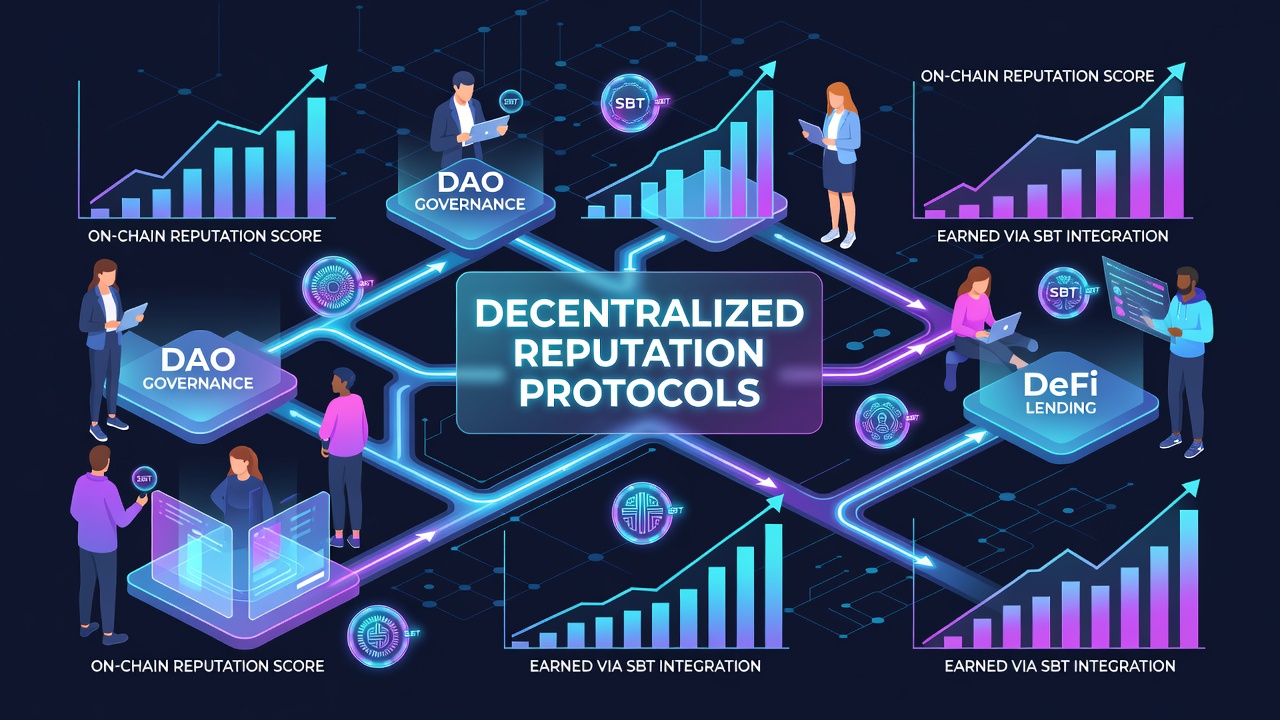
DAOs use reputation scores to weight voting power more fairly, moving beyond token holdings alone. This prevents whale dominance and encourages broader participation. In DeFi, platforms integrate scores to assess borrower risk, reducing defaults through proven histories. For instance, a user with a high reputation score from multiple successful lending cycles might access lower collateral requirements on protocols like Aave.
This integration fosters inclusive finance by allowing users without traditional credit to build and leverage on-chain trust signals. Real 2026 deployments have shown DAOs implementing hybrid models where SBTs grant proposal rights only after a minimum reputation threshold is met, leading to more thoughtful governance outcomes.
Leading Platforms and 2026 Case Studies
Platforms like those on Ethereum mainnet and specialized reputation networks have rolled out updates in 2026. Case studies show DAOs achieving higher participation rates after implementing SBT-based scoring, while DeFi protocols report improved loan performance through reputation-gated lending. Comparisons highlight differences in privacy features and interoperability, with some excelling in cross-chain reputation portability across Ethereum, Arbitrum, and Optimism.
One notable 2026 example involves a major DAO that integrated reputation scores to filter voter eligibility, resulting in a 40% increase in proposal quality as measured by community feedback. Another case from a DeFi lending pool demonstrated reduced default rates by requiring minimum on-chain reputation for high-value loans. These platforms differ in their scoring algorithms, with some emphasizing peer endorsements and others focusing on transaction volume and consistency.
Practical Steps to Build and Leverage Reputation Scores
Users can start by engaging in verifiable on-chain activities. Follow these detailed steps:
- Connect a secure wallet such as MetaMask to Ethereum or compatible layer-2 networks and begin with small, low-risk transactions to establish baseline activity.
- Participate in DAO proposals and receive attestations from recognized community members or protocols.
- Complete DeFi transactions that contribute to positive history, such as providing liquidity or repaying loans on time.
- Mint or claim SBTs from recognized issuers, ensuring they come from audited smart contracts.
- Monitor your score through dashboard tools provided by protocols and seek feedback from peers to improve weak areas.
To leverage scores, integrate wallets with compatible platforms for priority access or better terms. Always verify protocol security before linking identities, and diversify activities across multiple chains to build robust, portable reputation.
Common Pitfalls to Avoid
Avoid over-reliance on single-platform scores, as they may lack portability across ecosystems. Beware of Sybil attacks where fake identities inflate scores—opt for protocols with strong anti-collusion measures like proof-of-personhood integrations. Privacy leaks are another risk; use zero-knowledge proofs where available to protect sensitive data. Another common mistake is ignoring gas fees and network congestion when building reputation through frequent transactions, which can erode gains. Finally, failing to update scores regularly can lead to outdated profiles that no longer reflect current behavior.
Future Innovations in the Decentralized Web
Looking ahead, AI-enhanced scoring and cross-protocol standards promise more nuanced reputation models. Integration with emerging layer-2s and identity solutions will further decentralize trust building. Innovations may include interoperable SBT standards that work seamlessly between DeFi and social dApps, as well as machine learning models that predict reputation risks based on behavioral patterns. These developments aim to make Web3 more accessible and secure for mainstream users.
For authoritative references on blockchain fundamentals, explore Ethereum.org and Aave. Additional insights can be found at Arbitrum.io and Uniswap.org.
Frequently Asked Questions
How do reputation scores differ from traditional credit scores?
They are decentralized, portable, and based on transparent on-chain data rather than centralized reporting agencies.
Can I transfer my reputation to a new wallet?
Most systems tie scores to specific wallets via SBTs, though some protocols offer migration tools with verification steps.
What happens if my score is low?
Focus on consistent positive actions like community contributions to gradually improve it over time.
Conclusion
Web3 reputation systems are transforming how trust operates in decentralized environments. By understanding and adopting these tools responsibly, users position themselves for greater opportunities in the evolving web. Continued innovation in 2026 and beyond will likely make these systems even more integral to daily Web3 interactions.


No comments yet. Be the first!