 CryptoChain Blog

Introduction to Web3 Satellite Networks
The demand for reliable global internet continues to grow, especially in remote and underserved regions where traditional infrastructure falls short. Web3 satellite networks combine blockchain technology with low-Earth orbit (LEO) satellite constellations to create decentralized connectivity solutions. This approach moves beyond centralized providers by leveraging distributed ledgers for governance, incentives, and data routing. In 2026, these networks promise to bridge the digital divide while integrating seamlessly with existing decentralized protocols. This article explores the core concepts, real-world applications, and practical steps for involvement, providing a comprehensive look at how blockchain enables new forms of orbital infrastructure that prioritize accessibility and resilience.
Traditional satellite systems have long been dominated by large corporations, but the rise of Web3 introduces token-based incentives that encourage broader participation. Developers and communities can now contribute to network growth in ways that were previously impossible, fostering innovation in areas like dynamic routing and automated service agreements.
Key Projects Driving Blockchain-Powered LEO Constellations
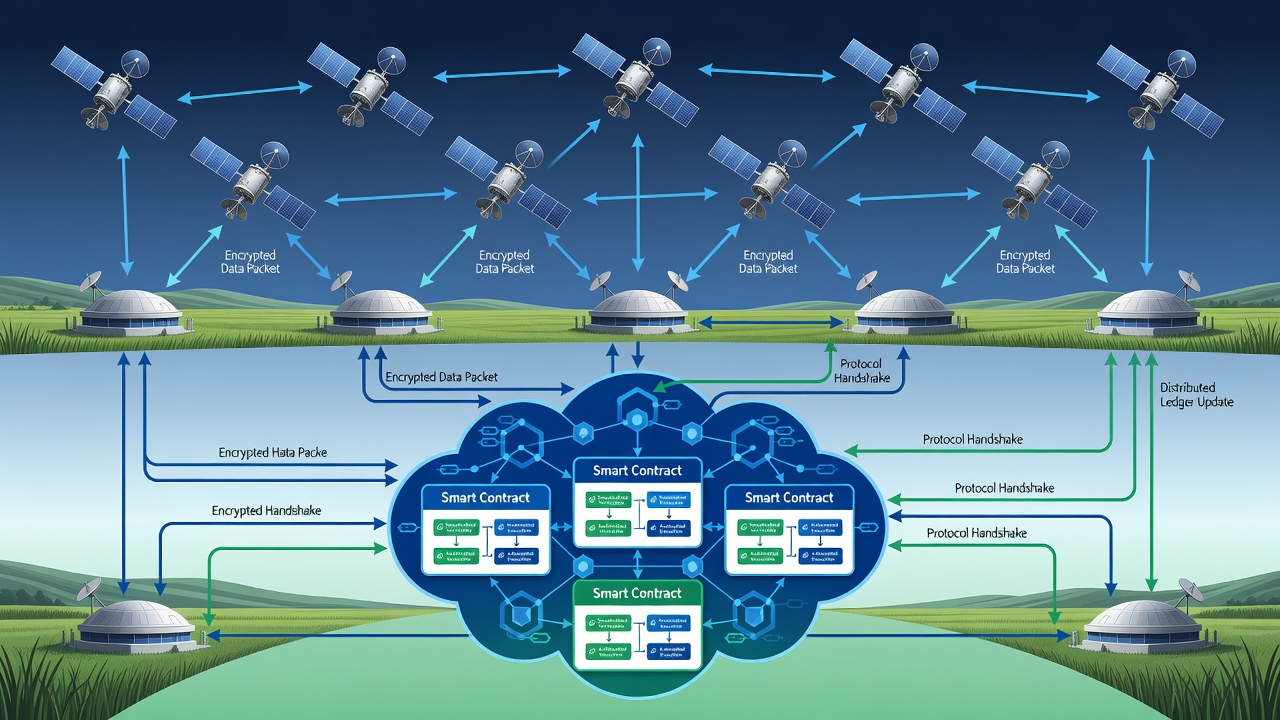
Several initiatives are pioneering the fusion of blockchain and satellite tech. Projects focus on token-incentivized participation where users and operators contribute bandwidth or ground stations in exchange for cryptocurrency rewards. These constellations operate in LEO to minimize signal travel distance compared to traditional geostationary satellites. Integration often involves smart contracts that automate payments and network management, ensuring transparency without intermediaries. For instance, emerging platforms are experimenting with proof-of-coverage mechanisms similar to those used in decentralized wireless networks, allowing satellite operators to verify and monetize their contributions in real time.
Additional projects emphasize interoperability, building bridges between satellite data feeds and major blockchain ecosystems. This allows for seamless data validation across chains, reducing reliance on any single network and enhancing overall system robustness.
Benefits for Remote and Underserved Regions
Decentralized satellite networks excel in areas lacking fiber optic cables or cellular towers. Communities in rural Africa, mountainous terrains, or island nations gain access through community-owned ground stations. This fosters economic growth by enabling e-commerce, education, and telemedicine without reliance on single corporations. Resilience against outages is another advantage, as distributed nodes prevent single points of failure common in centralized systems.
Beyond basic connectivity, these networks support localized content delivery and edge computing capabilities powered by blockchain oracles. Users in isolated regions can access Web3 applications directly, participating in decentralized finance or supply chain tracking without needing to route through distant data centers.
Integration with Existing Web3 Protocols
These networks align with protocols like those on Ethereum for identity verification and micropayments. Data routing can utilize decentralized file systems, while oracles feed real-time orbital data into smart contracts. This creates end-to-end decentralized internet stacks where users pay in tokens for bandwidth. Further integrations include compatibility with layer-2 scaling solutions that handle high volumes of micro-transactions for bandwidth allocation, ensuring the network remains efficient even during peak usage periods in connected communities.
Technical Hurdles: Latency, Regulations, and Scalability
Latency remains a challenge despite LEO advantages, with round-trip times still higher than terrestrial fiber in optimal conditions. Orbital regulations governed by bodies like the International Telecommunication Union require coordination to avoid spectrum conflicts and space debris. Scalability involves managing thousands of satellites and dynamic node participation while maintaining security against potential attacks on the blockchain layer. Engineers are addressing these issues through advanced beamforming techniques and predictive algorithms that anticipate satellite handoffs, minimizing disruptions for end users engaged in real-time applications such as video calls or live data streaming.
Regulatory navigation also includes compliance with international space treaties and national licensing requirements, which decentralized projects must handle collectively through on-chain voting mechanisms.
Comparisons Between Centralized Satellite Providers and Decentralized Alternatives
- Ownership Model: Centralized providers control all infrastructure; decentralized alternatives distribute ownership via tokens.
- Cost Structure: Centralized services often involve subscriptions; decentralized options use usage-based token economics that reward active contributors.
- Accessibility: Centralized networks prioritize profitable markets; decentralized ones incentivize coverage in remote zones through community staking rewards.
- Resilience: Single-entity control risks outages; distributed networks offer higher fault tolerance via redundant pathways.
- Innovation Speed: Centralized entities may move slower due to bureaucracy, while decentralized projects benefit from open-source collaboration and rapid iteration.
Real-World Case Studies from 2026 Pilots
Pilots in 2026 have demonstrated viability in regions like Southeast Asia and parts of South America. One project connected remote villages using blockchain-verified ground stations, achieving consistent connectivity where previous attempts failed. Metrics showed improved participation rates as local operators earned tokens for maintaining uptime. Another initiative integrated with NASA open data for orbital tracking, enhancing network reliability through transparent governance. A third pilot in Eastern Europe tested hybrid setups combining satellite links with existing mesh networks, revealing how Web3 incentives can accelerate deployment in post-disaster recovery scenarios.
Step-by-Step Overview: How Developers Can Participate
- Research open-source repositories for satellite simulation tools and blockchain SDKs compatible with LEO networks, focusing on documentation that covers orbital mechanics and consensus algorithms.
- Set up a node by deploying hardware such as phased-array antennas and connecting to testnet environments, then validate initial connectivity through on-chain proofs.
- Stake tokens to join governance proposals on network upgrades or coverage expansions, reviewing proposals for technical feasibility and community impact.
- Develop dApps that leverage the connectivity layer, starting with simple bandwidth marketplaces and progressing to complex applications like decentralized content delivery.
- Contribute to community audits and simulations to address latency optimizations, participating in bug bounties and collaborative testing events.
- Monitor pilot results and scale participation as mainnet launches progress, diversifying across multiple projects to mitigate risks.
Adoption Metrics and Potential ROI for Investors
Early 2026 data indicates growing node deployments in pilot zones, with participation increasing steadily due to incentive mechanisms. Investors eyeing these projects should evaluate token utility in bandwidth trading and long-term network effects. Qualitative growth in underserved connectivity suggests strong potential returns through ecosystem expansion rather than short-term speculation. Tracking metrics such as active ground stations and transaction volumes on the associated blockchains provides insight into sustainable adoption trends.
FAQ: Security and Scalability Concerns in the Decentralized Web
How secure are Web3 satellite networks against cyber threats?
Security relies on cryptographic consensus and distributed validation, reducing risks of centralized breaches. Regular audits and multi-signature controls further protect against exploits, while zero-knowledge proofs can enhance privacy for routing decisions.
Can these networks scale to serve millions of users globally?
Scalability depends on advancing LEO hardware and layer-2 blockchain solutions. Current pilots focus on regional clusters before broader expansion, with ongoing research into sharding techniques for handling increased orbital data traffic.
What regulatory hurdles might affect adoption?
International coordination on spectrum allocation and orbital slots remains essential, with ongoing dialogues between projects and governing bodies to establish clear frameworks for decentralized operations.
How do these networks handle data privacy compared to traditional providers?
Decentralized designs often incorporate end-to-end encryption and user-controlled data policies enforced by smart contracts, giving individuals greater autonomy over their information flows.
Conclusion
Web3 satellite networks represent a transformative shift toward inclusive, resilient global connectivity. By addressing infrastructure gaps through decentralization, they open new possibilities for 2026 and beyond. Developers, investors, and communities stand to benefit from thoughtful participation in this evolving space, driving forward a more equitable digital future.


No comments yet. Be the first!