 CryptoChain Blog

The freelance economy continues to evolve rapidly in 2026, driven by Web3 innovations that promise greater autonomy, transparency, and efficiency for independent professionals. Centralized platforms have long dominated gig work, but their high fees, data silos, and restrictive policies have pushed many toward decentralized alternatives. Blockchain technology now underpins new models where reputation, payments, and contracts operate without traditional intermediaries. This shift not only empowers freelancers with portable credentials but also enables seamless global collaboration through programmable agreements. Professionals exploring career opportunities in this space seek practical insights into emerging tools that align with the decentralized web's core principles of ownership and verifiability.
Understanding Blockchain Reputation Systems
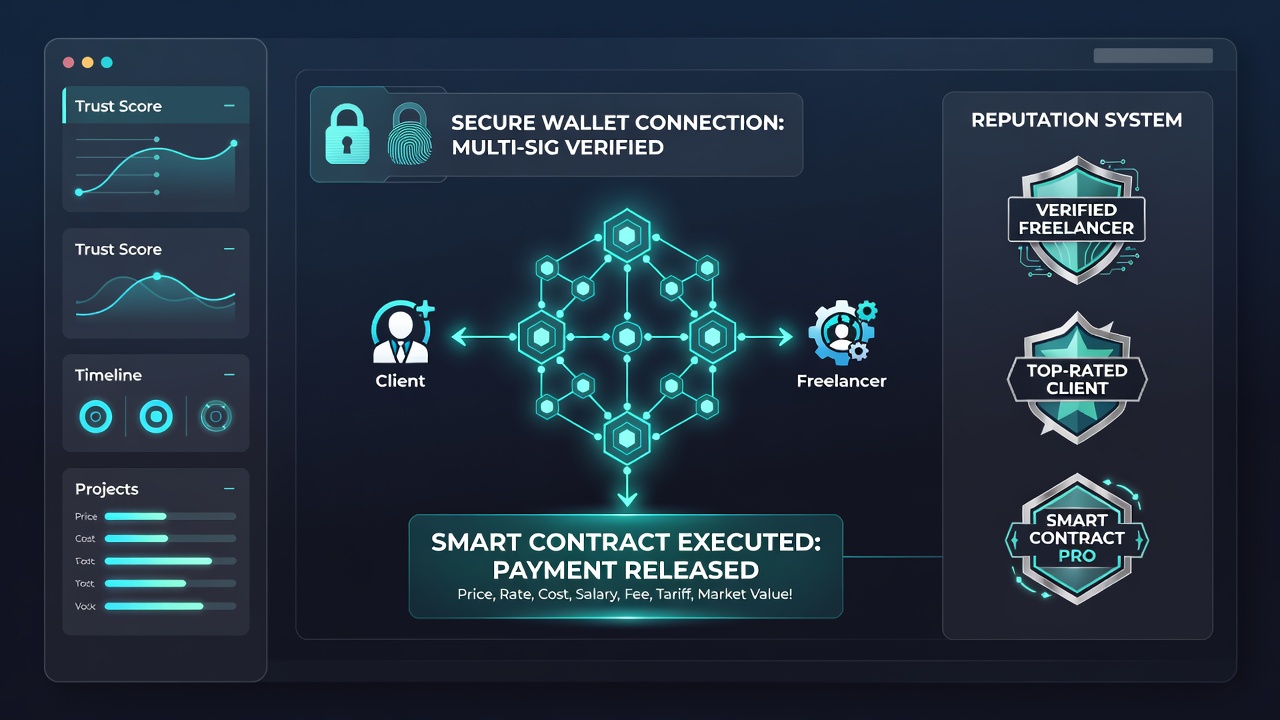
Reputation lies at the heart of any freelance marketplace, yet traditional systems lock this data within proprietary databases. Blockchain-based reputation systems address this by recording feedback, skill verifications, and work history on immutable ledgers. These on-chain profiles use decentralized identifiers that freelancers control directly, allowing seamless transfer across platforms. For instance, a developer who completes projects on one network can port their verified ratings to another without starting from zero. The technical foundation often relies on Ethereum standards for attestations, where third parties cryptographically sign claims about skills or past performance. This creates a trust layer resistant to manipulation while preserving privacy through selective disclosure techniques. Benefits include reduced bias from platform algorithms and enhanced mobility for workers in emerging markets. However, adoption requires careful design to prevent Sybil attacks where fake identities inflate scores, often mitigated by staking mechanisms or multi-source verification.
Smart Contracts Transforming Payments and Agreements
Smart contracts automate the execution of freelance agreements, replacing manual invoicing and escrow services with code that runs on blockchain networks. When milestones are verified through oracles or client confirmation, funds release automatically to the freelancer's wallet. This eliminates weeks-long payment delays common in legacy systems and reduces disputes by encoding terms upfront. Advanced implementations incorporate multi-signature requirements for larger projects or conditional clauses tied to deliverables uploaded to decentralized storage. Freelancers benefit from instant settlement in stablecoins that maintain value across borders, while clients gain assurance through time-locked escrows. The result is lower overhead and higher trust in cross-border arrangements, particularly for creative, technical, and consulting roles where deliverables can be digitally verified.
Real-World Examples from Leading Platforms
Braintrust exemplifies decentralized governance in freelance networks, where talent and clients participate in protocol decisions via token voting, ensuring the platform evolves according to user needs rather than corporate priorities. Ethlance demonstrates zero-fee job matching on Ethereum, with all interactions handled through wallets and reputation tokens that accrue based on completed work. Another notable project integrates with IPFS for storing portfolios, allowing freelancers to host work samples permanently without relying on centralized servers. These examples illustrate how Web3 platforms prioritize community ownership and interoperability, often integrating with broader ecosystems like decentralized finance for lending against earned reputation scores. Early adopters report improved cash flow and access to international clients previously unreachable due to banking barriers.
Comparing Web3 and Traditional Freelance Sites
Side-by-side analysis reveals stark differences in user experience and economics. Centralized sites typically charge substantial commissions that reduce net earnings, while Web3 alternatives route payments directly between parties. Data portability stands out as another differentiator: Web3 profiles remain with the individual across multiple services, unlike siloed ratings that lose value if a platform declines. Accessibility improves dramatically because anyone with a smartphone and wallet can participate, bypassing traditional KYC hurdles that exclude freelancers from certain regions. Dispute resolution shifts from opaque support teams to transparent mechanisms such as DAO voting or on-chain arbitration panels. Scalability challenges persist in Web3 due to network congestion, yet layer-2 solutions increasingly address transaction speeds. Overall, professionals weighing options find Web3 superior for long-term career building but may combine both models during transition periods.
Practical Steps for Freelancers to Get Started
- Begin by installing a reputable non-custodial wallet and securing recovery phrases offline to manage digital assets safely.
- Establish a decentralized identity by registering on platforms supporting verifiable credentials, then request attestations from past clients or collaborators.
- Research and join Web3 job networks, starting with small tasks to accumulate initial on-chain feedback and build momentum.
- Study smart contract basics through official documentation provided by major blockchain foundations to understand escrow flows before accepting assignments.
- Participate in relevant DAOs to gain governance experience and network with others navigating similar career paths in decentralized economies.
- Experiment with cross-chain tools for broader opportunity access while monitoring gas fees and network reliability.
- Document all interactions meticulously and back up wallet data regularly to prevent loss from technical issues.
Potential Challenges and Security Considerations
Transitioning to Web3 freelance work involves navigating volatility, regulatory gray areas, and technical risks. Token price fluctuations can erode earnings unless stablecoins are prioritized for transactions. Security threats range from phishing attempts targeting wallet credentials to vulnerabilities in unaudited smart contracts. Regulatory bodies in various jurisdictions are still clarifying tax treatment of crypto-based income and the legal status of decentralized agreements, requiring freelancers to maintain thorough records. Additionally, the irreversible nature of blockchain transactions demands double-checking recipient addresses and contract parameters. Mitigation strategies include using hardware wallets for significant balances, participating only in audited protocols, and consulting local advisors familiar with digital assets.
Security Best Practices for Web3 Freelancers
Protecting digital identities and funds requires ongoing vigilance. Enable multi-factor authentication wherever supported and avoid sharing private keys or seed phrases. Regularly audit connected dApps for permissions and revoke unnecessary access. Employ transaction simulation tools before signing contracts to preview outcomes. Stay informed about emerging threats through community forums and official blockchain announcements. These habits help sustain long-term participation in decentralized economies without compromising safety.
Frequently Asked Questions
How secure are Web3 payments compared to traditional methods?
Smart contract escrows deliver cryptographic certainty when properly audited, though users bear responsibility for wallet hygiene and contract verification before engagement.
Can I transition gradually from traditional platforms?
Many professionals maintain dual presences, gradually shifting reputation and client relationships to Web3 networks while retaining legacy profiles for stability.
What happens if a smart contract fails?
Most established platforms embed arbitration modules or community governance processes; reviewing terms and starting with low-stakes work reduces exposure.
Are there educational resources tailored for beginners?
Foundational sites offer guides on wallet setup, identity management, and contract interactions suitable for freelancers new to the space.
How does on-chain reputation affect future job prospects?
Portable credentials enhance visibility across networks, allowing clients to verify history directly and often leading to higher-value opportunities over time.
As Web3 matures through 2026, deeper integrations with artificial intelligence for project matching and enhanced cross-chain reputation portability will further expand possibilities. Freelancers who invest time mastering these tools position themselves advantageously in an increasingly decentralized professional landscape.


No comments yet. Be the first!