 CryptoChain Blog
Introduction to Web3 Social Media in 2026
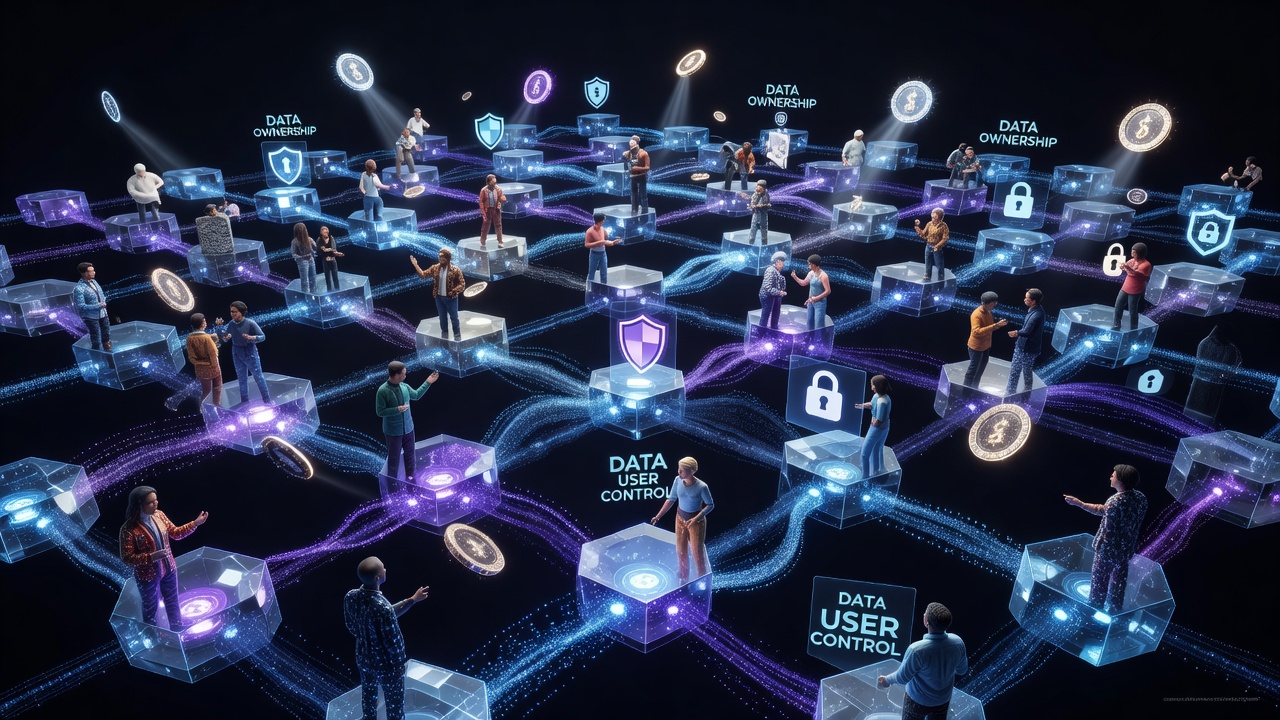
The decentralized web is evolving rapidly, with Web3 social media platforms leading the charge by prioritizing user ownership and community governance. Unlike traditional centralized networks, these innovations empower creators through token incentives and verifiable content ownership. As adoption grows, platforms built on protocols like successors to Lens Protocol and Farcaster are redefining how communities form and monetize interactions. Users are increasingly frustrated with data harvesting practices and algorithmic opacity on legacy platforms, prompting a migration toward systems where individuals control their digital identities and earnings directly.
This shift addresses key pain points of legacy social media, including data exploitation and opaque algorithms. By leveraging blockchain technology, Web3 solutions ensure transparency and direct value exchange between users and platforms. In 2026, these networks are no longer experimental niches but are gaining traction among mainstream creators seeking sustainable models beyond ad revenue dependency.
Centralized vs Decentralized Social Networks: A Detailed Comparison
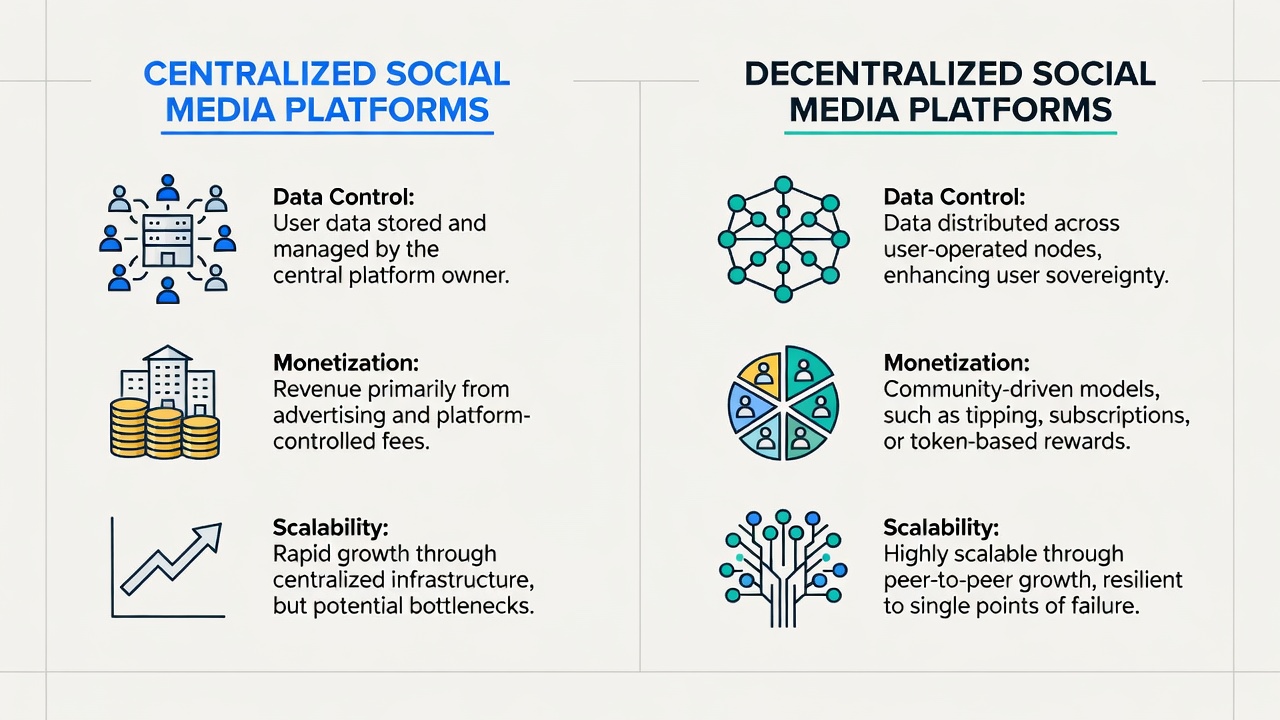
Centralized platforms control user data on private servers, often monetizing it without consent. In contrast, decentralized networks distribute data across nodes, giving users full sovereignty. Key differences include data ownership, where centralized models store data in silos while decentralized ones use cryptographic wallets for portable identities. Monetization differs sharply as traditional ads benefit corporations exclusively, whereas Web3 enables direct creator payouts via tokens. Moderation on centralized sites relies on company policies that can change abruptly, but decentralized versions use community-driven DAOs for collective decision-making. Scalability was once a hurdle for decentralized networks, but recent layer-2 advancements have narrowed this gap significantly.
- Data Ownership: Centralized models store data in silos; decentralized ones use cryptographic wallets for portable identities.
- Monetization: Traditional ads benefit corporations, while Web3 enables direct creator payouts via tokens.
- Moderation: Centralized relies on company policies; decentralized uses community-driven DAOs.
- Scalability: Early decentralized networks faced limitations, now mitigated by layer-2 solutions.
- Interoperability: Centralized platforms lock users into ecosystems, while decentralized ones allow seamless profile migration across applications.
These distinctions highlight why users are migrating toward decentralized alternatives for greater control and fairness. Real-world adoption shows that communities on decentralized platforms report higher engagement rates due to aligned incentives.
Key Innovations: User-Owned Data and Token Incentives
User-owned data mechanics allow individuals to export profiles and content across platforms seamlessly. Token incentives reward engagement, content creation, and curation through native cryptocurrencies. For instance, platforms reward high-quality posts with governance tokens that holders can stake for additional benefits. Practical examples include Farcaster's frame-based interactions that enable on-chain actions directly from feeds, and Lens Protocol successors that integrate advanced modular smart contracts for customizable social graphs. These features let users own their follower relationships as NFTs, preventing sudden loss of audience if a platform changes policies.
Token incentives also foster viral growth loops where early participants earn more as networks expand. Ethereum Foundation resources explain how these innovations build on public blockchains for trustless interactions, providing educational materials on wallet integration and smart contract basics that newcomers find invaluable.
Monetization Strategies for Creators
Creators in Web3 social spaces can earn through multiple avenues: subscription tokens, NFT-gated content, and revenue-sharing from platform fees. Step-by-step, a creator might set up a wallet and connect to a protocol like Farcaster, then mint a profile NFT representing their identity. They can publish content with embedded tipping mechanisms, launch community tokens for exclusive access and voting rights, and analyze on-chain metrics to refine strategies. Additional tactics include hosting paid AMAs via token-gated events or collaborating on cross-protocol campaigns that split rewards automatically through smart contracts.
This approach fosters sustainable income streams independent of advertiser whims. Many creators combine multiple streams, such as selling limited-edition digital collectibles tied to viral posts while building recurring revenue from token subscriptions.
Content Ownership Mechanics Explained
Content ownership in these networks uses NFTs or soulbound tokens to prove provenance. Users retain rights to their posts, which can be licensed or sold across ecosystems. This prevents platform lock-in and enables true digital scarcity for viral moments. Advanced implementations allow creators to embed royalty splits so every resale or remix generates ongoing income. For example, a photographer sharing work on a Lens successor can automatically receive percentages from derivative creations made by others in the network.
Scalability Solutions for Mass Adoption
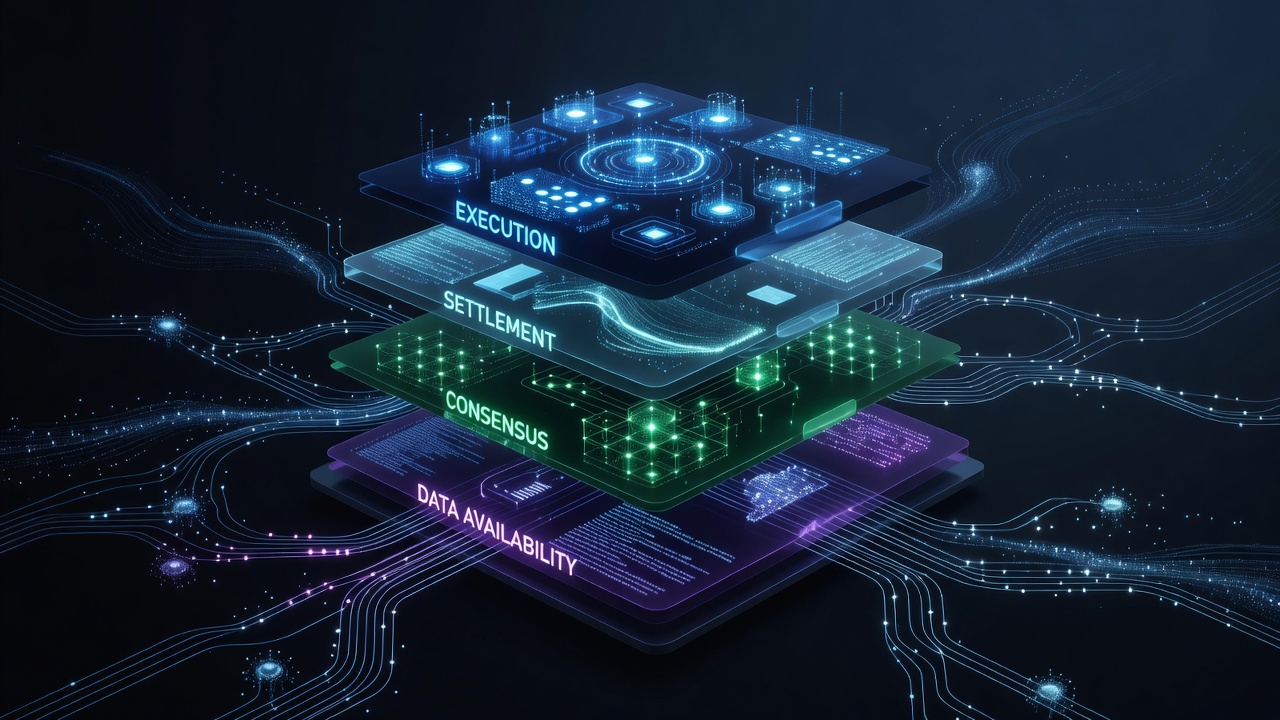
Early challenges like high gas fees have been addressed through rollups and sidechains. Current solutions support thousands of transactions per second, paving the way for mainstream users. Farcaster demonstrates this with its efficient frame architecture that scales social features without compromising decentralization. Other protocols incorporate zero-knowledge proofs to maintain privacy during high-volume interactions, ensuring performance remains consistent even during peak usage periods like major cultural events or product launches.
Real-World Case Studies from Leading Protocols
Successors to Lens Protocol have introduced modular apps where developers can plug in custom features like decentralized messaging or live streaming without rebuilding core infrastructure. Farcaster has seen organic growth through its emphasis on open frames that let any developer extend functionality. These case studies reveal that platforms prioritizing developer accessibility achieve faster iteration cycles and stronger user retention compared to closed systems.
Potential Challenges and Mitigation Strategies
Despite progress, challenges such as user education gaps and regulatory uncertainty persist. Mitigation includes intuitive onboarding flows with social login abstractions and proactive community governance that adapts to new laws. Education resources from protocol foundations help bridge the technical divide, while partnerships with traditional platforms offer hybrid entry points for hesitant users.
Step-by-Step Guide for Creators Entering Web3 Social Spaces
1. Research protocols and choose one matching your niche, such as Lens successors for creator-focused tools.
2. Acquire a compatible wallet and secure your seed phrase.
3. Create and verify your decentralized identity.
4. Build initial connections by following and engaging authentically.
5. Experiment with token launches and monitor community feedback.
6. Iterate using analytics dashboards provided by the platform.
7. Diversify across multiple protocols to reduce single-point risks.
8. Engage in DAO votes to influence future features directly.
FAQ
How does data privacy work in Web3 social media?
Data remains encrypted and user-controlled via private keys, reducing risks of centralized breaches while allowing selective sharing.
What is the earning potential for new creators?
Earnings vary by engagement and strategy, often starting small through tips and growing via token appreciation and community building.
Are these platforms accessible to non-technical users?
Many now feature intuitive interfaces with wallet abstractions, lowering the entry barrier significantly.
How do DAOs handle content moderation disputes?
Community proposals and token-weighted voting determine outcomes, with appeals processes built into most governance frameworks.
Can I migrate my existing audience from centralized platforms?
Yes, through portable profile standards that let you import followers and content history while maintaining ownership on-chain.
Conclusion
Web3 social media innovations are not just trends but foundational shifts toward a more equitable decentralized web. By embracing user-owned data, token incentives, and scalable infrastructure, creators and communities stand to benefit immensely in 2026 and beyond. Continued development in these areas promises even greater accessibility and economic opportunity for participants worldwide.
No comments yet. Be the first!