 CryptoChain Blog
Web3 Streaming Success Stories: Token Incentives in 2026
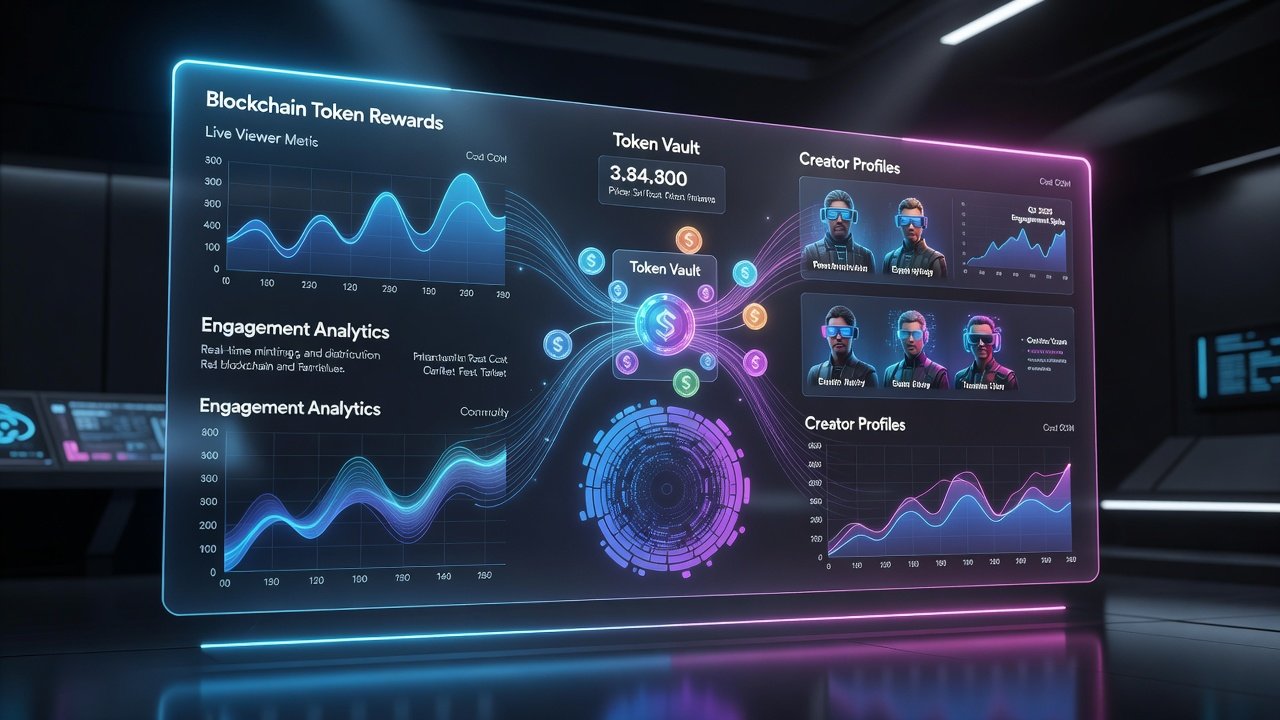
The decentralized streaming landscape transformed dramatically in 2026 as blockchain-based platforms leveraged token incentives to attract users and retain creators. These models distributed rewards through native tokens, fostering community ownership and sustainable monetization far beyond traditional ad-supported services. As audiences grew frustrated with centralized platforms' opaque algorithms and low creator payouts, Web3 solutions emerged with transparent on-chain economics that rewarded participation at every level. By mid-2026, several platforms had already demonstrated measurable success in scaling user bases while improving creator earnings through carefully designed tokenomics.
Key 2026 Web3 Streaming Platform Launches
Several platforms launched or scaled significantly throughout 2026, using token mechanics to drive adoption. Projects emphasized peer-to-peer video distribution combined with staking and NFT-based perks, leading to exponential user growth. The emphasis on blockchain distribution models allowed for censorship resistance and global accessibility without intermediaries taking large cuts.
Case Study: StreamToken Protocol
StreamToken Protocol achieved over 2 million active users within six months of its mainnet launch by implementing a dual-token system. Viewers earned governance tokens for watching and engaging with content, while creators received staking rewards proportional to audience retention metrics. Tokenomics featured a 40% allocation to user incentives and a deflationary burn mechanism tied to transaction fees. The project also introduced tiered staking pools that offered bonus multipliers for long-term holders, which helped stabilize token velocity and encouraged sustained platform activity. Early metrics showed average daily watch time rising steadily as users chased reward thresholds.
Case Study: DecentralVideo Network
DecentralVideo Network focused on live events and integrated NFT minting for exclusive access passes. Its engagement metrics showed a 300% increase in creator retention compared to pre-token models, with monetization outcomes including 25% higher average earnings per creator through direct token tips and revenue shares from protocol fees. The platform partnered with independent musicians and esports organizers to host ticketed streams where attendees received soulbound NFTs that unlocked future content drops and voting rights on event lineups. This approach created recurring revenue loops that traditional platforms struggled to match.
Case Study: EdgeStream Collective
EdgeStream Collective launched in Q2 2026 with a focus on mobile-first creators in emerging markets. By distributing micro-rewards in its native token for every minute of content uploaded and viewed, the platform quickly onboarded thousands of regional influencers. Tokenomics included a unique liquidity mining program that paired streaming rewards with DeFi yields, resulting in creator portfolios growing even during market downturns. Retention rates remained above 65% after three months, far exceeding industry averages for new video apps.
Livepeer served as a foundational reference for many of these projects, highlighting scalable transcoding on Ethereum-compatible chains.
Comparing Tokenomics Structures and Outcomes
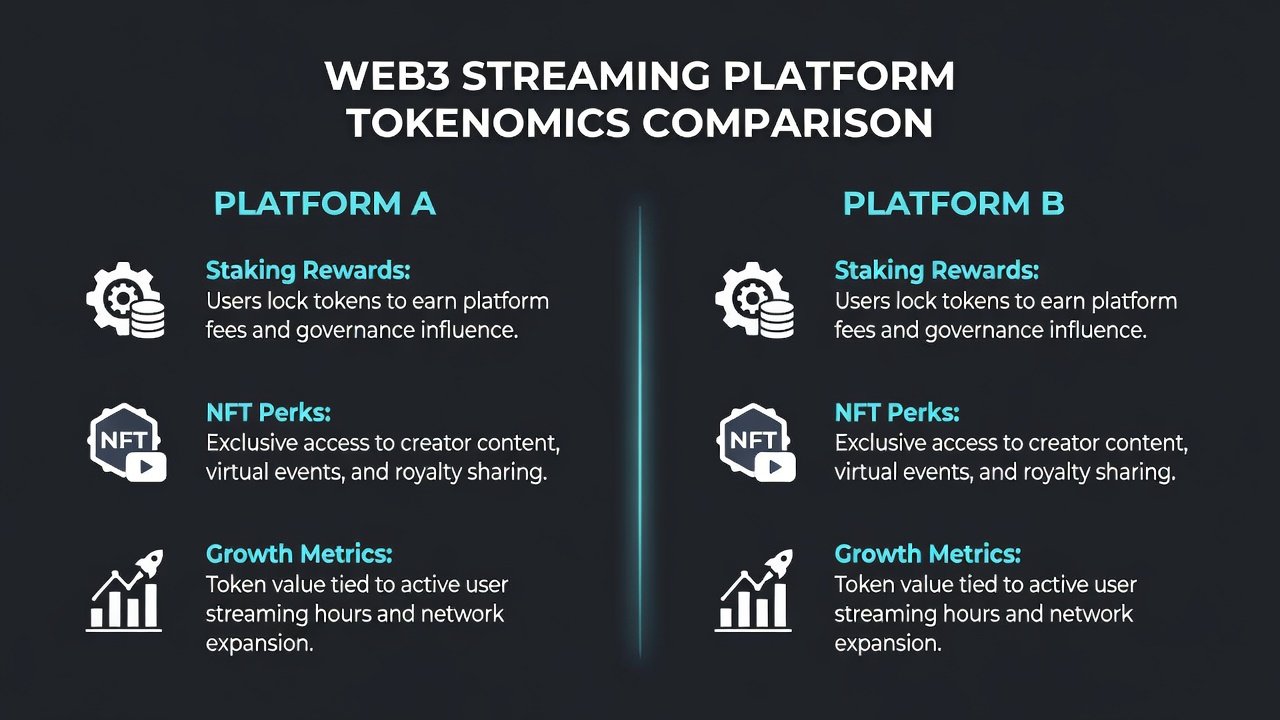
Traditional platforms like YouTube rely on ad revenue shares averaging 55% to creators, but Web3 models often allocate 60-80% of protocol value directly to participants via tokens. Engagement metrics in 2026 demonstrated Web3 platforms outperforming legacy services in daily active users by leveraging play-to-earn mechanics and community governance. When comparing structures, StreamToken emphasized linear vesting schedules to curb early dumps, DecentralVideo prioritized community airdrops for virality, and EdgeStream blended staking with liquidity incentives for broader DeFi integration.
- Token Distribution: StreamToken used linear vesting for team allocations to prevent dumps, while DecentralVideo emphasized community airdrops and EdgeStream focused on liquidity mining rewards that required active platform usage.
- Engagement Metrics: Average session times increased 45% on incentivized platforms due to reward multipliers for consistent viewing, with StreamToken reporting 1.8 million hours watched in its first quarter alone.
- Monetization: Creators on Web3 networks reported diversified income from staking yields alongside content sales, surpassing traditional CPM rates in volatile markets and providing hedge against single-platform dependency.
Practical Steps for Creators to Integrate Incentives
Creators can adopt these strategies to maximize benefits from Web3 streaming:
- Connect a non-custodial wallet to supported platforms and stake a portion of earnings for compounding rewards; start small with test streams to understand gas costs and reward cycles before scaling.
- Mint NFTs representing exclusive content tiers to offer fans premium access and royalty streams; successful creators often bundle these with behind-the-scenes footage or live Q&A sessions to build loyal communities.
- Participate in governance votes to influence protocol upgrades that boost visibility for niche creators; many platforms allow token holders to propose feature changes that directly affect discoverability algorithms.
- Combine staking rewards with referral programs to grow audiences organically while earning bonus tokens; track referral performance through on-chain analytics dashboards to refine outreach tactics over time.
- Monitor token utility across multiple chains using bridges to access lower-fee environments during high-traffic events, ensuring consistent reward claiming without excessive costs.
Common Pitfalls to Avoid
Many early adopters faced issues like over-reliance on volatile token prices or neglecting regulatory compliance. Always diversify revenue sources and review smart contract audits before committing large holdings. Ignoring scalability limits on certain chains led to high gas fees during peak events in early 2026. Additional pitfalls include failing to disclose token reward structures to audiences, which can damage trust, and neglecting tax implications of frequent token distributions across jurisdictions. Creators should also avoid locking all assets into single-platform staking pools without exit strategies, as protocol changes or hacks have occasionally frozen funds temporarily. Finally, rushing into unvetted projects without community feedback often results in low liquidity and abandoned incentives.
Livepeer Alternatives and Emerging Protocols
Beyond established options, emerging protocols such as Theta Edge Network and new layer-2 solutions offered competitive decentralized video delivery. These alternatives emphasized lower latency and broader device support, appealing to mobile-first audiences seeking Web3 features without sacrificing quality. Theta's hybrid architecture combined edge caching with token rewards for bandwidth sharing, while newer protocols on Arbitrum and Base focused on zero-knowledge proofs for private viewing analytics. Each provided distinct advantages in cost, speed, and creator control compared to pure Ethereum mainnet solutions.
Ethereum remains central for many token standards, while cross-chain bridges expanded accessibility.
FAQs on Compliance, Scalability, and Future Predictions
How do Web3 streaming platforms handle regulatory compliance?
Leading projects incorporate KYC options for token rewards and partner with legal frameworks in key jurisdictions to ensure adherence to securities laws, reducing risks for global users. Some platforms also implement geographic restrictions on certain reward features to align with evolving international guidelines.
What scalability challenges remain for decentralized video?
While layer-2 solutions have improved throughput, bandwidth-intensive live streams still require hybrid models combining on-chain incentives with off-chain delivery networks for optimal performance. Ongoing research into sharding and decentralized storage continues to address remaining bottlenecks.
What are future predictions for decentralized streaming?
By 2027, experts anticipate wider integration of AI-driven content moderation on-chain and expanded metaverse streaming capabilities, further blurring lines between entertainment and interactive economies. U.S. Securities and Exchange Commission guidance continues to shape token classification approaches.
Conclusion and Outlook
Web3 streaming in 2026 proved that token incentives can fundamentally reshape creator economies when executed with transparent tokenomics and user-centric design. As more creators experiment with staking, NFTs, and governance, the gap between traditional and decentralized platforms will likely widen. Staying informed about emerging protocols and maintaining diversified strategies will be essential for long-term success in this rapidly evolving space.

No comments yet. Be the first!